
Do I Need Fire Rated Cladding on My House Extension? (UK Guide 2026)
It is one of the most common questions we receive from homeowners planning a timber-clad extension: does the cladding need to be fire rated? The answer depends on several factors — the height of the building, its proximity to a boundary, and which part of the UK Building Regulations applies to your project. Getting it wrong can result in a failed Building Control inspection, costly remedial work, or — more seriously — a building that does not perform safely in the event of a fire.
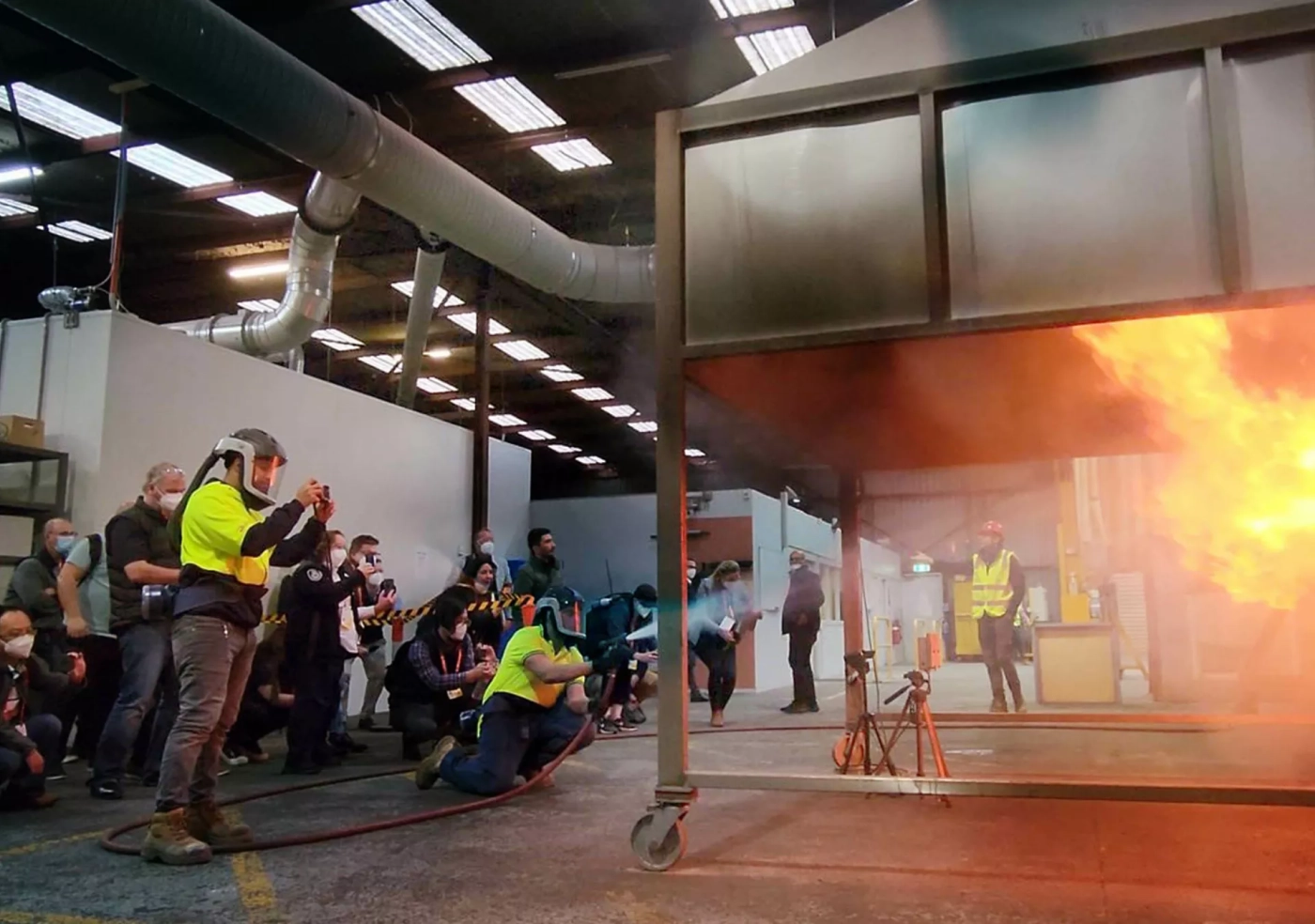
This guide explains the UK Building Regulations rules that govern external cladding on house extensions, what fire performance classifications mean in practice, and when you should — and should not — specify fire rated timber cladding for your project. It is aimed at homeowners, self-builders, and architects working on residential projects, though the principles apply equally to commercial extensions and mixed-use buildings.
For most single-storey and two-storey domestic extensions, fire rated cladding is not automatically required by law — but it becomes a requirement in specific circumstances, particularly where the extension is close to a boundary or the building exceeds 11 metres in height. Specifying fire rated cladding when it is not legally required is still good practice on many projects, and adds minimal cost when treated at the factory stage.
The Building Regulations That Govern External Cladding
In England and Wales, the fire performance of external walls — including cladding — is governed by Approved Document B (Fire Safety), most recently updated in 2022 following post-Grenfell reform. Scotland and Northern Ireland operate under separate but broadly similar regulations. The core requirement is that external wall materials must not significantly contribute to the spread of fire across a building's facade, particularly in a way that could endanger the occupants of the building or neighbouring properties.
Approved Document B sets out different requirements depending on building use and height. For domestic extensions, the key threshold is 11 metres — the height at which more restrictive cladding requirements come into force. Below that threshold, standard Building Regulations apply, and combustible cladding materials including untreated timber are generally permitted, subject to boundary distance rules.
Building Regulations in this area changed significantly in 2022. If you have existing advice or specifications from before that date, they should be reviewed against the current edition of Approved Document B before use.
The 11-Metre Rule — What It Means for House Extensions
The 11-metre height threshold under Approved Document B is measured from ground level to the floor level of the top storey — not to the ridge or eaves. Most detached, semi-detached, and terraced houses in the UK fall well below this threshold, meaning their extensions are generally not subject to the stricter cladding requirements that apply to taller buildings.
In practical terms, this means that for the majority of residential extensions — single-storey rear or side extensions, two-storey extensions, loft conversions — standard timber cladding without fire treatment is permitted under Building Regulations, provided the boundary distance rules are also satisfied.
However, the 11-metre rule is not the only consideration. A small number of residential properties — particularly some three-storey houses, flats above garages, or buildings in complex mixed-use situations — may exceed this threshold. If there is any doubt about whether your building crosses the 11-metre threshold, this should be confirmed with your architect or Building Control officer before cladding is specified.

External wall assembly — fire performance requirements depend on the full wall system, not just the cladding boards alone.
Boundary Distance Rules — When Fire Rating Becomes Necessary
Even for buildings well below 11 metres, the distance from the extension to a neighbouring boundary matters. Approved Document B sets out requirements for resistance to fire spread from one property to another, which affects the permitted combustibility of external wall materials when a building is close to a site boundary.
The general principle is that the closer a wall is to a boundary, the more restricted the use of combustible materials becomes. As a rough guide:
- External walls more than 1 metre from a boundary — standard untreated timber cladding is generally acceptable on buildings under 11 metres.
- External walls within 1 metre of a boundary — the wall must provide at least 30 minutes of fire resistance, which typically means fire rated cladding should be specified or the wall should have limited combustibility.
- External walls on or at the boundary — the most restrictive requirements apply, and fire rated or non-combustible materials are likely to be required across the full wall area.
It is worth noting that these rules apply specifically to the wall closest to the boundary. An extension with three elevations well away from any boundary and one elevation close to a fence line may only require fire rated cladding on that single elevation — the others can remain standard.
Quick Reference: When Is Fire Rated Cladding Required?
Understanding Fire Performance Classifications
When fire rated cladding is required or specified, you will encounter two classification systems in UK specifications — the European Euroclass system and the older UK Class system. Both are still in use, and understanding the difference matters when checking compliance.
| Classification | System | What It Means | Typical Application |
|---|---|---|---|
| Euroclass A1 | European (EN 13501-1) | Non-combustible — no contribution to fire | Buildings over 18m, high-risk facades |
| Euroclass A2-s1,d0 | European (EN 13501-1) | Very limited combustibility, minimal smoke | Buildings over 18m (residential) |
| Euroclass B-s1,d0 | European (EN 13501-1) | Limited flame spread, low smoke, no droplets | Buildings 11–18m, schools, commercial, near-boundary walls |
| UK Class 0 | UK (BS 476) | Limited surface spread of flame | Broadly equivalent to Euroclass B for many applications |
| UK Class 1 | UK (BS 476) | Low surface spread of flame | Internal linings, lower-risk external applications |
For most residential and commercial cladding projects in the UK where fire treatment is required, Euroclass B (B-s1,d0) is the standard that is specified. This is the classification achieved by the fire retardant treated cladding we supply, certified to BS1 and BS2 standards. It is important that any fire rated cladding you specify comes with a full test certificate — not just a supplier claim.
Does Fire Rated Cladding Look Different?

Fire retardant treated cladding is visually identical to standard timber cladding — same profiles, same species, same installation method.
This is one of the most common concerns from homeowners and architects encountering fire rated cladding for the first time. The answer is straightforward: factory-applied fire retardant treatment does not change the visual appearance of the timber in any significant way. The treatment penetrates the cell structure of the wood rather than sitting as a surface coating, so there is no visible change to colour, texture, or grain.
Fire rated cladding is available in all the same species and profiles as standard cladding — ThermoWood, Siberian larch, Douglas fir, Nordic spruce — and installs in exactly the same way. There is no need to change your detailing, fixings, or batten specification when switching from standard to fire rated boards.
Factory Treatment vs On-Site Application
Fire retardant can be applied either at the factory before the boards are delivered, or on site after installation. For the majority of projects, factory treatment is the strongly preferred option — and for good reason.
Factory-applied treatment is carried out under controlled conditions using pressure impregnation, which ensures deep and consistent penetration of the retardant throughout the full cross-section of each board. This produces a reliably certified result that can be backed by test documentation. On-site brush or spray application is less consistent, harder to certify, and generally not accepted by Building Control as evidence of compliance with Approved Document B.
Our fire retardant treatment service is carried out in a factory environment to BS1 and BS2 / Euroclass B (B-s1,d0) standards. Boards are treated before despatch and arrive on site ready to install, with full certification documentation included.
When Should You Specify Fire Rated Cladding Even If It Is Not Required?
There are several situations where specifying fire rated cladding makes sense even when Building Regulations do not strictly require it. These include:
- Insurance requirements — some home insurers, particularly for high-value properties, are beginning to ask about cladding specification. Fire rated boards can simplify this conversation.
- Future-proofing — Building Regulations in this area have tightened significantly since 2017 and may tighten further. Specifying fire rated cladding now avoids potential retrofit costs if rules change.
- Permitted development extensions — extensions built under permitted development do not always require a full Building Regulations application, but that does not mean fire performance is irrelevant. Specifying fire rated cladding is a straightforward way to demonstrate due diligence.
- Proximity to neighbours — even where the 1-metre rule does not technically apply, a tight urban plot where fire spread to a neighbouring property is a realistic risk is a good reason to upgrade the specification.
- Planning conditions — some local authorities impose cladding material conditions through the planning process, particularly in conservation areas or on sensitive sites. Confirming compliance early avoids delays.
The cost difference between standard and fire rated cladding when treated at the factory stage is relatively modest — typically 10–20% on material cost. On most projects, specifying fire rated boards where there is any doubt about requirements is the straightforward and sensible choice. It removes compliance uncertainty, satisfies Building Control, and adds genuine value to the building.
How to Confirm What Is Required for Your Specific Project
The rules outlined in this guide provide a working framework, but every project has its own variables. The definitive answer for your extension should always come from one of the following sources:
- Your local Building Control officer — either through the local authority or an approved inspector. They will assess your specific proposal and confirm whether fire rated cladding is required.
- Your architect or structural engineer — if you have a design professional involved in the project, they should be specifying cladding to the correct standard as part of their service.
- Our technical team — if you are unsure whether your project requires fire rated treatment, we are happy to advise based on the building type, height, and location. Contact us here with the details of your project.
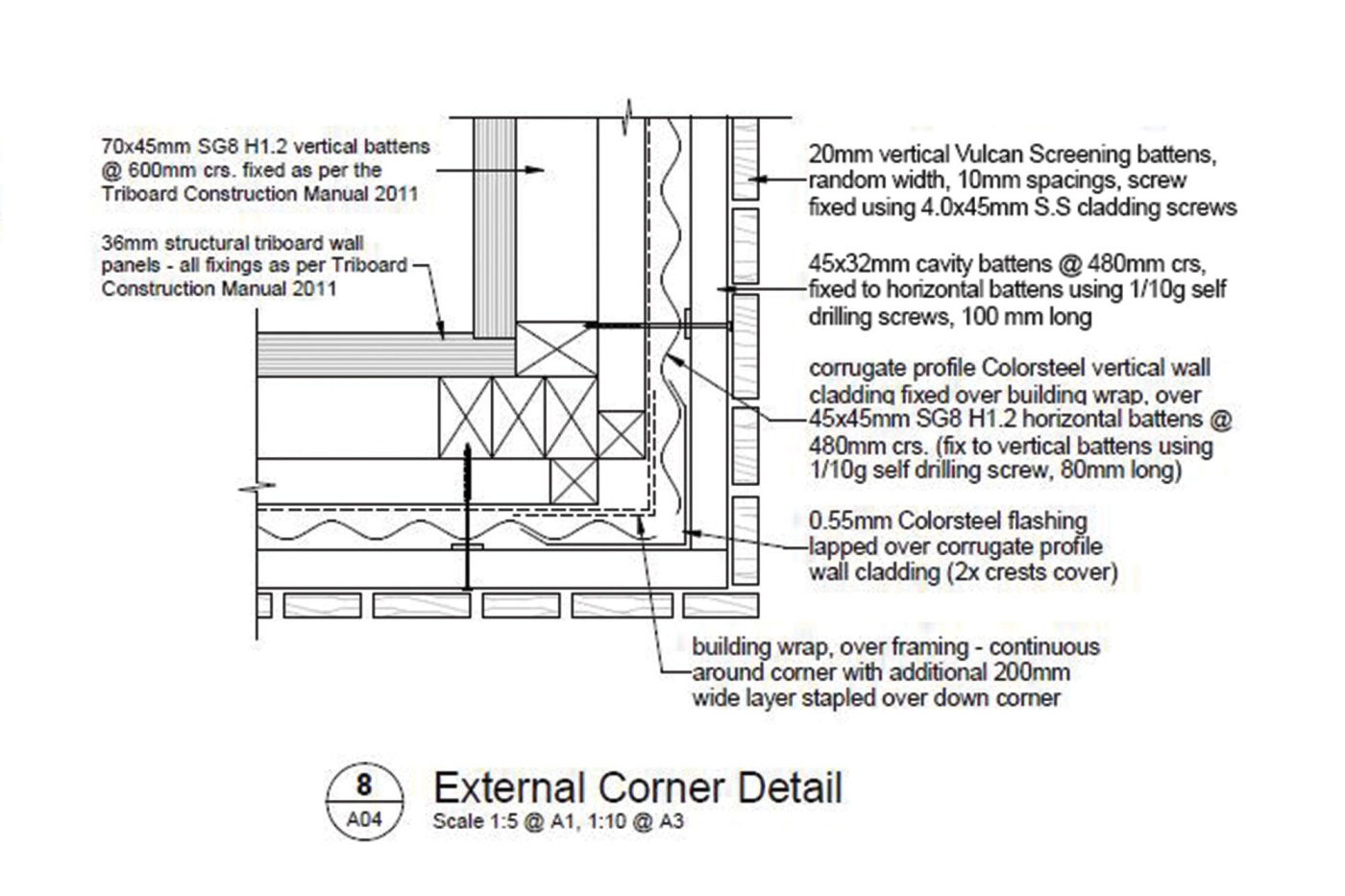
Correct system design — ventilated cavity, appropriate fixings, and fire rated boards where required — is the foundation of a compliant and long-lasting cladding installation.
For most single-storey domestic extensions, fire rated cladding is not a legal requirement under Building Regulations — provided the extension is on a house under 11 metres in height and is not built close to a boundary. However, if the extension is within 1 metre of a boundary, Approved Document B requires the external wall to have limited combustibility, which in practice means fire rated cladding should be specified. Always confirm with your Building Control officer before proceeding.
Under Approved Document B (2022 edition), buildings over 11 metres in height — measured from ground level to the top floor — must use cladding materials of limited combustibility on their external walls. For residential buildings over 18 metres, the requirements are significantly stricter and all cladding components must meet Euroclass A2-s1,d0 or better. The 11-metre threshold applies to most two-storey and some three-storey houses and their extensions.
Euroclass B (specifically B-s1,d0) is a European fire performance classification for construction materials. Timber cladding treated to Euroclass B standard has undergone certified fire retardant treatment that significantly limits flame spread, heat release, and smoke production. It is tested to EN 13501-1 and is the standard most commonly specified for commercial buildings, schools, and residential buildings over 11 metres in the UK.
Yes. Timber cladding can be treated with a certified fire retardant to achieve Euroclass B (B-s1,d0) or UK Class 0 performance. The treatment is either applied in a factory environment before installation or applied on site, though factory-applied treatments offer more consistent penetration and certified results. Timber Cladding Specialists supply factory fire-treated cladding certified to BS1/BS2 and Euroclass B standards across all main species including ThermoWood, Siberian larch, Douglas fir, and Nordic spruce.
No. Fire retardant treatment does not significantly alter the visual appearance of the timber. Factory-treated cladding boards look and install identically to untreated boards. The treatment penetrates the timber cell structure rather than sitting on the surface, so there is no visible coating, colour change, or surface texture difference in most cases. You can still specify the same profiles, species, and finishes on fire rated boards as on standard cladding.
Need Fire Rated Timber Cladding? We Supply Across the UK
We supply factory fire-treated timber cladding certified to Euroclass B (B-s1,d0) and UK Class 0 standards, across all main species and profiles. Full certification documentation provided. Nationwide delivery in 7–14 days. Not sure what you need? Our team can advise on the right specification for your project.