

Short answer: There is no maintenance-free timber cladding in the UK. What exists is reduced-maintenance systems — where dimensional stability, breathable finishes, corrosion-resistant fixings and correct detailing dramatically lower intervention frequency. In real-world UK conditions, thermally modified timber and properly detailed charred systems typically require fewer recoating cycles than untreated softwood. The biggest long-term cost is not the timber itself — it is access, labour and repeated intervention.
Many homeowners start with price per square metre. The more important question is: how often will I need to touch this façade over 20 years? Once scaffold, labour and disruption are factored in, the cheapest board is rarely the cheapest system. This guide explains what genuinely reduces maintenance in the UK climate, what to avoid, and how to finish timber cladding intelligently for 15–30 year performance.
1. What “Low Maintenance” Actually Means in the UK Climate
The UK climate is defined by repeated moisture cycling rather than extreme heat. Rainfall, humidity variation and wind-driven exposure create constant expansion and contraction across timber boards. South- and west-facing elevations weather faster due to UV and prevailing wind patterns.
Low maintenance therefore means:
- Reduced dimensional movement.
- Longer intervals between surface treatment cycles.
- Minimal fixing corrosion risk.
- Predictable, even weathering.
It does not mean “no work ever.” It means fewer scaffold hires, fewer coating failures and fewer corrective repairs.
| System Type | Movement Risk | Typical Recoat Interval | Maintenance Demand |
|---|---|---|---|
| Untreated Softwood | High | 2–3 years | Frequent |
| Thermally Modified Timber | Low | 4–6 years | Reduced |
| Charred Timber (Brushed & Sealed) | Low–Moderate | 4–6 years (if sealed) | Reduced |
2. The Science of Dimensional Stability: Why Movement Drives Maintenance
Timber expands and contracts primarily across the grain. Tangential movement (along growth rings) is greater than radial movement (across rings). When moisture content increases, boards swell. When drying occurs, they shrink. This cycle repeats dozens of times annually in the UK.
When boards move:
- Rigid paint films crack.
- Fixing holes elongate.
- Surface checking increases.
- Water penetrates micro-fissures.
The coating then fails earlier than expected, increasing intervention frequency.
If you want deeper technical background, see What is ThermoWood?, which explains thermal modification and moisture equilibrium behaviour in detail.
Reducing movement reduces coating stress. Reducing coating stress extends recoat intervals. Extending recoat intervals reduces lifetime cost.

3. ThermoWood: Performance, Lifespan & Maintenance Reality
Thermally modified timber undergoes controlled heating, reducing equilibrium moisture content. This lowers expansion and contraction amplitude during wet–dry cycling.
Practical implications:
- Reduced cupping and twisting.
- Improved coating stability.
- Lower risk of distortion in exposed elevations.
Service life expectations commonly reach 20–30 years when detailed correctly and ventilated. For full durability modelling, refer to ThermoWood performance and lifespan.
For buyers prioritising reduced intervention cycles and predictable weathering, you can shop ThermoWood cladding to explore available profiles and finishes.
| Factor | Standard Softwood | ThermoWood |
|---|---|---|
| Moisture Movement | Higher | Reduced |
| Coating Stress | High | Lower |
| Maintenance Interval | Shorter | Longer |

4. Charred Timber (Shou Sugi Ban): Does It Reduce Maintenance?
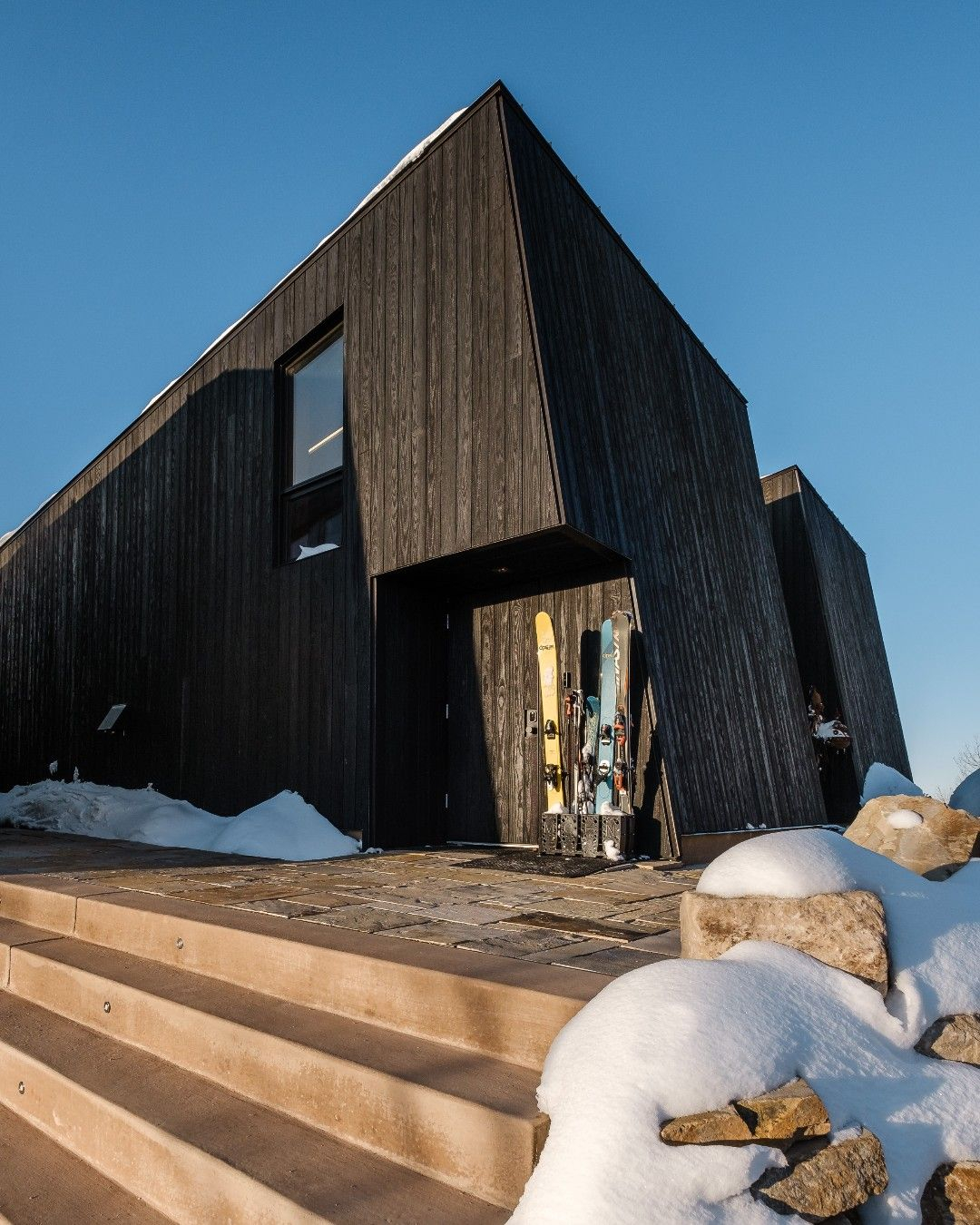
Properly produced charred timber systems create a carbonised surface layer that increases resistance to UV and surface erosion. The char layer slows weathering and can reduce visible variation over time.
Brushed and sealed variants may still require periodic oiling depending on exposure. Deep char systems may weather more naturally with limited surface intervention.
For a detailed overview of production methods and finish variations, see the Shou Sugi Ban charred timber guide.
Charred timber is not maintenance-free — but when detailed correctly, it can offer stable long-term appearance with predictable upkeep.

5. What to Avoid If You Want Low Maintenance
High-maintenance outcomes are often predictable at specification stage.
- Wide untreated softwood boards in exposed zones.
- Film-forming opaque paint systems on unstable substrates.
- No ventilated cavity behind boards.
- Standard plated fixings prone to corrosion.
- Ignoring end grain sealing.
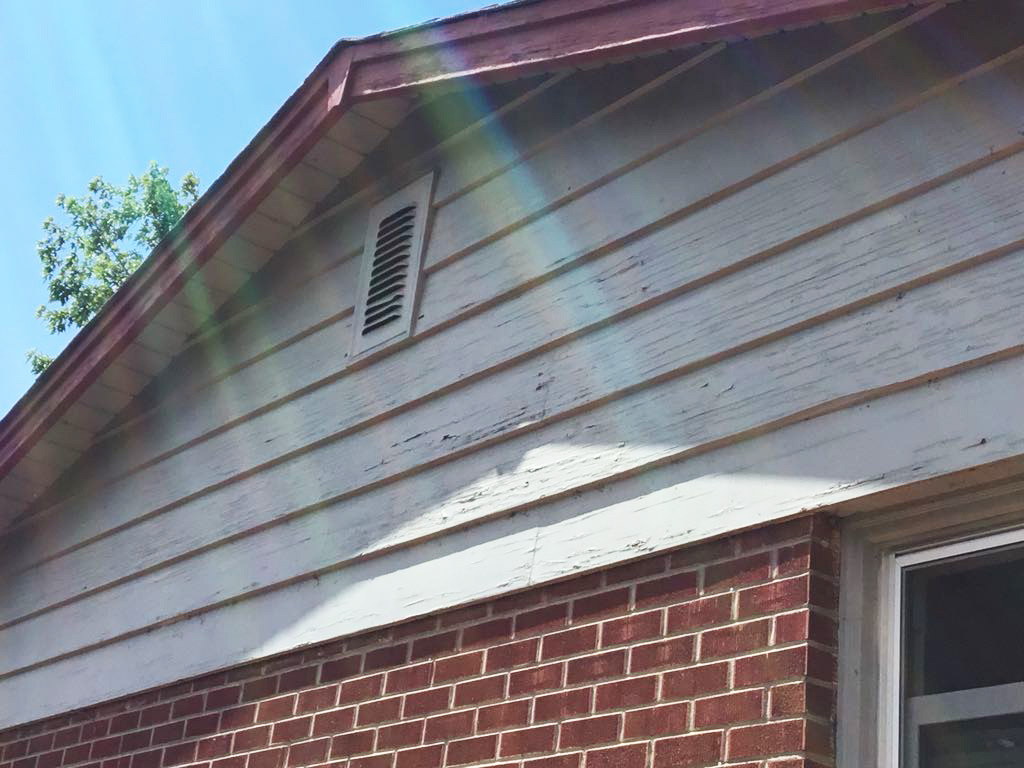
The most common mistake is using rigid paint systems. When timber moves, paint cracks. Once cracked, moisture penetrates beneath the film, leading to peeling and accelerated failure.
6. Finishing Strategy: Factory vs On-Site Treatment
Factory-Applied Coatings
Controlled factory application ensures even coverage and correct curing. For projects aiming to reduce early-stage maintenance, a factory coatings service can improve initial stability and finish longevity.
On-Site Treatment
Breathable penetrating systems allow timber to move without forcing surface cracking. An example of a flexible, breathable option is Remmers Wood Cream preservative, which penetrates rather than forming a rigid surface film.
The correct choice depends on exposure, aesthetic preference and access difficulty.

7. 20-Year Cost Modelling (Real UK Scenario)
Example: 140m² two-storey façade.
- Softwood recoat every 3 years = ~6 cycles in 18–20 years.
- ThermoWood recoat every 5 years = ~4 cycles.
- Average scaffold cost per cycle = £2,800.
Access cost alone:
- 6 cycles = £16,800
- 4 cycles = £11,200
Difference: £5,600 — before labour and materials are included.
This is why dimensional stability often outweighs small upfront material savings.
8. Best Low-Maintenance Option by Scenario
| Scenario | Best Option | Reason |
|---|---|---|
| South/West Facing | ThermoWood or Larch | Reduced movement under UV + moisture |
| Coastal Exposure | ThermoWood or Charred or Larch | Improved stability + surface resilience |
| Sheltered Budget Build | Treated Softwood |
Accept higher maintenance interval |

FAQs: Low-Maintenance Timber Cladding in the UK
1. Is there maintenance-free timber cladding?
No. All timber requires inspection and eventual treatment. Reduced-maintenance systems simply extend intervention intervals.
2. How often does ThermoWood need recoating?
Typically every 4–6 years depending on exposure and finish selection.
3. Does charred timber need oiling?
Brushed and sealed variants may require periodic oiling; deep char can weather naturally.
4. Is factory coating worth it?
It reduces early intervention risk and improves coating consistency.
5. What lasts longest in UK climate?
Dimensionally stable systems such as thermally modified timber typically outperform unstable softwood in exposed elevations.
6. Is larch low maintenance?
Larch offers good durability but can move more than thermally modified timber in high exposure.
7. Does board width matter?
Yes. Wider boards experience greater total movement across their face.
8. What is the biggest maintenance mistake?
Applying rigid paint to unstable timber without proper ventilation.
9. Can timber be left untreated?
Yes, but weathering will occur faster and appearance will change.
10. Does orientation affect lifespan?
South- and west-facing elevations weather more rapidly due to UV and prevailing wind.
Final Summary: Spend Once or Pay Repeatedly
Low-maintenance timber cladding is achieved through stability, ventilation, breathable finishing and corrosion-resistant detailing. The cheapest board rarely produces the lowest 20-year cost.
If reducing future disruption and intervention is the priority, dimensionally stable systems such as ThermoWood frequently offer stronger long-term value in UK conditions.