
- Nordic spruce: £20–£40 per m² materials — treat every 2–3 years
- Siberian larch: £35–£70 per m² materials — no treatment required
- ThermoWood: £55–£95 per m² materials — zero maintenance, 30-year BRE life
- Charred timber: £75–£130 per m² materials — zero maintenance, bold black finish
- Add £10–£15 per m² for battens, membrane, and fixings
- Add £25–£45 per m² for professional installation labour
- Scaffolding: £1,500–£3,500 per project — budget separately
Timber cladding cost per m² in the UK varies more than almost any other exterior material — from £20 per m² for budget Nordic spruce shiplap to £130 per m² for deep charred larch. The species, profile, fixing method, and whether you're looking at materials only or a fully installed price all affect the figure significantly. This 2026 guide gives you real prices across every species and profile, complete project costs for common building types, and a clear breakdown of what you're actually paying for.

Timber cladding is available across a wide price range depending on species and profile — from affordable Nordic spruce to premium ThermoWood and charred timber. The right choice depends on your budget, maintenance commitment, and service life expectations.
Timber Cladding Cost per m² — All Species (Materials Only)

ThermoWood weathered to silver-grey — at £55–£95 per m² it costs more than larch upfront but requires zero maintenance over its 30-year service life, making it cheaper on a whole-life cost basis for most projects.
All prices below are for materials only, supplied from UK stock with nationwide delivery. Prices reflect current April 2026 market rates — contact us for a live quotation on your specific species, profile, and quantity.
| Species | Profile | Cost per m² | Treatment | Service life |
|---|---|---|---|---|
| Nordic Spruce | Feather edge / shiplap | £20–£35 | Every 2–3 years | 15–25 yrs |
| Nordic Spruce | Shadow gap / loglap | £22–£42 | Every 2–3 years | 15–25 yrs |
| Siberian Larch | Feather edge / shiplap | £35–£55 | None required | 20–35 yrs |
| Siberian Larch | Shadow gap | £45–£65 | None required | 20–35 yrs |
| Siberian Larch | Rainscreen | £45–£65 | None required | 20–35 yrs |
| ThermoWood | Shiplap / feather edge | £55–£75 | None — ever | 25–40 yrs |
| ThermoWood | Shadow gap | £60–£80 | None — ever | 25–40 yrs |
| ThermoWood | Triple shadow gap | £75–£95 | None — ever | 25–40 yrs |
| Douglas Fir | Rainscreen / shadow gap | £45–£65 | Oil every 3–5 yrs | 20–30 yrs |
| Charred Timber | All profiles | £75–£130 | None — ever | 25–40 yrs |
Full System Cost — Materials + Battens + Fixings
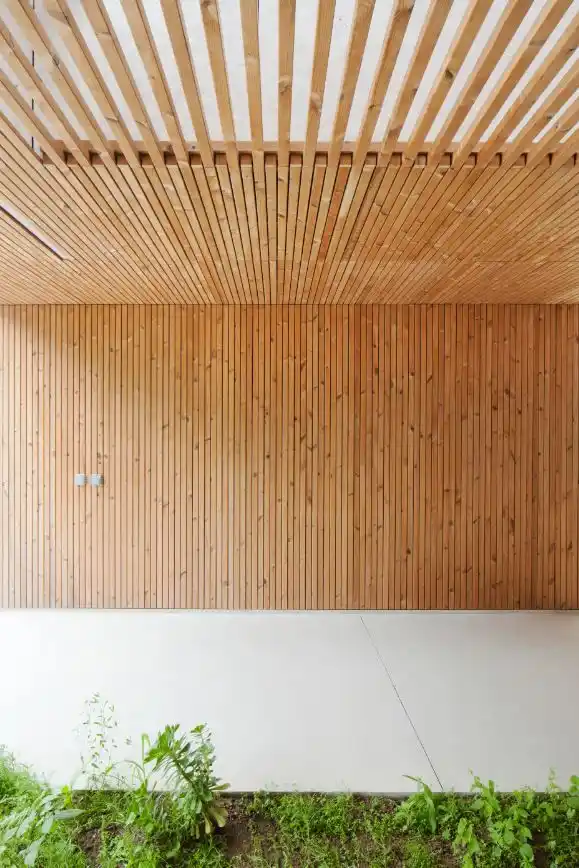
ThermoWood pine shadow gap cladding — the cladding board cost is only one element of the total material cost. Battens, breather membrane, and stainless steel fixings add approximately £10–£15 per m² to every project.
The material cost of the cladding boards is only part of what you need to buy. Every correctly installed timber cladding system also requires treated softwood battens, breather membrane, and A4 stainless steel fixings. These typically add £10–£15 per m² to the total material cost regardless of species.
| Cost element | Cost per m² | Notes |
|---|---|---|
| Cladding boards | £20–£130 | Depends on species and profile — see table above |
| Vertical counter battens | £3–£5 | 25x50mm treated softwood — creates ventilated cavity |
| Horizontal fixing battens | £3–£5 | 25x50mm treated softwood — cladding fixing substrate |
| Breather membrane | £2–£4 | Behind battens — essential for all exterior cladding |
| A4 stainless fixings | £2–£4 | Screws or ring-shank nails — never galvanised |
| Total materials system | £30–£148 | Boards + battens + membrane + fixings |
Installed Cost — Adding Labour and Scaffolding

Professional cladding installation — labour typically accounts for 30–40% of the total installed cost. Self-installation is a practical option for garden rooms and outbuildings and can save £25–£45 per m².
| Cost element | Typical cost | Notes |
|---|---|---|
| Installation labour | £25–£45 per m² | Simple profiles lower end — shadow gap upper end. London 20–30% premium |
| Scaffolding | £1,500–£3,500 total | Per project — not per m². Required above ground floor level |
| Fire treatment (if required) | +10–20% on boards | Euroclass B-s1,d0 — via fire treatment service |
| Factory coating (optional) | +15–25% on boards | Pre-applied colour coat — via factory coatings service |
Project Costs — What It Costs for Common Building Types

Shadow gap cladding on a garden room — a typical 4x3m garden room costs £1,750–£4,500 fully installed depending on species. Self-installation reduces this to £875–£2,375 in materials only.
Premium Profiles — Triple Shadow Gap and Rainscreen
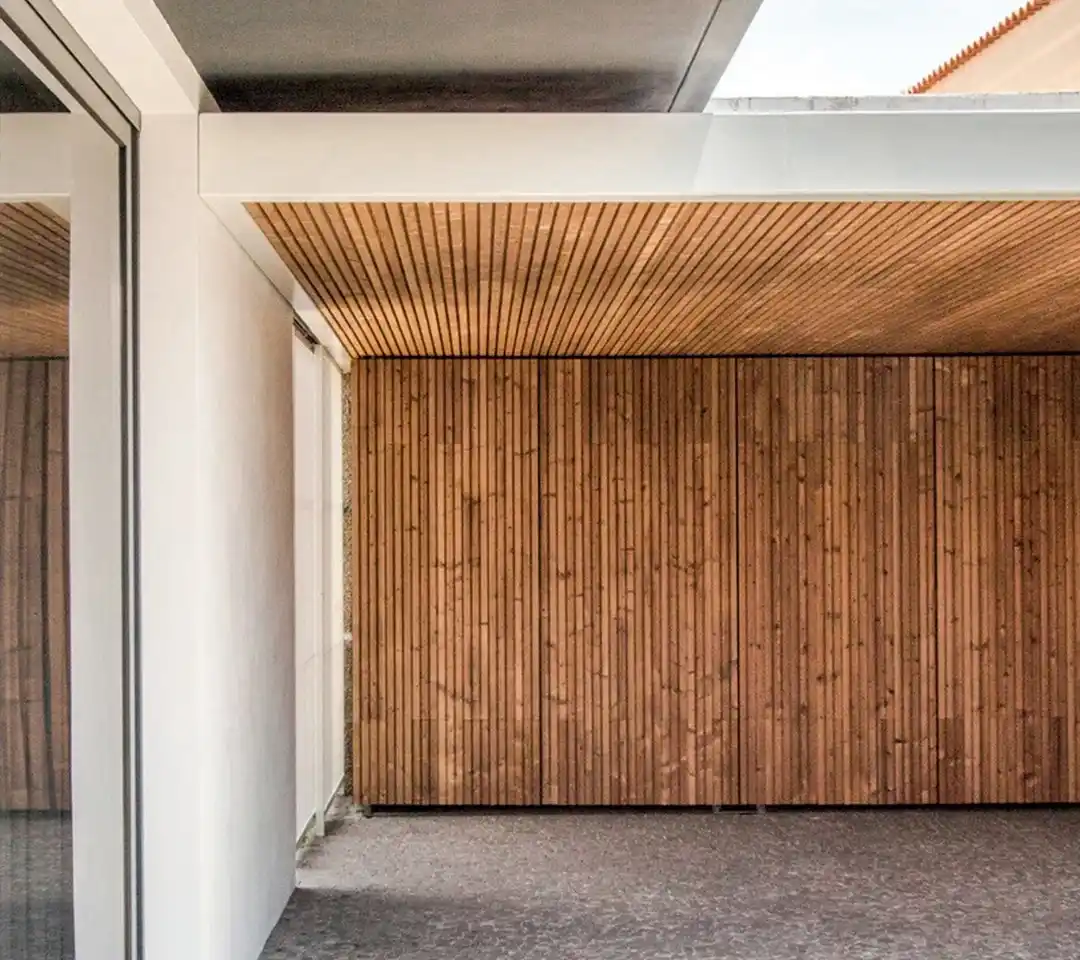
ThermoWood triple shadow gap — the most architectural profile in the range at £75–£95 per m². The three machined grooves create exceptional shadow depth and three-dimensional texture on the facade.
Profile choice is the biggest cost variable within any species. Within ThermoWood alone, switching from shiplap (£55–£75 per m²) to triple shadow gap (£75–£95 per m²) adds approximately £20 per m² to the material cost — on an 80m² house that is a difference of approximately £1,600 in materials. The right profile depends on the design intent of the building — shiplap and feather edge deliver all the performance benefits of the species at the lowest cost, while shadow gap and triple shadow gap profiles deliver an architectural result that is genuinely worth the premium on the right project.
Whole-Life Cost — Where the Real Value Lies
| Species | Upfront cost/m² | 30-yr maintenance/m² | 30-yr total/m² |
|---|---|---|---|
| Spruce — maintained | £20–£40 | £45–£75 | £65–£115 |
| Spruce — unmaintained | £20–£40 | £80–£150 (early replacement) | £100–£190 |
| Siberian larch | £35–£70 | £0–£15 (optional oiling) | £35–£85 |
| ThermoWood | £55–£95 | £0 | £55–£95 |
| Charred timber | £75–£130 | £0 | £75–£130 |
A maintained Nordic spruce installation costs approximately £65–£115 per m² over 30 years — comparable to or more expensive than Siberian larch at £35–£85 per m². An unmaintained spruce installation costs £100–£190 per m² once early replacement costs are factored in. For most UK projects, Siberian larch is the best value cladding when measured over the service life — and ThermoWood frequently justifies its premium through zero maintenance over 25–40 years. For species-specific cost guides see our ThermoWood cost guide and Siberian larch cost guide.
What Affects the Cost of Timber Cladding?
Species is the single biggest cost driver — from spruce at £20–£40 to charred timber at £75–£130. Profile is the second biggest — feather edge is cheapest in any species, triple shadow gap is the most expensive. Project size matters — larger orders attract better rates per m², and full pack orders avoid cut-pack premiums. Location affects labour cost — London and South East installers typically charge 20–30% more than Midlands and Northern rates. Fire treatment adds 10–20% to material cost where required — see our Approved Document B guide for when this is needed. Season affects labour availability — peak spring and summer slots command a premium.
Choose feather edge or shiplap over shadow gap to save £7–£20 per m². Use larch on primary elevations and spruce on rear or sheltered elevations to reduce total material cost by 20–30%. Order in full pack quantities to avoid cut-pack premiums. Self-install on garden rooms and outbuildings to save £25–£45 per m² in labour. Order in autumn or winter when installation slots are cheaper. See our cheapest timber cladding guide for full detail.
How much does timber cladding cost per m² in the UK?
Timber cladding costs £20–£35 per m² for Nordic spruce, £35–£70 for Siberian larch, £55–£95 for ThermoWood, and £75–£130 for charred timber — materials only. Add £10–£15 per m² for battens, membrane and fixings, and £25–£45 per m² for professional installation labour.
How much does it cost to clad a house with timber?
A typical UK semi-detached house (80m²) costs approximately £8,000–£18,000 fully installed in Siberian larch, or £12,000–£22,000 in ThermoWood. A detached house (130m²) costs approximately £14,000–£28,000 in larch or £18,000–£35,000 in ThermoWood. Figures include materials, battens, fixings, labour, and scaffolding.
How much does timber cladding cost for a garden room?
A typical 4x3m garden room (25m²) costs approximately £1,750–£3,250 fully installed in Siberian larch, or £2,500–£4,500 in ThermoWood. Self-installation reduces total cost to approximately £875–£2,375 in materials depending on species.
What is the cheapest timber cladding in the UK?
Nordic spruce feather edge at £20–£30 per m² is cheapest upfront. However Siberian larch at £35–£50 per m² is cheaper over 20 years as it needs no ongoing treatment. See our cheapest timber cladding guide for a full whole-life cost comparison.
What affects the cost of timber cladding in the UK?
The main factors are: species choice (spruce cheapest, charred most expensive); profile complexity (feather edge cheapest, triple shadow gap most expensive); project size (larger orders attract better rates); location (London and SE labour premium of 20–30%); and whether fire treatment or factory coating is required (adds 10–25% to material cost).
Get an Accurate Quote for Your Project
Send us your species, profile, and dimensions and we will calculate the exact material quantity and provide a precise price. We supply all timber cladding from UK stock with nationwide delivery in 7–14 days. FSC and PEFC certified.