
- What it is: An interlocking timber profile — each board has a tongue on one edge fitting into the groove of the next, creating a continuous flush surface with a V-joint detail at each board junction.
- vs shadow gap: T&G produces a flush, continuous surface. Shadow gap produces defined recessed lines between boards. T&G is more traditional; shadow gap is the dominant contemporary exterior profile.
- Species available: ThermoWood, Siberian larch, Nordic spruce, and charred timber — all from UK stock in 7–14 days.
- Costs: Nordic spruce T&G £20–£35/m². Siberian larch T&G £35–£60/m². ThermoWood T&G £50–£75/m². Charred timber T&G £75–£120/m².
- Uses: Exterior cladding (vertical and horizontal), garden buildings, sheds, interior timber wall panelling, and sauna wall and ceiling linings.
- Sauna use: T&G is the standard profile for sauna interiors — use ThermoWood pine, alder, or Nordic spruce only. Avoid Siberian larch inside the sauna.
Tongue and groove cladding is one of the most versatile timber profiles available — equally at home on a contemporary exterior elevation, a traditional agricultural building, a garden room, or a sauna interior. Its interlocking profile creates a continuous flush surface with a V-joint detail at each board junction, making it visually cleaner and more uniform than open-joint profiles while remaining quick and straightforward to install. This buyers guide covers every available species in tongue and groove from UK stock — ThermoWood, Siberian larch, Nordic spruce, and charred timber — with costs, uses, and how to choose the right one for your project.

ThermoWood tongue and groove V-joint boards — thermally modified pine, Durability Class 2, zero maintenance, 30-year BRE endorsed service life. The V-joint detail is formed where the chamfered edges of adjacent boards meet, creating a subtle shadow line across the continuous flush surface.
What Is Tongue and Groove Cladding?
Tongue and groove is a machined timber profile in which a projecting tongue runs along one edge of each board, and a corresponding groove is machined into the opposite edge. When boards are installed, the tongue of each board is inserted into the groove of the adjacent board, locking them together into a continuous, interlocking surface. The result is a flush face with no visible gap between boards — unlike shadow gap or open-joint rainscreen profiles which have deliberate spaces between boards.
The V-joint detail visible on the face of a T&G installation is formed by chamfers machined onto the face edges of each board. When two boards are joined, the chamfers meet to form a V-shaped groove that defines each board's width visually while maintaining the overall flush surface. This V-joint is the characteristic detail of the profile — it creates subtle horizontal or vertical rhythm without the strong shadow lines of a shadow gap profile.
| Profile | Face appearance | Gap between boards | Best use |
|---|---|---|---|
| Tongue & Groove (V-joint) | Flush with V-joint detail | None — interlocking | Traditional and contemporary exterior, interior, sauna |
| Shadow Gap | Flush with recessed shadow groove | Defined shadow recess | Contemporary exterior — most specified profile |
| Shiplap | Slightly overlapping rebate | Hidden rebate overlap | Traditional exterior, sheds, garden buildings |
| Rainscreen | Boards with visible open joints | Open — 10–25mm gap | Contemporary exterior, maximum ventilation |
ThermoWood Tongue and Groove — Zero Maintenance, 30-Year Life
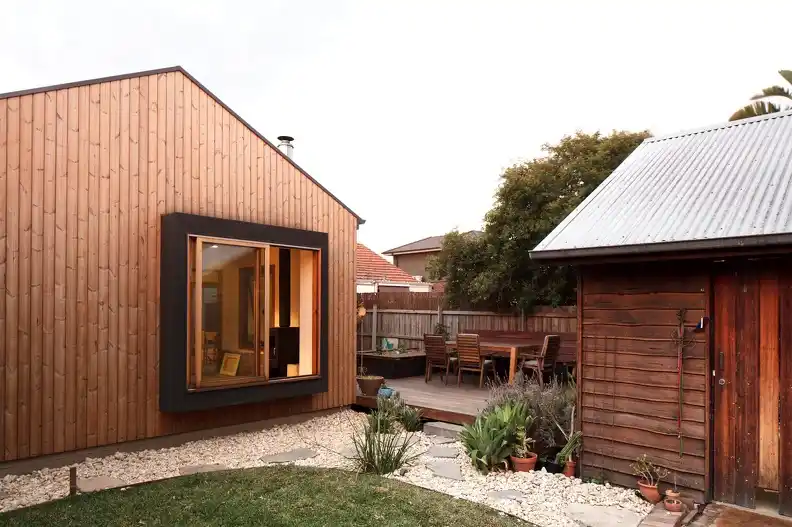
ThermoWood tongue and groove cladding installed — the warm honey-brown of fresh ThermoWood gradually weathers to silver-grey over 12–24 months without any treatment. The V-joint detail creates a clean, consistent rhythm across the elevation.

ThermoWood T&G close-up — the V-joint chamfer detail and the characteristic rich honey-brown colour of thermally modified pine. The surface has a slightly darker, denser appearance than standard softwood — a result of the modification process that also gives ThermoWood its exceptional durability.
Thermally modified pine, Durability Class 2. Zero maintenance throughout 30-year BRE endorsed service life. Suitable for both exterior cladding and sauna interiors — resin removed by modification process. Horizontal or vertical installation.
ThermoWood tongue and groove in 19x140mm is the most specified T&G profile for contemporary exterior cladding applications. Its 19mm depth gives good dimensional stability across the width, and the 140mm face width produces a clean, wide-board aesthetic with fewer V-joint lines per metre than narrower profiles. For full ThermoWood technical data see our ThermoWood technical guide.
Siberian Larch Tongue and Groove — Naturally Durable, No Treatment
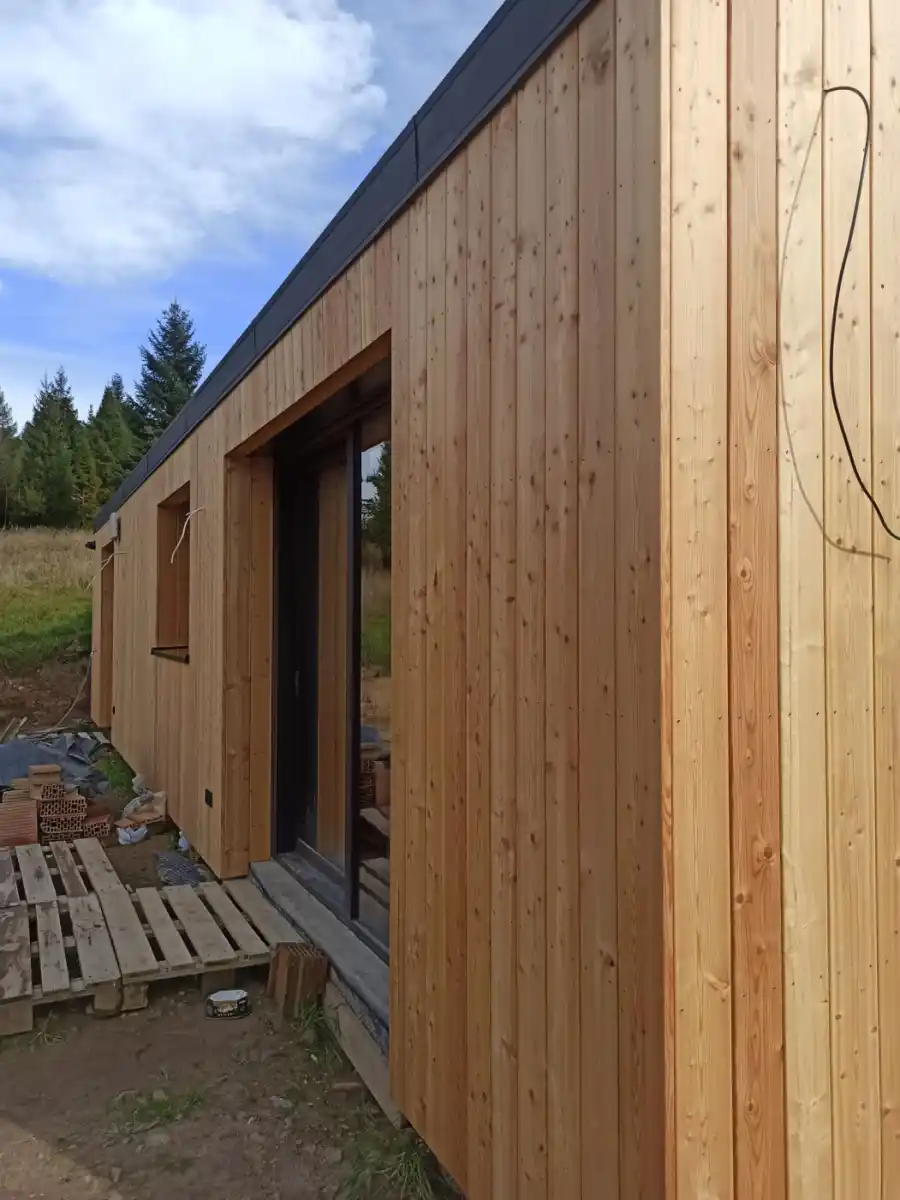
Siberian larch tongue and groove cladding — Durability Class 3, no preservative treatment required. The warm honey-gold tone weathers to silver-grey over 18–24 months without any treatment obligation.

Siberian larch T&G boards ready for delivery — the consistent grain and colour of quality Siberian larch is evident across the full pallet. All boards are kiln dried for dimensional stability and FSC/PEFC certified.
Durability Class 3 — no preservative treatment required throughout 20–35 year service life. Warm honey-gold, weathers to silver-grey. Not suitable for sauna interiors due to resin content. Excellent for exterior cladding on extensions, garden rooms, and sheds.
Nordic Spruce Tongue and Groove — Budget Exterior and Sauna Interior
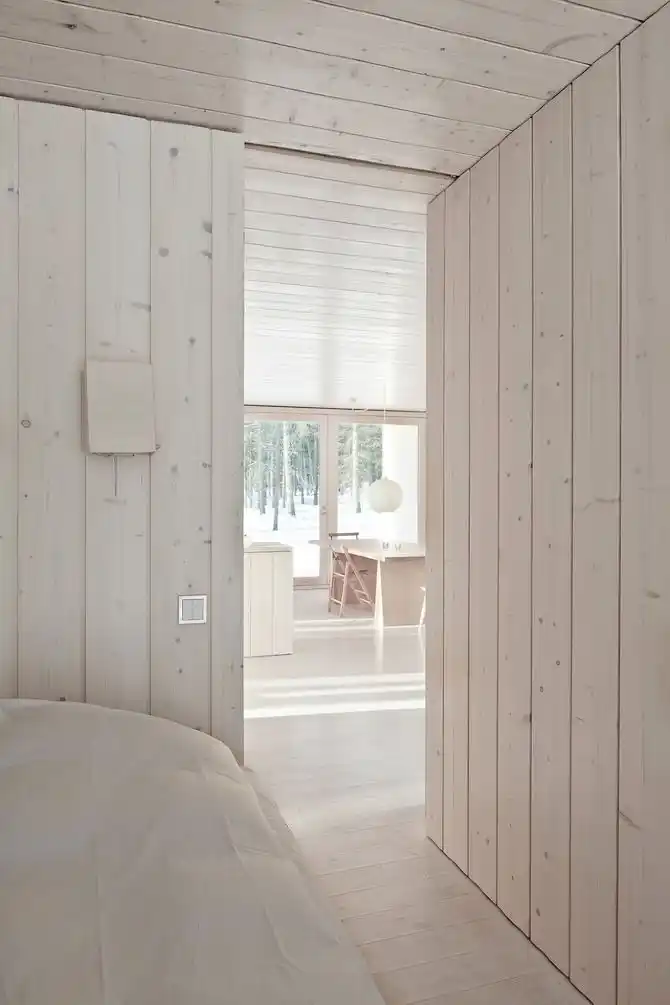
Nordic spruce tongue and groove — the lightest and most affordable T&G species available. For exterior use, treatment every 2–3 years is essential. For sauna interior use, it is an excellent choice — light colour, low thermal conductivity, and minimal resin.
Most affordable T&G option. For exterior use, treat every 2–3 years with quality preservative stain — Durability Class 4–5. For sauna interior walls, ceilings, and bench use — excellent choice, low thermal conductivity, light colour.
Nordic spruce is Durability Class 4–5 and will begin showing biological decay within 3–5 years in above-ground exterior conditions without preservative treatment. Apply Remmers HK Stain to all four faces and both ends before installation, and re-treat every 2–3 years. For sauna interiors this does not apply — sauna use is a protected internal environment.
Deep Charred Tongue and Groove — Bold, Black, Zero Maintenance
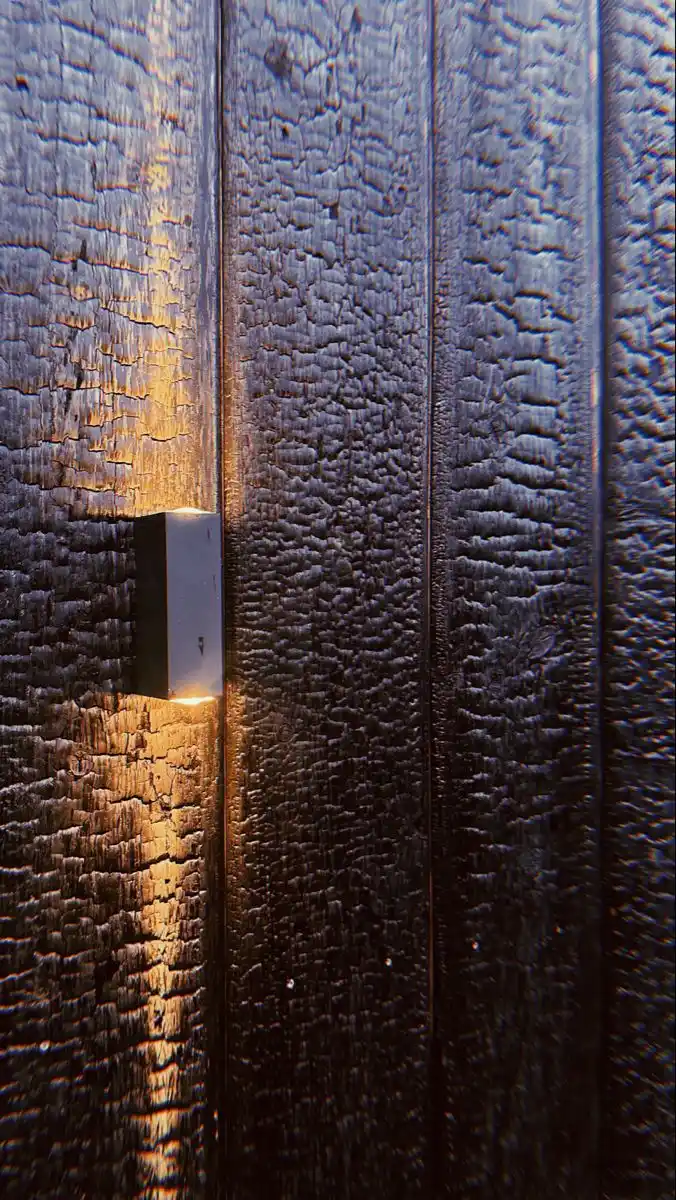
Deep charred tongue and groove cladding — the Shou Sugi Ban charring technique applied to T&G boards produces a smooth, even black finish with the characteristic V-joint detail still visible in the surface. Zero maintenance, 25–40 year service life depending on base species.
Shou Sugi Ban technique applied to T&G profile — deep black finish, zero maintenance, 25–40 year service life on larch base. The T&G profile with charred finish produces a clean, contemporary black wall that is visually distinctive from open-joint or shadow gap charred profiles.
Tongue and Groove Cladding — Uses and Applications
| Application | Best species | Orientation | Notes |
|---|---|---|---|
| Exterior house extension | ThermoWood or Larch | Vertical or horizontal | Naturally durable — no treatment obligation |
| Garden room / garden office | ThermoWood or Larch | Vertical or horizontal | Consistent with contemporary garden room aesthetic |
| Garden shed | Nordic Spruce or Larch | Horizontal typical | Spruce requires treatment; larch no treatment needed |
| Sauna walls & ceiling | ThermoWood pine, Alder, Spruce | Vertical standard | Avoid larch — resinous inside sauna |
| Interior wall panelling | Any species | Vertical or horizontal | Interior — durability class not relevant |
| Bold black exterior | Charred T&G | Vertical or horizontal | Zero maintenance, dramatic contemporary statement |
Installing Tongue and Groove Cladding — Key Points
T&G cladding installs quickly compared to other profiles because the interlocking joint self-aligns each board. The key installation principles are:
- Secret fixing through the tongue — fix through the tongue of each board at an angle into the batten behind, so the fixing is concealed by the groove of the next board. This produces a clean face with no visible fixings. Use A4 stainless steel ring-shank nails or purpose-made T&G secret fixing clips
- Leave an expansion gap — T&G profiles should not be driven fully home in humid conditions. Leave a 1–2mm gap at the tongue/groove junction to allow for seasonal expansion without surface buckling
- Ventilated cavity behind — as with all exterior cladding, install over a ventilated cavity of minimum 25mm created by counter battens over a breather membrane. This applies even though the T&G profile has no visible gaps between boards — back ventilation is essential
- Pre-treat all faces — for spruce, apply preservative to all four faces and both ends before installation. For naturally durable species, seal end grain at cut ends on site. See our timber cladding oiling guide for product recommendations
- Vertical installation sheds water better — for exterior T&G, vertical installation is preferable as it sheds water directly down the face. Horizontal T&G requires careful attention to the groove direction to ensure water does not sit in the joint
Choose tongue and groove if: you want a flush, continuous surface with subtle V-joint detail; the application includes sauna interiors or interior wall panelling where a gap-free surface is preferred; or a traditional or rural building character is appropriate. Choose shadow gap if: you want strong defined horizontal or vertical lines and the bold architectural shadow depth that contemporary architects most commonly specify. Both profiles are available in all species from UK stock — the choice is primarily aesthetic and architectural. Browse our full timber cladding profiles guide for the complete comparison.
What is tongue and groove cladding?
Tongue and groove cladding is a timber profile in which each board has a projecting tongue on one edge and a corresponding groove on the other. The tongue fits into the groove of the adjacent board creating a continuous, interlocking flush surface with a V-joint detail at each board junction. Used for exterior cladding, interior wall panelling, and sauna linings.
What is the difference between tongue and groove and shadow gap cladding?
Tongue and groove produces a flush surface with a narrow V-joint detail — no deliberate gap between boards. Shadow gap has a machined rebate creating a defined recessed groove between boards with strong shadow lines. T&G is more traditional; shadow gap is the dominant contemporary exterior profile for architect-designed extensions.
How much does tongue and groove cladding cost in the UK?
Nordic spruce T&G £20–£35 per m². Siberian larch T&G £35–£60 per m². ThermoWood T&G £50–£75 per m². Charred timber T&G £75–£120 per m². All available from UK stock with nationwide delivery in 7–14 days.
Can tongue and groove cladding be used externally in the UK?
Yes — T&G cladding is widely used for exterior cladding in the UK. For exterior use, the species must be naturally durable (Siberian larch, Douglas Fir) or modified (ThermoWood, charred timber), or untreated softwood (Nordic spruce) must be treated every 2–3 years. Install over a ventilated cavity with breather membrane as for all exterior timber cladding.
Is tongue and groove cladding suitable for a sauna?
Yes — T&G is the standard profile for sauna interior wall and ceiling linings. For sauna use, the species must be resin-free: ThermoWood pine, alder, Nordic spruce, or aspen. Avoid Siberian larch inside saunas — its resin content causes unpleasant surface deposits at high sauna temperatures.
Tongue and Groove Cladding — All Species from UK Stock
We supply tongue and groove V-joint cladding in ThermoWood, Siberian larch, Nordic spruce, and charred timber from UK stock. FSC and PEFC certified. All profiles available for both exterior cladding and sauna interior applications. Nationwide delivery in 7–14 days — contact our team for a precise quantity and quote.