

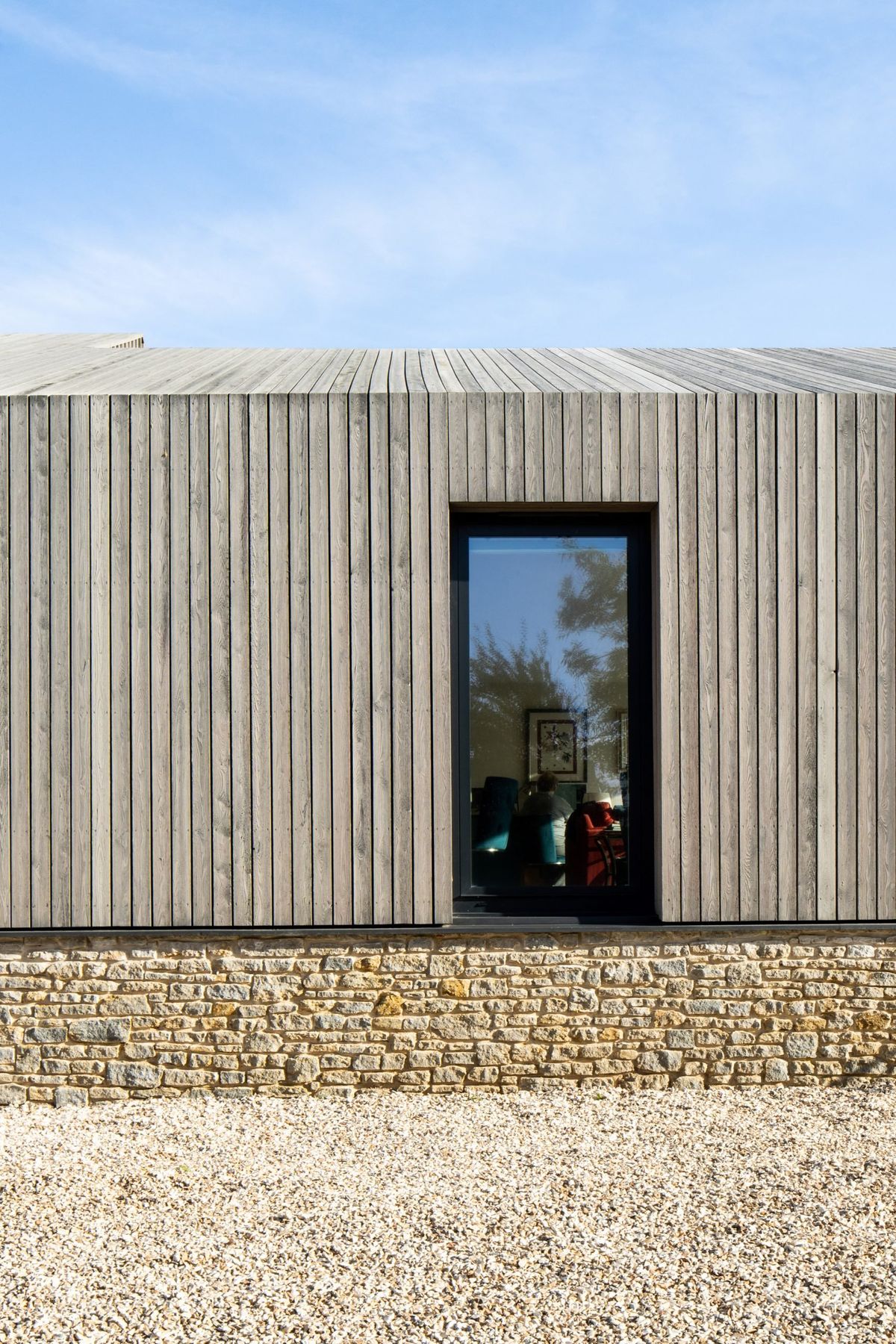
Timber cladding remains one of the most flexible façade materials available to architects in the UK, but it only performs well when it is specified as a complete external wall system rather than treated as a decorative outer skin. The visual appeal is obvious. The technical discipline behind a successful timber façade is less obvious. Movement, ventilation, moisture risk, cavity design, fire classification, fixing strategy, warranty requirements, maintenance planning and species behaviour all sit behind what, on the finished building, looks deceptively simple.
For a broader understanding of system types, material options and design approaches, see our ultimate guide to timber cladding UK, which covers full façade strategies used across residential and commercial projects.
That is the point where many projects go wrong. Timber itself is rarely the real problem. Failures usually come from under-designed cavities, poorly judged board widths, incorrect fixings, weak base details, bad ventilation continuity, or unrealistic expectations about weathering and maintenance. Architects who specify timber well tend to approach it with the same rigour they would apply to a rainscreen panel system: as a build-up, with performance logic, regulatory context and clear detailing priorities. Architects who specify it badly often focus too early on colour, profile and moodboard references and too late on how the façade will actually behave in UK conditions.
For that reason, the correct starting point is not the board. It is compliance and system logic. Any façade strategy should sit alongside a clear understanding of timber cladding & UK building regulations, because material choice only makes sense once height, building type, fire pathway, cavity arrangement and external wall constraints are understood. From there, the discussion becomes far more useful: which timber is stable enough, which species gives the right weathering pattern, which system detail reduces maintenance, and which option is most defensible from an architectural and commercial point of view.
This guide is written for architects, specifiers and technically minded clients who need more than a generic “best cladding” overview. It looks at timber cladding from the point of view of real specification. That means discussing movement with numbers, cavities with dimensions, fixing logic with practical rules, compliance with the right distinctions, and material selection with realistic trade-offs rather than marketing language.
What Actually Defines the “Best” Timber Cladding for Architects?
The best timber cladding is never simply the most expensive board or the species with the strongest visual appeal. In architectural specification, “best” means the material and system combination that performs most reliably under the project’s actual constraints. On one project, that may mean maximum dimensional stability because the façade relies on tight vertical lines and crisp shadow joints. On another, it may mean a naturally durable timber that accepts a more varied grain pattern because the budget is tighter and the design language is less rigid. On another, the project may live or die on fire strategy, warranty acceptability and the ability to prove a compliant external wall route.
In practice, architects tend to balance five core criteria. The first is durability: how well the timber resists moisture-related decay, fungal risk and long-term exposure. The second is stability: how much the board moves as moisture content changes through the year. The third is fire performance: not only the timber’s classification, but the viability of the whole façade build-up. The fourth is maintenance profile: how often the client will need to intervene if the design intent depends on retained colour or a controlled finish. The fifth is visual behaviour: knot level, grain consistency, colour variation, weathering pattern and how forgiving the timber is when viewed across a large façade.
The mistake is assuming those criteria all point to one obvious answer. They do not. A highly stable modified timber can be the best technical answer for a sharply detailed contemporary façade, while a natural larch may be the best commercial and aesthetic answer for a lower-rise residential scheme where slight movement and tonal variation are acceptable. The right answer is contextual. Good architectural specification is really about aligning timber behaviour with the design intent and regulatory envelope, not chasing an abstract “premium” label.
Why Timber Cladding Often Fails in the UK
The UK climate is not forgiving to casual timber specification. Frequent rain, regular humidity cycling, limited drying periods in shaded areas, and exposure to wind-driven moisture all create conditions where boards move, coatings fail, edges stay damp and details are tested constantly. The biggest misconception is that a durable timber will solve everything on its own. It will not. Even an excellent species will underperform if it is trapped against a wet substrate, fixed too tightly, denied ventilation, or detailed so badly that water is directed into its most vulnerable junctions.
Most real failures can be traced back to a short list of repeated mistakes. The base detail is often one of them: boards carried too close to finished ground level, splashback ignored, or the lower cavity choked off with debris or inappropriate closures. Window zones are another: poor sill projection, no proper drainage path, weak reveal sequencing or membranes left exposed to UV where they were never designed to be seen. Overly wide boards also create predictable problems. Designers sometimes favour broad board faces for visual simplicity, but wider boards increase movement risk, especially in variable exposure. Then there is the fixing issue: incorrect stainless grade, poor edge distances, insufficient fixing ratio to board width, or face-fixed boards over-tightened so the timber is prevented from moving naturally.
These are not exotic technical failures. They are specification and detailing failures. That is why the best timber cladding discussion needs to move past species marketing quickly and into system thinking.
Timber Movement: The Core Engineering Constraint
Timber is hygroscopic. It absorbs and releases moisture in response to its environment, and that means it changes dimension. This is the basic fact that sits behind nearly every good or bad cladding decision. In external UK use, timber may be installed around 14% to 16% moisture content, then cycle upward during wetter periods and downward again in warmer, drier conditions. The exact movement pattern depends on species, modification process, orientation, board width, profile and exposure, but movement is not a possibility. It is a certainty.
What matters is how much movement a timber shows and whether the design allows for it. Movement primarily occurs across the grain rather than along the length, which is why board width matters so much. The wider the board, the more visible the consequence of swelling and shrinkage. Tangential movement is typically the most relevant metric because it reflects the greater dimension change across the growth rings.
| Material | Typical Tangential Movement | Typical Max Practical Board Width | Stability Profile |
|---|---|---|---|
| Thermally modified softwood | Approx. 4–5% | Up to 140mm often workable | High stability |
| Siberian larch | Approx. 6–8% | Usually 120–145mm with more care | Moderate stability |
| Untreated softwood in general façade use | Varies widely | Narrower widths generally safer | Project-dependent |

These figures are only part of the story, but they explain why stable modified timber is so attractive in design-led architecture. A façade with tight vertical alignment, narrow expressed joints and prominent long elevations gives movement nowhere to hide. Slight cupping or variable shadow lines that may be acceptable on a rustic garden building become obvious defects on a refined contemporary house. In that setting, stability is not a luxury. It is central to whether the design can survive the first few seasons intact.
Practical movement rules matter. Boards should not be specified without allowance for expansion gaps appropriate to the profile. As a working guide, 2–4mm allowance is often required depending on profile logic and moisture condition at installation. Wider boards generally require double fixing. End grain deserves attention because it acts like a straw for moisture. And board layout should reflect elevation exposure rather than treating every face of the building identically. The south-west elevation of an exposed site is not behaving like the sheltered inner courtyard wall.
Profile selection also plays a major role in how movement is managed in practice. Certain profiles allow better tolerance and drainage, which is covered in our timber cladding profiles guide UK.
Ventilated Rainscreen Design: Timber Must Be Allowed to Dry
If movement is the core material behaviour, ventilation is the core system requirement. Timber cladding in the UK should be thought of as a drained and back-ventilated rainscreen, not a sealed outer lining. The cladding board is expected to get wet. The system succeeds because it dries effectively and prevents prolonged moisture retention behind the face.
That means the cavity is not optional. A typical minimum ventilated cavity of 25mm may be workable in standard conditions, but higher exposure or more demanding vertical arrangements often justify 38mm to 50mm. More important than the nominal number is the continuity of the airflow path. A cavity dimension that looks compliant on paper can still fail in reality if blocked by poorly considered cavity barriers, compressed membrane drape, badly set window details or insect mesh that acts more like a plug than a protector.
| Layer | Typical Function | Specification Note |
|---|---|---|
| Timber cladding board | Primary weathering face | Profile, width and species directly affect movement and maintenance |
| Ventilated cavity | Drainage and drying zone | 25mm minimum typical; 38–50mm often preferred in higher exposure |
| Primary battens | Support and cavity formation | Treated battens, commonly C16/C24, Use Class 3 for external wall application |
| Counter battens | Airflow continuity for vertical cladding | Required where primary batten direction would otherwise stop drainage/ventilation |
| Breather membrane | Secondary weather protection | UV resistance matters where any exposure risk exists through open joints |
| Sheathing / substrate / insulation | Structural and thermal support | Must align with fire and moisture strategy for full wall build-up |

Correct detailing at junctions such as windows, corners and base connections is critical to system performance. These details are explored in our timber cladding detail drawings UK, which illustrates compliant façade solutions.
Ventilation openings at top and bottom should be sized so airflow is real rather than nominal. A useful benchmark often cited in façade detailing is a minimum equivalent opening of 5000mm² per metre run, but good detailing is about maintaining performance in practice. Base details should stop vermin and insect ingress without strangling the cavity. Top terminations should avoid trapping warm moist air. Vertical cladding needs counter battens so water and air are not blocked by the support arrangement itself. These points are ordinary, but they are where long-term performance is won or lost.
Thermally Modified Timber: Why Architects Specify It
For projects that depend on stable lines, reduced movement and predictable weathering behaviour, ThermoWood cladding is often the most defensible specification route. The thermal modification process changes the timber’s cellular structure by heating it in a controlled environment, which reduces its ability to absorb moisture. The practical outcome is improved dimensional stability and lower movement risk compared with many untreated softwoods.
That stability matters more than most clients initially realise. On a façade with long uninterrupted elevations, expressed vertical board rhythms, tight trims and sharp corners, reduced movement means reduced risk of opening joints, uneven shadow lines, board face distortion and coating stress. In simple terms, the façade keeps looking more like the drawings for longer. That is the real value of thermally modified timber in architecture. It is not just that it is “premium”. It is that it supports design precision.
Thermally modified timber also performs well where exposure is more demanding. That does not make it invincible, and it still needs full system detailing, but it is typically a safer choice where the architect wants low visual drama from the material itself. It is also helpful where the design intent involves controlled silvering rather than painted colour retention, because the client is less likely to experience the stress of movement-driven finish problems.
There are, of course, trade-offs. Modified timber can cost more. Some clients may prefer the livelier natural character of larch. And thermally modified boards still weather if left untreated. They are not “maintenance free” in the literal sense. The more accurate statement is that they tend to reduce one of the biggest maintenance triggers: substrate movement beneath the chosen finish or detail strategy.
Siberian Larch: Why It Still Remains a Strong Architectural Material
Siberian Larch cladding remains one of the most commonly specified cladding timbers in the UK because it offers a strong balance of natural durability, recognisable architectural character and more approachable cost. It gives architects a material that feels honest and substantial, with a grain pattern and tonal variation many designers actively want. On the right project, that slight irregularity is a strength, not a defect.
Where larch requires more care is movement and appearance management. It is not as dimensionally stable as thermally modified timber, so detailing decisions matter more. Narrower board widths, realistic joint expectations, appropriate fixing logic and careful consideration of exposure all become more important. Resin bleed can also occur, particularly in warmer conditions or if the material has not been selected and handled with adequate attention to grade and project context.
That does not make larch a weak specification. It means it suits projects where natural timber character is welcome and the design is robust enough to tolerate the material behaving like timber rather than like an engineered panel. On a residential scheme, extension, low-rise development or naturalistic design language, larch can be an excellent answer. The key is that the architect should choose it intentionally, not as a budget substitute for a more stable façade concept that actually required a different material all along.
Material Selection Logic: When to Choose Which Timber
Material choice becomes much clearer when framed as a decision problem rather than a product comparison. Architects usually get to the right answer faster by asking what the façade needs from the timber, rather than asking which species is globally “best”.
| Project Scenario | More Suitable Option | Why |
|---|---|---|
| Minimalist contemporary façade with tight expressed lines | Thermally modified timber | Lower movement, better dimensional consistency, cleaner long-term visual outcome |
| Budget-sensitive low-rise residential project | Siberian larch | Strong cost-to-performance balance if detailing allows for natural timber behaviour |
| High-exposure coastal or elevated site | Thermally modified timber | Better stability under moisture cycling, reduced risk of distortion |
| Traditional or more natural design language | Siberian larch | Natural variation and grain character may support the architecture better |
| Client wants the lowest risk of visible movement | Thermally modified timber | More predictable façade behaviour over seasonal cycling |
This decision logic matters commercially as well as technically. Many disappointing cladding outcomes begin with a mismatch between the visual ambition of the design and the behaviour of the chosen timber. If the façade demands precision, specify for precision. If the design celebrates natural variation and weathering, then specify a timber that can deliver that character honestly.
UK Fire Compliance: The Point Architects Cannot Treat Lightly
Timber cladding specification now lives under much stricter scrutiny in the UK than it did historically, especially on higher and more sensitive building types. This is why the fire question should be addressed early rather than layered in later as a treatment conversation. The architect needs to understand the difference between an attractive timber façade idea and a façade strategy that can actually pass through the project’s regulatory and warranty environment.
At a simplified level, Approved Document B drives the external wall fire discussion, but the practical issue is broader than a single regulation clause. The building height matters. The building type matters. Whether the project counts as a relevant building matters. And the difference between a material’s reaction-to-fire classification and a full façade system’s compliance logic matters.
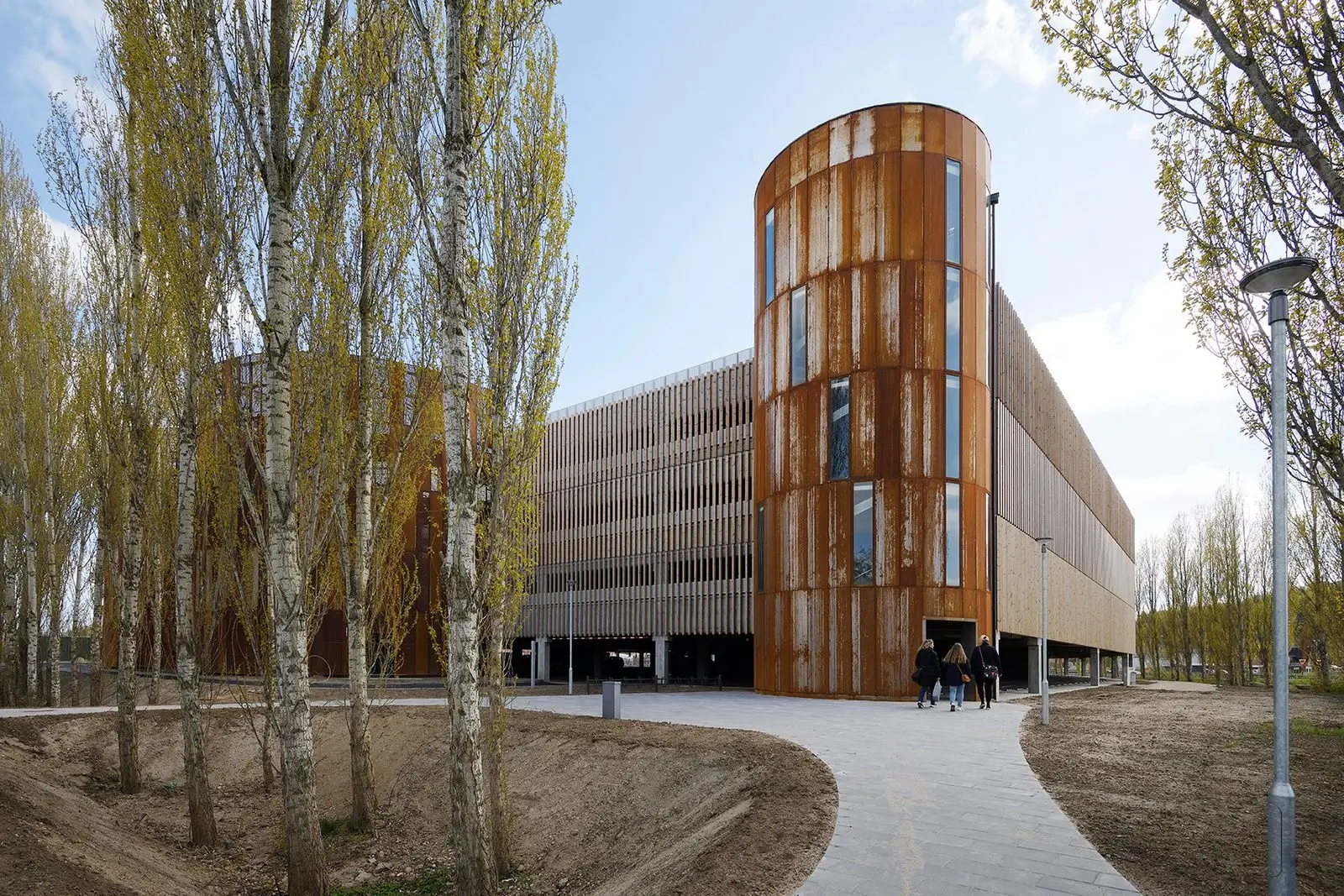
“Relevant buildings” commonly include residential buildings, care homes, student accommodation and similar uses where the consequences of façade fire spread are treated more severely. Height thresholds matter because fire spread risk through the external wall becomes a more serious life-safety issue as buildings get taller and evacuation becomes more complex. In broad practical terms, buildings below 11m usually allow more flexibility; the 11m to 18m range demands more scrutiny and often pushes timber toward treated compliant solutions; and above 18m, non-combustible external wall routes often become the dominant requirement.
| Building Context | Typical Practical Position | Architectural Implication |
|---|---|---|
| Below 11m | Greater flexibility subject to use, design and approval route | Timber may remain viable more often |
| 11m–18m | Fire performance becomes a major decision driver | Treated or specially designed timber systems may be needed |
| Above 18m | Non-combustible requirements typically dominate | Timber cladding may not be viable as the façade finish route |
One persistent area of confusion is the difference between older Class 0 language and Euroclass language. Class 0 is part of an older UK framework that still appears in industry conversation, but modern specification practice is typically far more concerned with Euroclass reaction-to-fire ratings such as B-s1,d0. Architects should be careful not to rely on outdated shorthand or assume that a familiar historic label answers the current compliance question.
There is also a critical difference between reaction to fire and resistance to fire. Timber cladding usually sits within the reaction-to-fire conversation: how the external material contributes to flame spread, smoke production and droplets. Fire resistance is about how long an element or assembly withstands fire structurally or compartmentally. Confusing the two leads to bad decisions and bad discussions with contractors.
Where timber remains viable and the project requires an enhanced reaction-to-fire route, fire rated cladding systems become the relevant conversation. Even then, the board cannot be assessed in isolation. The full wall build-up matters: battens, membrane, insulation, cavity arrangement, cavity barriers, substrate and detailing sequence all form part of the external wall risk profile.
Cavity Barriers, Open State Requirements and the System-Level Fire Problem
One of the trickiest areas in timber cladding design is the relationship between cavity ventilation and cavity barriers. Timber needs drying airflow. Fire strategy needs interruption of concealed fire spread. Those two needs sit in tension. If the façade is ventilated properly but the cavity barrier strategy is handled poorly, compliance can fail. If cavity barriers are inserted without understanding airflow requirements, moisture risk can increase and the façade can underperform physically even if the paperwork looks tidy.
That is why cavity barrier design should not be treated as an afterthought delegated entirely late in the process. Barriers are commonly required at floor levels, around openings and at key junctions. The exact approach depends on project type and fire strategy, but the design must account for both the fire role and the ventilation continuity of the façade. Open-state cavity barriers or carefully coordinated proprietary solutions are often central to resolving that tension properly.
In practical terms, architects should not think “timber cladding plus generic cavity detail”. They should think “timber rainscreen build-up with a fire strategy that preserves or deliberately manages the ventilation route while still controlling spread.” That is a more accurate description of the real design challenge.
Fixings, Screw Logic and Why Cheap Hardware Causes Expensive Problems
Fixings are one of the most underappreciated specification layers in timber cladding. Architects and clients often focus on board species while assuming the screw choice is a contractor detail of little importance. In reality, poor hardware selection can stain the façade, split the boards, constrain movement and reduce lifespan dramatically.
As a rule, stainless steel fixings are the correct starting point. A2 stainless is commonly suitable for standard conditions. A4 stainless is usually the safer choice in coastal or highly exposed environments where corrosion pressure is greater. Galvanised hardware is frequently a false economy on external timber façades. Tannin reactions, staining and corrosion risk do not make it a serious long-term solution for quality architectural cladding.
| Board Width | Typical Fixing Logic | Typical Batten Centres |
|---|---|---|
| Under 120mm | Single fixing may be appropriate depending on profile/system | Often 400–600mm |
| 120mm and above | Double fixing commonly preferred | Often 400–600mm |
| Wide or high-movement boards | More conservative fixing approach advisable | Closer engineering review recommended |
A practical rule for screw length is around 2 to 2.5 times the board thickness, but that must still align with substrate conditions and system testing logic where relevant. Edge distance matters. Over-tightening matters. Pilot drilling may matter depending on timber density, profile and edge condition. Again, these are not glamorous decisions, but they are exactly the kind of decisions that separate durable façades from façades that begin to telegraph problems within a short time.
Coastal and High-Exposure Projects: The Façade Has to Be Specified Harder
Architects routinely underestimate exposure. A project does not need to be on a dramatic sea cliff to qualify as high-risk. Open rural settings, elevated plots, coastal towns, buildings facing persistent prevailing weather and façades with little protection can all create much harsher conditions than a sheltered suburban benchmark. The result is more frequent wetting, less predictable drying and greater stress on coatings, joints and board stability.
In these cases, specification should generally become more conservative. Larger cavity sizes are often advisable. A4 stainless fixings become more appropriate. Stable timber becomes more attractive. Painted systems become more questionable unless the client is realistic about maintenance. Board widths may need to be restrained. Base detailing and drip logic become more critical. It is often better to make the façade slightly more robust and slightly less visually idealised on paper than to insist on a refined detail that the environment will punish immediately.
When Not to Specify Timber Cladding
A strong authority article should not pretend timber is always the answer. There are projects where timber is the wrong material, or at least the wrong external wall finish for the project’s regulatory and operational reality.
The clearest case is high-rise or otherwise heavily constrained building contexts where non-combustible external wall solutions are effectively required. A second case is any project where the façade geometry makes proper ventilation continuity genuinely difficult and the design team is unwilling to adjust the envelope logic. A third case is client expectation mismatch: for example, where a client wants the warm look of natural timber but expects absolutely no visual weathering, no tone change and no maintenance commitment. That is not a timber problem. It is a briefing problem, but it can still make timber the wrong choice if the expectations cannot be reset.
Timber can also be the wrong material where the architecture depends on extremely complex junctions, compound geometries or repeated water traps and yet the project budget does not support the necessary detailing and execution discipline. Architects should be comfortable saying no to timber when the system cannot be built properly. That is part of good specification, not a failure of ambition.
Common Detailing Failures Architects Should Anticipate Early
The most common detailing failures are not difficult to predict. Base details too close to paving or soft landscape are one. Window heads without proper drainage logic are another. Deep reveals that trap shade and dampness without sufficient ventilation represent another. So do parapet or top-edge conditions where the façade is visually elegant in section but operationally weak because the cavity is not allowed to breathe or drain in a robust way.
Another recurring problem is inconsistent orientation logic. Vertical cladding often needs counter battens to preserve drainage and airflow. When this is overlooked, the cavity becomes fragmented and the façade loses one of its main drying mechanisms. Designers should also remember that membranes are not aesthetic finish layers. If the profile creates open joints or visual exposure of the substrate, the membrane specification needs UV resistance and appropriate appearance rather than assuming a standard hidden layer will be sufficient.

Full Example of a Robust Timber Façade Build-Up
A practical example helps. A typical well-considered ventilated timber façade on a low-rise UK building might consist of: a thermally modified timber cladding board selected to suit the desired visual rhythm; a 38mm ventilated cavity to improve resilience under variable exposure; treated support battens with counter battens where the cladding orientation requires it; a UV-stable breather membrane to the sheathing line; substrate and insulation coordinated with the building’s moisture and fire strategy; cavity barriers at required positions integrated so the system remains both compliant and functional; and stainless fixings sized relative to the board thickness and exposure class.
Nothing in that build-up is extraordinary. The strength comes from the coordination. The cavity is not added as an afterthought. The battens are not generic. The fixings are not value-engineered into weakness. The membrane is not assumed invisible if the joint profile can expose it. The timber choice reflects the design language of the elevation. That is what architects should aim for: not a magical timber, but a disciplined build-up.
Maintenance Planning: The Client Must Understand the Finish Strategy
Maintenance is where many otherwise good timber projects go sour emotionally. The technical specification may be fine, but the client was never properly prepared for how timber will age. That is why maintenance should be written into the specification logic, not left as a soft handover comment. The façade either embraces natural weathering or it aims to retain a controlled colour and finish. Those two routes have very different obligations.
| Finish Approach | Typical Maintenance Expectation | Visual Outcome |
|---|---|---|
| Untreated / natural weathering | Low intervention | Gradual silver-grey variation depending on orientation and exposure |
| Oiled / UV-protective finish | Often every 2–3 years depending on site and product | Better colour retention but ongoing maintenance commitment |
| Painted / opaque coating | Often 5–7 years or sooner in demanding exposure | Controlled colour, but substrate movement and coating integrity become critical |
Clients often say they want “low maintenance” when what they actually want is “little visible change”. Those are not the same thing. Natural weathering can be low maintenance but visually dynamic. A coated façade can look more controlled initially but create recurring upkeep cycles. Architects should make that distinction explicit.
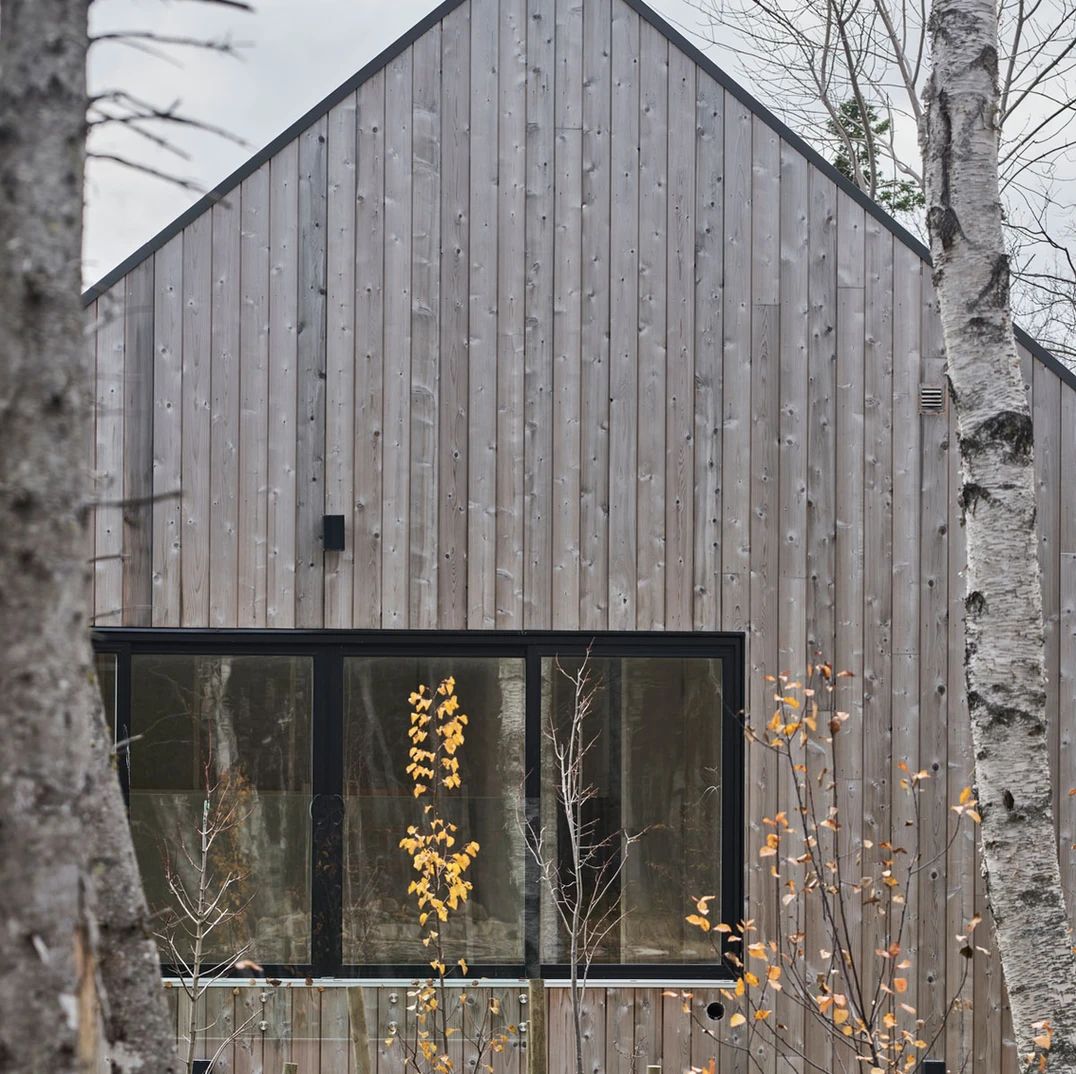
Lifecycle Cost: Initial Spend Is Not the Real Cost
Material selection should not be judged on board price alone. A cheaper timber that moves more, drives more remedial work, or forces earlier maintenance intervention may be more expensive over the life of the building than a more stable timber with a higher initial material cost. This is especially true on façades where access for maintenance is difficult or expensive. Once a scaffold, access platform or specialist maintenance package enters the equation, the initial price difference between timber types can look trivial.
Where reduced maintenance is a priority, selecting stable materials and appropriate finishes is essential. This is explained further in our low maintenance timber cladding UK guide, which compares long-term performance strategies.
This is one reason thermally modified timber often makes sense on architect-led projects even when it appears more expensive at quotation stage. It buys stability, which often buys predictability, which often buys lower risk and cleaner long-term performance. On the other hand, if the project is low-rise, accessible, budget-sensitive and visually suited to natural timber variation, larch can still present very strong lifecycle value. The correct decision depends on the whole building, not just the material line item.
Conclusion
The best timber cladding for architects is not a single board and not a single species. It is the result of getting the system right. That means selecting a timber whose movement profile matches the design ambition, choosing a façade build-up that actually dries, aligning the wall with UK regulatory demands, specifying fixings and battens with the seriousness they deserve, and briefing the client honestly about weathering and maintenance.
For many contemporary architectural projects, ThermoWood cladding will be the most technically robust answer because of its stability and predictability. For many lower-rise or more naturalistic projects, Siberian Larch cladding will remain a strong option where its behaviour is understood and designed for. Where the fire pathway demands it, fire rated cladding routes become essential. And all of those decisions should sit within a wider understanding of timber cladding & UK building regulations so that design quality and compliance quality move together rather than fighting each other late in the process.
That is the real architectural answer. Timber cladding works exceptionally well in the UK when it is specified as a disciplined façade system. When it is not, the material gets blamed for failures the specification created.
Frequently Asked Questions
What is the best timber cladding for architects in the UK?
The best timber cladding depends on the building type, exposure level, design language and compliance route rather than a universal winner. For sharply detailed contemporary façades where dimensional stability is critical, thermally modified timber is often the strongest specification because it reduces movement risk. For lower-rise or more naturalistic projects, Siberian larch can be an excellent choice where budget and visual character are important and the detailing allows for natural timber behaviour. The right answer is the timber whose performance matches the façade ambition.
Why is ThermoWood often preferred on contemporary architectural façades?
Thermally modified timber is often preferred because it offers lower moisture absorption and improved dimensional stability compared with many untreated softwoods. In practical terms, that means less cupping, less visible movement, more consistent shadow lines and a lower risk that a carefully drawn façade will begin to look uneven after seasonal cycling. It is particularly valuable where the design relies on long clean elevations, expressed joints, and crisp detailing with little tolerance for board distortion.
Is Siberian larch still a good cladding option for architects?
Yes. Siberian larch remains a strong material where the architect wants a natural, durable timber with recognisable grain and a good cost-to-performance balance. It is not as stable as thermally modified timber, so the design must account for movement more carefully, but that does not reduce its value. On the right project, especially low-rise residential work or designs that welcome natural variation, larch can be one of the most sensible specification choices available.
Does timber cladding always need a ventilated cavity?
Yes, in normal UK best practice timber cladding should be treated as a ventilated rainscreen rather than a sealed outer lining. The boards will get wet. The reason the system survives is that moisture is allowed to drain and the rear face is allowed to dry. Without a proper cavity, water becomes trapped, drying slows down dramatically, decay risk increases and the whole façade becomes more vulnerable to staining, distortion and premature failure.
What cavity size is normally used behind timber cladding?
A typical starting point is a 25mm ventilated cavity, but that should not be treated as a universal answer. Higher exposure, more demanding vertical arrangements or more cautious detailing may justify 38mm to 50mm. The bigger issue is not only the nominal cavity size but whether the airflow path is actually continuous from base to top. A 25mm cavity that is blocked in practice is worse than a slightly larger cavity that is properly detailed and ventilated.
What is the biggest technical mistake when specifying timber cladding?
The most common technical mistake is underestimating timber movement and then drawing a façade as though the boards were dimensionally inert. That error often sits behind a chain of other problems: overly wide boards, insufficient joint tolerance, poor fixing strategy, coating stress and visual disappointment after the first few seasons. Close behind it are poor ventilation continuity and weak base detailing, both of which create moisture conditions that timber should never be asked to tolerate long term.
Can timber cladding meet UK fire regulations?
Yes, but only within the correct building context and only when the entire façade strategy is assessed properly. The fire question is not solved by the board alone. Height, building type, whether the project is a relevant building, the reaction-to-fire classification, cavity barrier arrangement, membrane and insulation all matter. Where timber remains viable and enhanced performance is needed, a compliant fire rated cladding route may be required.
What does Euroclass B-s1,d0 mean for timber cladding?
Euroclass B-s1,d0 is a reaction-to-fire classification indicating limited contribution to fire, low smoke production and no flaming droplets. It is commonly referenced where enhanced external wall fire performance is required. Architects should be careful not to rely on outdated shorthand such as older Class 0 language without checking the actual current compliance pathway needed for the building. In modern projects, Euroclass language is usually the more relevant framework.
What is the difference between reaction to fire and fire resistance?
Reaction to fire describes how a material contributes to flame spread, smoke and droplets when exposed to fire. Fire resistance describes how long a building element or assembly can resist fire structurally or compartmentally. Timber cladding usually sits in the reaction-to-fire discussion, not the structural resistance discussion. Mixing those two concepts leads to confusion in design meetings and can result in the wrong product or test evidence being assumed relevant.
When should A4 stainless fixings be used instead of A2?
A2 stainless fixings are commonly suitable for many standard external conditions, but A4 stainless becomes the safer choice in coastal or otherwise highly exposed environments where corrosion pressure is greater. The cost uplift is usually minor compared with the cost of premature staining, hardware deterioration or remedial façade work. On a high-quality project in a demanding site condition, the more conservative stainless grade is often the more intelligent specification decision.
Does board width affect cladding performance?
Very much so. Wider boards move more visibly across the grain, which increases the risk of cupping, joint inconsistency and fixing stress. Architects sometimes favour wider boards for a simpler visual language, but the material behaviour does not disappear because the elevation looks elegant in CAD. Stable modified timber can tolerate wider board strategies more comfortably than less stable species, but even then the board width should be aligned with exposure, profile and fixing logic.
Should end grain be sealed on timber cladding?
End grain is often overlooked, but it is one of the most moisture-sensitive parts of a timber board because it absorbs water more readily. Sealing or otherwise protecting end grain where appropriate helps reduce moisture ingress, staining risk and localised splitting, especially around cut ends and vulnerable junctions. It is not a substitute for proper detailing, but it is a sensible supporting measure in a robust façade specification.
When is timber cladding the wrong material choice?
Timber can be the wrong choice on taller buildings where non-combustible external wall routes dominate, on geometries where correct ventilation is very difficult to preserve, or where client expectations about maintenance and weathering are unrealistic. It can also be the wrong answer if the façade detailing is too complex to execute properly within the project budget. A disciplined architect should be willing to reject timber where the building cannot support it as a proper system.
Do NHBC or warranty providers matter when specifying timber cladding?
Yes. Building regulations are not always the only gatekeeper. NHBC and other warranty providers may impose additional expectations or constraints, particularly on residential developments. That can affect material selection, fire strategy, tested system preference, moisture detailing and sign-off comfort. Architects should not assume that because a façade is theoretically compliant it will automatically be easy to approve under the project’s warranty route.
What is the best low-maintenance route for timber cladding?
The lowest maintenance route is usually to choose a stable timber, design the system to dry properly, and allow the façade to weather naturally rather than trying to hold a perfect uniform colour indefinitely. Untreated timber that silvers evenly can be a more honest and lower-maintenance solution than a coated façade that looks more controlled at completion but commits the client to repeat intervention. Low maintenance and low visual change are not the same thing, and that distinction matters.