
- There are four distinct ways to achieve a black timber cladding finish — charred (Shou Sugi Ban), factory stained, site stained, and painted — each with different durability, maintenance, and cost profiles.
- Charred timber (Shou Sugi Ban) is the most durable and lowest maintenance black finish — the carbonised surface resists UV, moisture, and insects without ongoing treatment.
- Factory black-stained ThermoWood or Siberian larch gives a clean, consistent black finish with visible grain — the best choice for contemporary shadow gap or rainscreen profiles.
- Black timber cladding typically costs £55–£130 per m² depending on species, finish type, and profile.
- Shadow gap, rainscreen, and board-on-board are the most popular profiles for black cladding on contemporary UK homes.
Black timber cladding has become one of the most searched exterior finishes in UK residential architecture. From barn conversions to contemporary extensions, garden rooms to new builds, the combination of dark timber and modern profiles has defined a significant share of UK exterior design over the past decade. But "black timber cladding" is not a single product — it is a category that covers several distinct materials, finish types, and production methods, each with very different performance characteristics, maintenance requirements, and long-term costs.
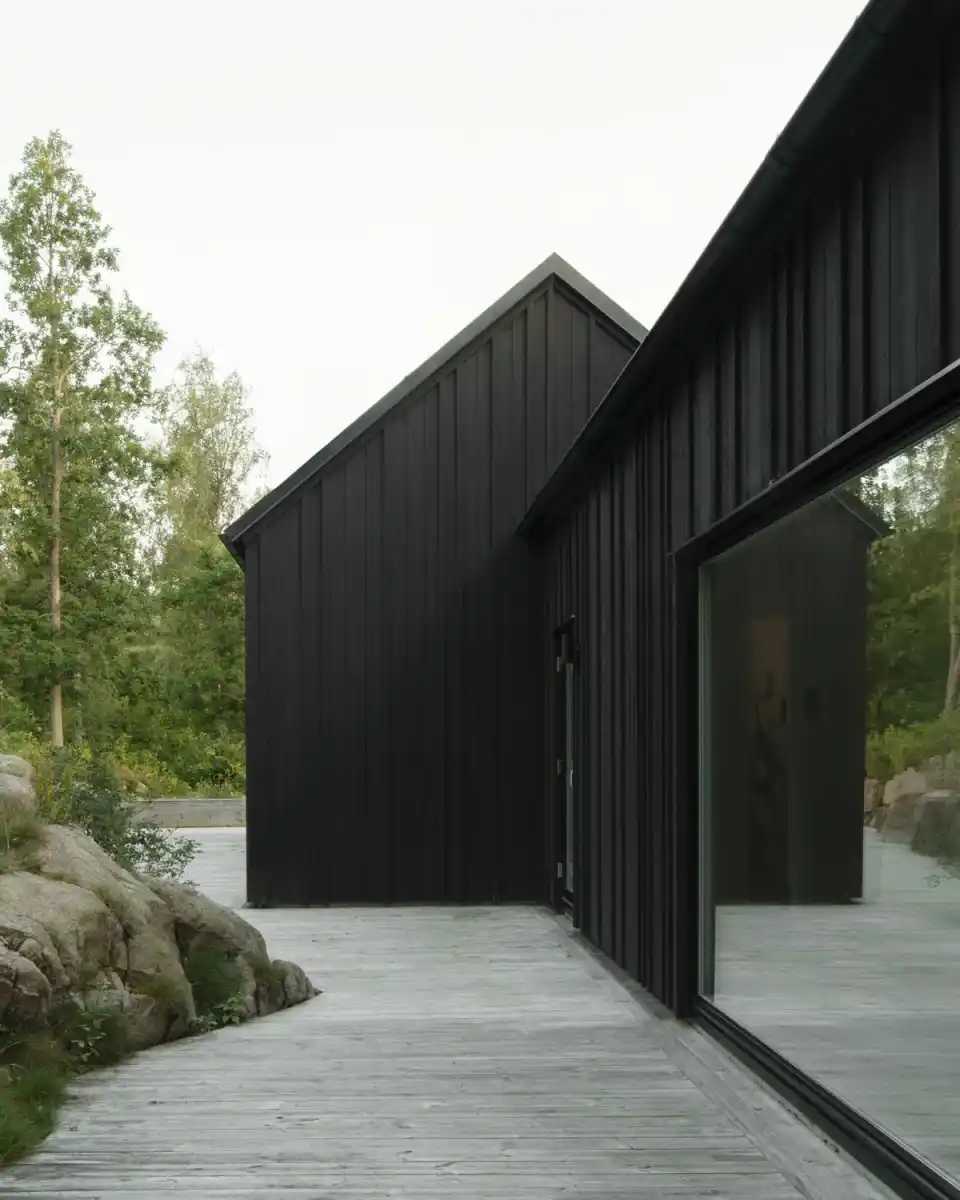
This guide covers every route to a black cladding finish in the UK — from charred timber and factory-stained boards to site-applied stains and painted systems. It explains what each option involves, how they compare on durability and maintenance, and which profiles and species are best suited to each finish type. Whether you are a homeowner, architect, or contractor, this guide will help you specify the right black cladding for your project.
The Four Ways to Achieve Black Timber Cladding
Understanding the difference between these four finish types is essential before specifying or purchasing black cladding. They look similar in photographs but behave very differently in use.
Charred Timber Cladding — The Shou Sugi Ban Approach
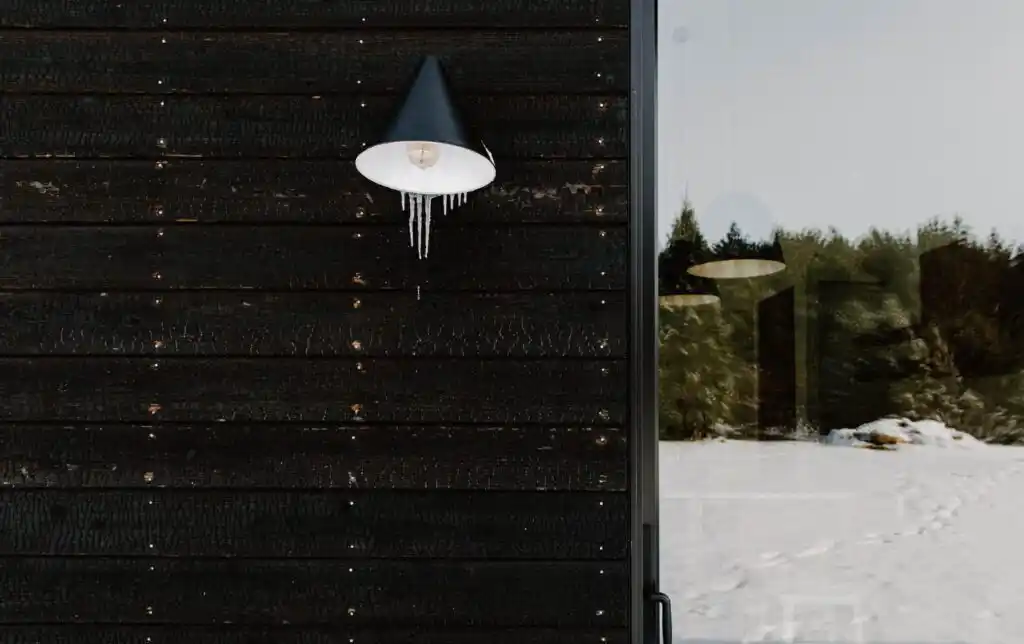
Charred Nordic spruce cladding — the deep black finish is a structural change to the timber surface rather than a coating, making it one of the most durable and lowest-maintenance black cladding options available in the UK. Available from UK stock with 7–14 day delivery.
A process in which timber boards are surface-charred using controlled burning, then brushed to remove loose carbon and finished to the required depth. The carbonised surface layer hardens the timber, seals the grain against moisture penetration, and creates a natural resistance to insects and biological decay. The black colour is a physical change to the timber itself — not a coating — which is why it performs differently to stained or painted finishes. In the UK, charred cladding is typically produced from Siberian larch or Nordic spruce rather than the traditional Japanese cedar.
Charred timber cladding is available in several finish levels, each producing a different visual result and depth of colour:
- Deep char — maximum carbonisation, deeply textured surface with a strong alligator-skin pattern. The most dramatic and rustic finish. Very high natural protection from the char layer.
- Brushed char — carbonised and then wire-brushed to remove loose carbon, revealing the grain pattern beneath. Smoother surface than deep char with a slightly lighter, more metallic black.
- Brushed and stained — brushed char finished with a pigmented stain in black, grey, larch, or other tones. The most consistent and controllable colour finish. Our Siberian larch charred brushed stained black is one of the most popular choices for contemporary UK residential projects.
Charred timber requires very little maintenance compared to stained or painted alternatives. The carbonised surface does not need re-treating — an occasional clean to remove surface dirt and algae is all that is typically required on most UK elevations. On south and west-facing facades with high UV exposure, a light application of a clear exterior oil every 5–7 years will help maintain the depth of colour, but this is optional rather than necessary for performance. For the full picture on charred timber see our Shou Sugi Ban deep charred cladding guide.
Factory Black Stained Cladding — ThermoWood and Larch Options

Factory black stained timber cladding — a consistent, grain-visible black finish applied under controlled conditions before delivery to site.
For projects where a consistent, grain-visible black finish is required without the textural variation of charred timber, factory black-stained cladding is the most reliable approach. The stain is applied in a controlled factory environment, ensuring consistent penetration and coverage across every board — something that is very difficult to achieve with site-applied stain, particularly on shadow gap profiles where the recessed edges are hard to reach after installation.
ThermoWood is particularly well suited to black staining. Its thermally modified cell structure accepts pigmented finishes more consistently than untreated softwood, and its improved stability means the stained surface is less prone to cracking or lifting as the boards move with seasonal moisture changes. A factory-applied black stain on ThermoWood triple shadow gap is one of the strongest specifications for contemporary black cladding on UK residential and commercial projects.
Siberian larch is equally well suited to factory black staining. Its tight grain takes pigment evenly and its natural durability means the underlying timber performs well regardless of the maintenance interval on the stain system. For the full species comparison see our ThermoWood cladding performance guide and Siberian larch cladding guide. Nordic spruce is the most affordable base species for factory black staining — its wide availability and consistent grain make it a practical budget choice where the underlying species is less important than the finished black appearance.
Profiles for Black Timber Cladding — What Works Best

Board-on-board vertical black timber cladding — a strong contemporary choice that works equally well with charred or stained finishes.
The profile you choose has a significant visual impact with black cladding — the dark colour amplifies shadows, making the joints and reveals more prominent than on natural timber. This means profiles that create strong horizontal or vertical lines look particularly effective in black.
| Profile | Works Best With | Visual Effect | Best Application |
|---|---|---|---|
| Triple shadow gap | Factory stained, ThermoWood | Strong horizontal rhythm, contemporary | Modern houses, extensions, commercial |
| Double shadow gap | Factory stained, charred brushed | Bolder, fewer joints, architectural | Large facades, commercial projects |
| Rainscreen / open joint | Charred deep, factory stained | Dramatic depth — shadow behind each board | Contemporary residential, commercial |
| Board-on-board vertical | Charred, stained larch | Bold vertical rhythm, textured | Barn conversions, rural projects |
| Feather edge | Charred deep, painted | Traditional, agricultural reference | Rural barns, outbuildings, garden buildings |
| Shiplap | Charred, stained spruce | Textured, traditional | Cabin-style, garden rooms, saunas |
Black Cladding Design Ideas for UK Homes

Black vertical shadow gap cladding on a UK residential project — combining vertical orientation with a shadow gap profile creates a striking contemporary result.
House extensions
Black timber cladding on a single-storey or two-storey extension creates a bold contrast against an existing brick or render house. The most effective approach is a consistent profile across all elevations of the extension — typically horizontal shadow gap or vertical batten — with the dark cladding set against light window frames, soffits, or reveals to create definition. For fire compliance on extensions close to a boundary, see our guide to fire rated cladding for house extensions.
Garden rooms and home offices
Black cladding is particularly popular on garden rooms and home offices where a contemporary, low-maintenance finish is needed on a smaller structure. Charred timber is an especially good choice here — the inherent durability removes the need for periodic re-staining, and the texture adds visual interest to what might otherwise be a simple rectangular box. For more detail on garden room cladding generally, see our garden room cladding guide.
Barn conversions and rural projects
Black timber cladding has strong roots in agricultural vernacular — traditional English barns were frequently clad in tarred or charred timber boards. Feather edge and board-on-board profiles in deep char or painted black sit naturally in a rural context, referencing this history while delivering a contemporary result. The informal texture of deep charred timber is particularly well suited to barn conversion projects where a raw, honest material palette is appropriate.
New build contemporary houses
On new build projects, black timber cladding is most commonly used in combination with other materials — zinc or standing seam metal roofing, large format windows, and concrete or stone detailing. The horizontal shadow gap profile in factory-stained ThermoWood or charred brushed larch is the most commonly specified combination on architect-designed new builds in the UK. For full specification guidance for architects see our timber cladding specification guide for architects.
Cost Comparison — Black Cladding Options per m²
| Finish Type | Species | Typical Cost per m² | Maintenance Interval |
|---|---|---|---|
| Deep charred (Shou Sugi Ban) | Siberian larch / Nordic spruce | £85–£130 | Minimal — clean only |
| Brushed charred stained black | Siberian larch / Nordic spruce | £75–£110 | Re-oil every 5–7 years optional |
| Factory black stained | ThermoWood / Siberian larch | £65–£90 | Re-stain every 4–6 years |
| Site-applied black stain | Any species | £55–£75 + finishing | Re-stain every 2–4 years |
| Factory opaque black paint | Any species | £70–£100 | Repaint every 5–10 years |
| Fixings note | A4 stainless steel screws recommended for all black cladding — standard steel rusts and stains the dark surface visibly | ||
Charred timber has the highest upfront cost but the lowest whole-life maintenance cost — the minimal maintenance requirement over 25–40 years means the total cost of ownership is often lower than stained or painted alternatives that need re-treating every 2–6 years. For projects where maintenance access is difficult (high elevations, restricted access), charred timber is often the most practical long-term specification regardless of initial cost.
Maintenance — Keeping Black Cladding Looking Its Best
All black timber cladding will fade over time on UK elevations — UV exposure is unavoidable. The rate of fading depends on the finish type, exposure level, and aspect. Charred timber fades most slowly. If maintaining a consistent deep black colour long term is a priority, specify charred timber or budget for re-staining every 4–6 years on stained systems. Setting realistic expectations at specification stage avoids dissatisfaction later.
For charred timber on most UK elevations, maintenance is limited to an annual wash down with clean water to remove algae and surface dirt. No re-treatment is required for performance — only if colour refresh is desired. For stained systems, re-application of the same exterior stain product every 4–6 years maintains the black colour. Always clean the surface thoroughly before re-staining. For a full timber cladding maintenance schedule, see our timber cladding maintenance guide.
What is the best black timber cladding for a UK house?
For most UK residential projects, charred timber cladding (Shou Sugi Ban) or factory black-stained ThermoWood are the strongest choices. Charred timber produces a deep, authentic black finish with excellent durability and very low maintenance — the carbonised surface layer resists moisture, insects, and UV without ongoing treatment. Factory black-stained ThermoWood or Siberian larch offers a more uniform black colour with a visible grain texture and requires re-staining every 4–6 years depending on exposure.
Does black timber cladding fade in the UK climate?
All black timber cladding finishes will fade to some degree in the UK climate — UV exposure is the primary cause. Charred timber fades most slowly because the black colour is a physical change to the timber surface rather than a surface coating. Black stained cladding typically begins to show fading within 3–5 years on south-facing elevations. Factory-applied systems generally last longer than site-applied stains before re-treatment is needed.
Is charred timber cladding the same as Shou Sugi Ban?
The terms are often used interchangeably in the UK market, but there is a technical distinction. Yakisugi is the original Japanese term. Shou Sugi Ban is the Western interpretation applied to a wider range of species. In the UK, charred cladding is produced from Siberian larch and Nordic spruce rather than traditional Japanese cedar — the charring technique is similar but the base timber and finishing processes differ.
How long does black timber cladding last in the UK?
Charred timber cladding on a well-detailed UK facade can realistically achieve 25–40 years of service life. The carbonised surface provides inherent protection against the main causes of timber deterioration. Black stained or painted cladding lasts as long as the underlying timber — typically 20–35 years for Siberian larch or ThermoWood — but the black finish itself will require re-application every 4–8 years to maintain appearance.
What profiles work best for black timber cladding?
Shadow gap and rainscreen profiles are the most popular for black timber cladding on contemporary UK homes — the recessed joint creates a strong visual rhythm enhanced by the dark colour. Board-on-board and vertical batten profiles work well for a bolder, more textured facade. Feather edge and shiplap suit rural and barn-style projects where black cladding references traditional agricultural buildings.
Black Timber Cladding — Charred, Stained & Factory Finished
We supply charred timber cladding in Siberian larch and Nordic spruce, factory black-stained boards, and ThermoWood profiles suitable for site finishing — all from UK stock with nationwide delivery in 7–14 days. FSC and PEFC certified. Not sure which black finish suits your project? Contact our team for advice and a free quote.