
- Routine clean: Soft brush + dilute exterior wood cleaner. Work top to bottom. Rinse thoroughly.
- Green algae: Apply biocidal exterior cleaner, dwell 10–15 mins, scrub, rinse. Repeat if heavy.
- Pressure washing: Fan-tip nozzle, low-medium pressure, 30cm+ distance, work top to bottom — never force water behind boards.
- After cleaning: Allow 48hrs to dry before oiling or treating.
- ThermoWood: Mild cleaner, no preservative treatment ever needed. Oiling optional — colour only.
- Siberian larch: Gentle clean, no preservative needed. Oil every 2–3 yrs if maintaining colour.
- Nordic spruce: Clean then re-treat with preservative stain if treatment is due.
- How often: Every 1–2 years. Shaded north-facing elevations annually.
Timber cladding in the UK picks up surface contamination — green algae, black biological staining, general weathering deposits — and periodic cleaning keeps it looking its best and removes the organic matter that can accelerate surface deterioration over time. The technique and products that work best vary significantly by species: ThermoWood requires a gentle approach; Nordic spruce requires cleaning as preparation for preservative re-treatment; charred timber requires specific care to avoid disturbing the char surface. This guide covers the right approach for every species and gives you the step-by-step process for a safe, effective clean that will not damage the cladding or void any manufacturer guidance.
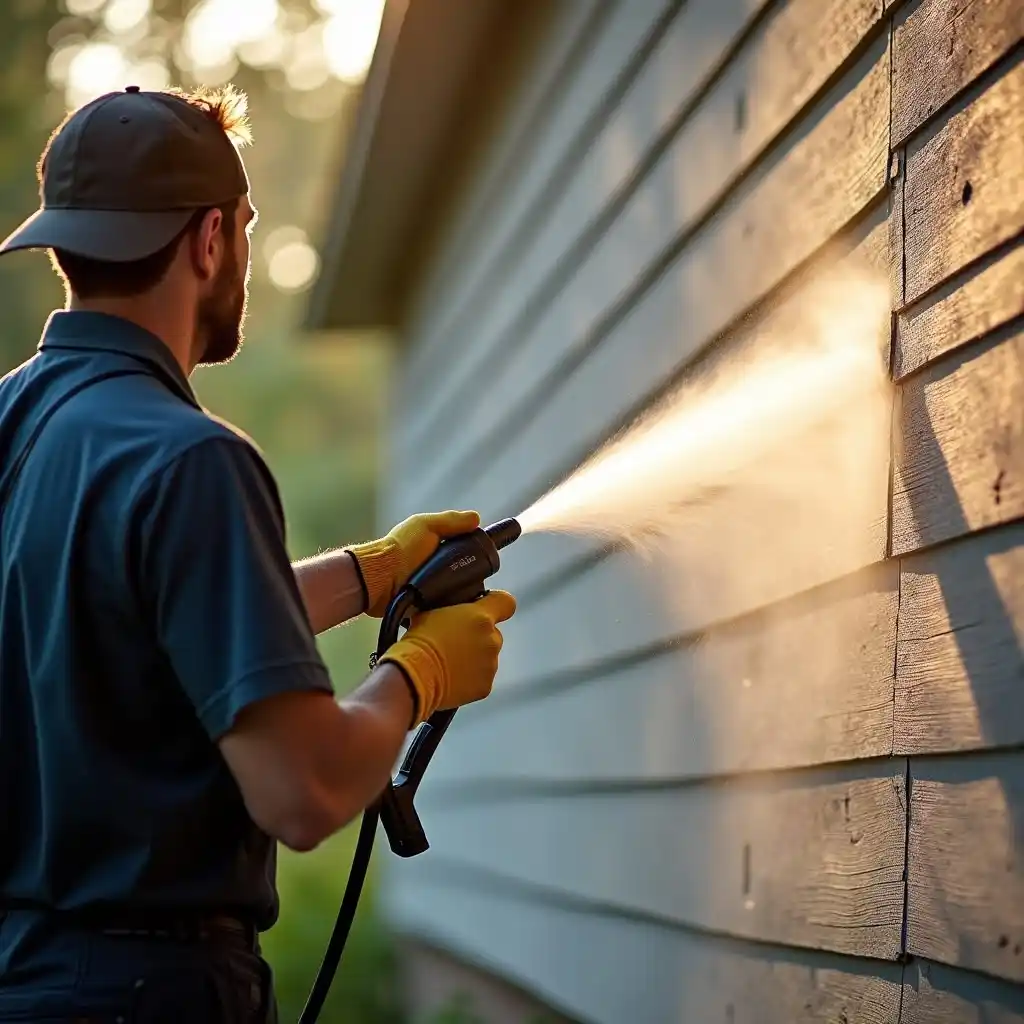
Cleaning timber cladding — a systematic wash-down from top to bottom removes accumulated algae, staining, and surface deposits. The difference between freshly cleaned and uncleaned cladding is significant — even naturally durable species like ThermoWood and Siberian larch benefit from periodic cleaning to maintain their appearance and prevent organic matter build-up in shadow gaps and board joints.
Why Clean Timber Cladding — And When It Matters Most
For naturally durable or modified timber cladding — ThermoWood, Siberian larch, charred timber — cleaning is entirely cosmetic. The surface algae and biological deposits that accumulate on any outdoor surface do not threaten the structural integrity of these species. Cleaning removes the deposits for aesthetic reasons, and prevents the organic layer becoming thick enough to retain moisture against the board surface for extended periods. Neither ThermoWood nor Siberian larch will decay from surface algae in UK conditions — the modification or natural durability prevents that.
For Nordic spruce and other treated softwood cladding, the situation is different. Cleaning is the essential preparation step before re-applying preservative treatment — and that treatment is what determines service life. Applying preservative stain over dirty, contaminated surfaces reduces penetration and adhesion, significantly shortening the effective life of each treatment coat. For spruce, the cleaning and treatment cycle are inseparable.
| Species | Why clean? | Frequency | After cleaning |
|---|---|---|---|
| ThermoWood | Appearance only | Every 1–2 years | Nothing required — optional oil |
| Siberian Larch | Appearance only | Every 1–2 years | Optional oil every 2–3 yrs |
| Nordic Spruce | Appearance + treatment prep | Annually or before each treatment | Apply Remmers HK Stain once dry |
| Charred Timber | Appearance only — gentle clean | Every 2–3 years | Nothing required |
Before You Start — Preparation and Safety
- Inspect first: Walk the full elevation before cleaning. For Douglas Fir cladding and charred timber cladding, follow the species-specific notes below. Look for damaged boards, split or cracking profiles, loose fixings, or signs of genuine decay (soft timber that dents with finger pressure). Cleaning over structural problems will not fix them — address remedial work first
- Protect surroundings: Cover windows and doors with plastic sheeting. Lay old sheets or plastic on planting beds and paving below the elevation to catch cleaning product run-off
- Choose the right weather: Clean on a dry, overcast day — not in direct strong sunlight where the cleaner will dry on the surface before you can rinse it off, and not when frost is forecast within 24 hours
- Work from scaffold or a stable platform: Never lean a ladder directly against timber cladding — it will damage the boards. Use a tower scaffold or proper hop-up for upper elevations
How to Clean Timber Cladding — Step by Step
For elevations with visible green algae, black biological staining, or lichen, apply a diluted biocidal exterior wood cleaner to the affected areas with a garden sprayer or brush. Allow to dwell for 10–15 minutes — this softens and kills biological deposits, making them much easier to remove physically. Do not let the product dry on the surface.
Work from the highest point of the elevation downward — dirty water runs down, and you do not want to contaminate areas you have already cleaned. Use a soft-bristle brush with clean water or dilute wood cleaner for standard cleaning. Work along the board profile — horizontal boards are cleaned horizontally, vertical boards vertically. Never scrub across shadow gaps or board joints at an angle that could force water behind the boards.
For more heavily contaminated elevations, a pressure washer significantly speeds up the process. Use a fan-tip nozzle only — never a concentrated jet nozzle which forces water behind boards and into the cavity behind the cladding. Maintain at least 30cm distance from the boards. Low to medium pressure is sufficient. Work from top to bottom in smooth passes along the board direction. Pay particular attention to shadow gaps where deposits accumulate.
Rinse the full elevation with clean water, working top to bottom, to remove all cleaning product residue. Residue left on the cladding surface can cause uneven discolouration and — on spruce — can interfere with the adhesion of subsequent preservative treatment. A thorough rinse is particularly important for ThermoWood where pH-neutral cleaners are recommended.
Allow the cladding to dry for a minimum of 48 hours in dry weather before applying any oil or preservative treatment. For Nordic spruce where preservative re-treatment is due, this drying period is critical — treatment applied to damp timber does not penetrate correctly and will fail prematurely. Check boards in shadow gap recesses and north-facing areas are fully dry before proceeding.
For ThermoWood: no treatment needed. Optional Koopmans Houtolie oil every 2–3 years if you want to slow natural greying. For Siberian larch: no treatment needed. Optional oil every 2–3 years for colour. For Nordic spruce: apply Remmers HK Stain preservative once fully dry if treatment is due (every 2–3 years). For charred timber: no treatment needed.
Cleaning by Species — What's Different
Use a mild pH-neutral exterior wood cleaner — ThermoWood's modified surface is more sensitive to harsh acid or alkali-based cleaners than standard softwood, and aggressive products can cause uneven discolouration. Dilute the cleaner more than you would for spruce. Low-pressure fan-tip washing is ideal. After cleaning, no preservative treatment is ever needed — oiling is purely optional for colour. Full detail in our ThermoWood maintenance guide.
Larch can be cleaned with a standard exterior wood cleaner at normal dilution. Note that larch contains natural tannins which can leach as run-off and cause staining on adjacent light-coloured paving or render — particularly in the first year after installation. Protect adjacent surfaces during cleaning. No preservative treatment after cleaning — optional oiling every 2–3 years for colour maintenance only.
Clean with a standard exterior wood cleaner, removing all surface contamination before re-treatment. The cleaning step directly affects the quality of the subsequent preservative coat — never apply Remmers HK Stain or equivalent over contaminated or damp boards. After cleaning and drying (48hrs minimum), apply Remmers HK Stain to all exposed surfaces by brush, working into shadow gaps and board edges.
Clean with a very gentle soft brush and water only — avoid biocidal cleaners and pressure washing on charred surfaces where possible, as these can disturb or wash away the outer char layer that provides the surface protection. For light surface dust and weathering deposits, a damp cloth or gentle brush is sufficient. If algae is present in a shaded location, a very dilute mild wood cleaner applied gently is acceptable. No preservative treatment ever needed.
1 — Pressure wash with a jet nozzle: Forces water behind boards into the cavity, potentially causing damage to the substrate and structure behind. Fan nozzle only. 2 — Work bottom to top: Dirty water runs over already-cleaned boards. Always top to bottom. 3 — Apply treatment to damp boards: Traps moisture and prevents penetration. Always 48hrs minimum drying time. 4 — Use undiluted bleach: Discolours and damages timber fibres — particularly damaging to ThermoWood's modified surface.
Best Cleaning Products for Timber Cladding UK
The product range matters less than the technique — a correctly diluted standard exterior wood cleaner applied with good technique will outperform the best product applied incorrectly. That said, the right products by application:
- Routine cleaning — all species: Dilute exterior wood cleaner or deck cleaner at manufacturer's recommended dilution. Apply with brush or sprayer, leave to dwell briefly, scrub and rinse
- Algae and biological staining: Biocidal exterior wood cleaner containing quaternary ammonium compounds. Apply, dwell 10–15 minutes, scrub, rinse. Repeat if heavy
- After-clean treatment for spruce: Remmers HK Stain 3-in-1 — combined preservative, primer, and stain in one product. Apply by brush to all exposed surfaces
- After-clean oiling for ThermoWood/larch: Koopmans Houtolie — penetrating linseed-based oil, UV stable, suitable for both species
- What to avoid: Undiluted bleach, acid-based stone cleaners, high-pH masonry cleaners — all can damage timber surfaces or cause discolouration
The reason ThermoWood and Siberian larch require so much less maintenance than treated softwood is not that they stay cleaner — all exterior timber surfaces accumulate surface deposits in UK conditions. The difference is that for naturally durable species, cleaning is cosmetic. For spruce, cleaning is the prerequisite to the preservative treatment that keeps the timber alive. If you want exterior cladding where the cleaning programme is genuinely low obligation, specify ThermoWood or Siberian larch. For the full lifespan comparison see our timber cladding lifespan guide.
How do I clean timber cladding without damaging it?
Use a soft brush with dilute exterior wood cleaner for routine cleaning, or a pressure washer with a fan-tip nozzle at low-medium pressure for heavier contamination. Always work top to bottom. Never use a concentrated jet nozzle — it forces water behind boards and raises the grain. Avoid undiluted bleach.
How do I remove green algae from timber cladding?
Apply biocidal exterior wood cleaner, leave to dwell 10–15 minutes, scrub with a soft brush top to bottom, then rinse thoroughly. For heavy algae on shaded elevations, repeat the treatment. Trim back overhanging vegetation to improve air circulation and prevent recurrence.
Can I pressure wash timber cladding?
Yes — fan-tip nozzle only, low-medium pressure, 30cm+ distance, working top to bottom. Never use a jet nozzle which forces water behind boards into the cavity. After pressure washing, allow to dry fully before applying any treatment.
How often should timber cladding be cleaned?
Every 1–2 years for most UK elevations. Heavily shaded north-facing elevations benefit from annual cleaning. Well-ventilated south-facing elevations may only need cleaning every 2–3 years. Inspect regularly and clean when algae or biological staining becomes visible rather than on a fixed schedule.
Do I need to re-treat cladding after cleaning?
ThermoWood — no treatment ever required, optional oil for colour. Siberian larch — no treatment required, optional oil every 2–3 years. Nordic spruce — yes, apply Remmers HK Stain preservative after cleaning every 2–3 years. Charred timber — no treatment required. Always allow 48 hours drying time before applying any treatment.
Cladding Treatments & Woodcare — UK Stock
We stock Remmers HK Stain for Nordic spruce, Koopmans Houtolie for ThermoWood and larch, and the full Koopmans and Remmers woodcare range. Browse our full woodcare range for the right product for your cladding species.