Timber Cladding Lifespan by Species: UK Performance, Maintenance Cycles & Long-Term Durability

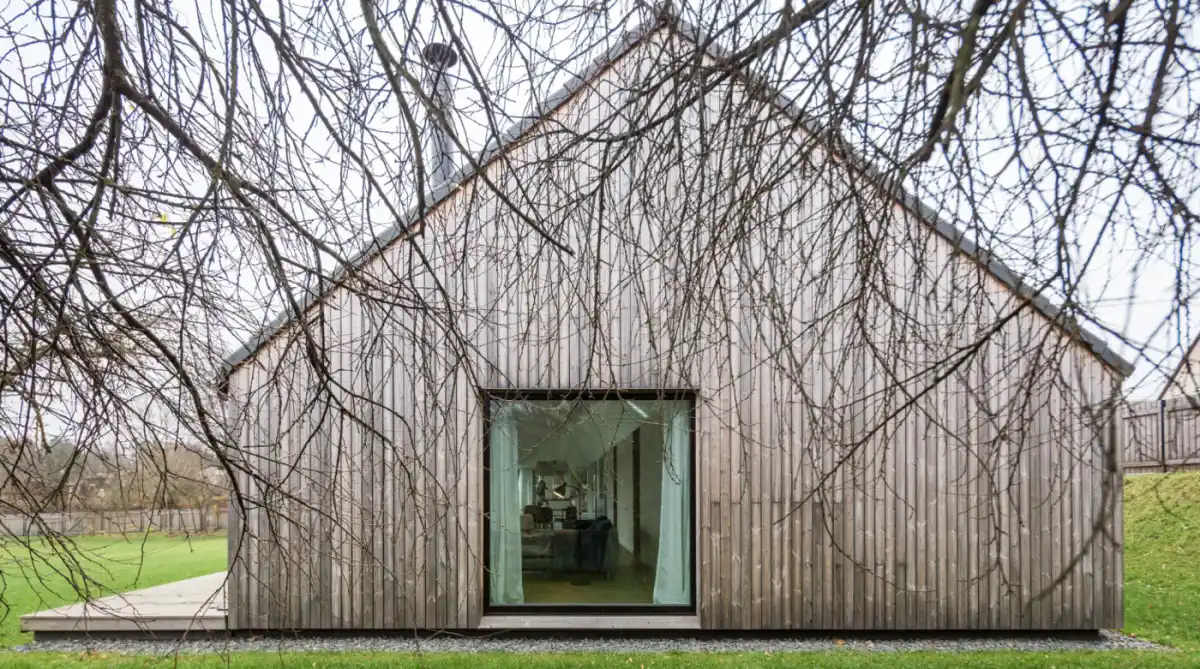
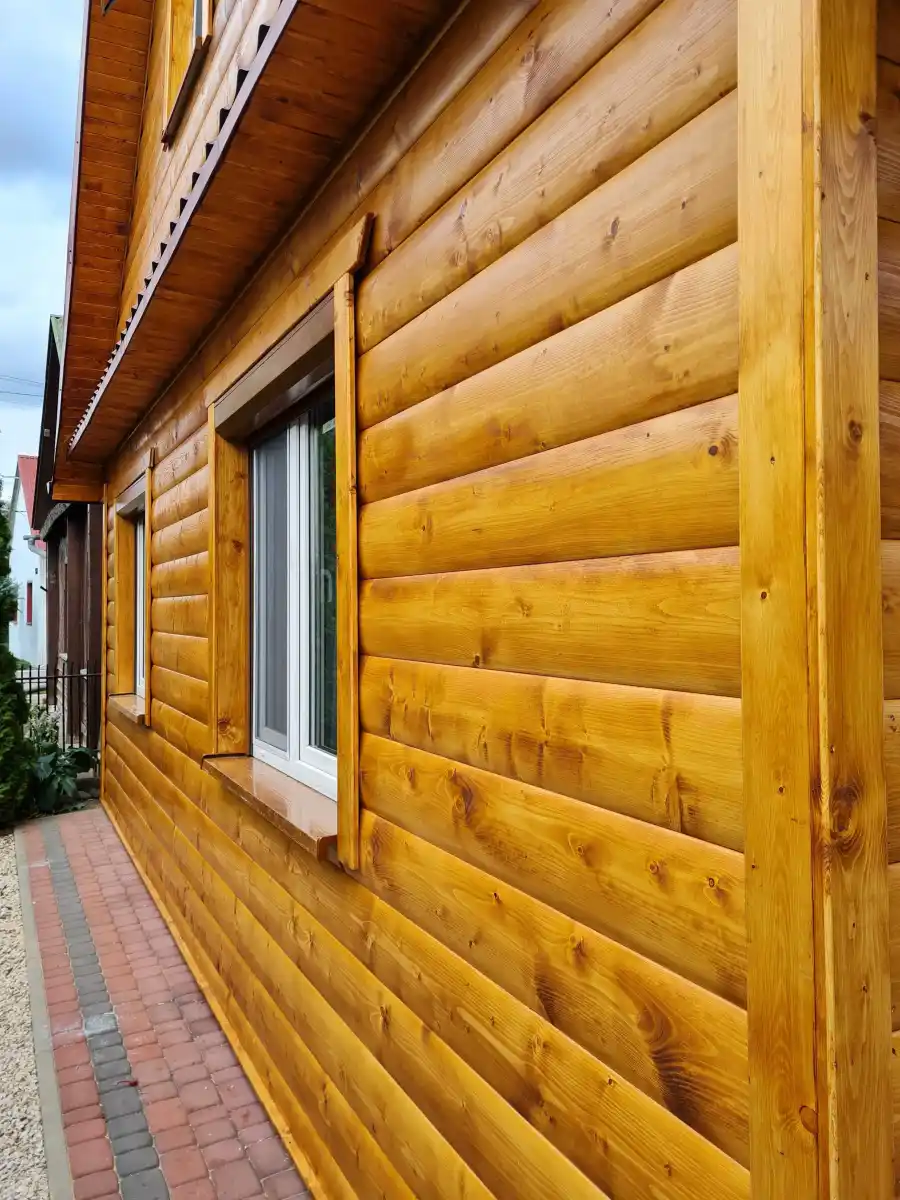
Timber cladding on contemporary UK building showing natural timber façade and long-term exterior weathering performance


Timber cladding lifespan is one of the most misread parts of façade specification in the UK. People often ask how long a species lasts as though the answer sits entirely inside the board itself. It does not. Lifespan is a system outcome. Species matters, but so do movement, cavity design, exposure, fixing logic, coating strategy, ground clearance and whether the façade is actually allowed to dry. That is why two buildings clad in the same timber can age in completely different ways. One can still be performing strongly after decades, while the other starts showing distortion, staining or decay far earlier than expected.


That point matters because architects, contractors and clients often use the word “lifespan” when they really mean three different things at once: structural service life, visual appearance retention, and maintenance interval. Those are related, but they are not identical. A timber façade can remain structurally sound while weathering to a silver tone that a client did not expect. Equally, a façade can look visually controlled for a few years under a coating system, then start to fail faster than an untreated elevation because the coating traps moisture once maintenance is missed. Good specification depends on separating those issues instead of rolling them into one vague number.


For that reason, the right starting point is not simply “Which species lasts longest?” but “Under what conditions is this timber being asked to perform?” Maintenance strategy, moisture exposure and detailing decisions all shape the real answer, which is why this page should be read alongside timber cladding maintenance and lifespan. That article deals with lifecycle thinking more broadly. This one goes deeper into the lifespan question by species, comparing how different timbers behave in UK conditions and what actually controls long-term durability once the building is in use.


This guide focuses on ThermoWood cladding, Siberian Larch cladding, Shou Sugi Ban wood and Nordic Spruce cladding, while also explaining the bigger technical framework around ventilation, moisture equilibrium, board movement, maintenance cycles and common failure patterns in UK façades.


What Actually Determines Timber Cladding Lifespan?


Timber cladding lifespan is controlled by an interaction of material properties and system behaviour. The timber species sets a baseline for durability, density, resin content and dimensional stability, but it does not determine performance on its own. The façade must also be detailed so that water drains away, air can move behind the boards, and movement is accommodated rather than restrained. When those conditions are met, even a less naturally durable species can perform well within its intended use. When they are not met, a better species can still fail surprisingly early.


There are five core factors that determine service life. The first is biological durability: how resistant the timber is to fungal decay and long-term moisture-related damage. The second is dimensional stability: how much the timber moves as it takes on and releases moisture. The third is system design: especially cavity depth, ventilation continuity, membrane choice, batten strategy and edge detailing. The fourth is exposure: coastal wind, driving rain, persistent shade, urban pollution and freeze–thaw cycling all change how hard the façade works. The fifth is maintenance strategy: whether the timber is left untreated, oiled, stained or painted, and whether that approach is maintained consistently over time.


That is why the question “How long does timber cladding last?” has to be answered conditionally. A sheltered low-rise façade with good ventilation and natural weathering will often outperform a more exposed façade with a high-maintenance coating system, even if the second project used a more expensive timber. Lifespan is rarely lost in one moment. It is usually eroded slowly through repeated moisture stress, trapped water, restrained movement or missed maintenance decisions.


Timber Cladding Lifespan by Species (UK Comparison)


Species Typical Service Life Range Movement Profile Maintenance Demand Typical Use Pattern
ThermoWood 30–50+ years Low Low to moderate Contemporary façades, precise detailing, stable elevations
Siberian Larch 25–40 years Moderate Moderate Residential façades, natural grain-led projects, mixed applications
Shou Sugi Ban / charred timber 50–80+ years Low to moderate depending on base species Low Architectural feature façades, low-maintenance design-led work
Nordic Spruce 15–30 years Moderate to high Higher if finish-dependent Coated systems, cost-sensitive schemes, controlled applications

These ranges assume the timber is installed in a correctly ventilated rainscreen arrangement with appropriate board sizing, fixings, detailing and maintenance. They are not guarantees. They are realistic planning ranges based on how these species are typically used and how they behave when the build-up is doing its job. If the cavity is blocked, the base detail is wrong or the coating system is neglected, those ranges shrink quickly.


Charred timber board on board type of cladding on modern house UK


System Build-Up: Where Lifespan Is Actually Won or Lost

The biggest error in timber cladding thinking is assuming lifespan lives in the species chart. In practice, it lives in the wall build-up. Timber cladding performs best as a ventilated rainscreen system. That means the outer boards act as the weathering face, but the system accepts that some moisture will get behind them. The reason this does not become a problem is that the cavity is designed to drain and dry, rather than trap moisture against the structure.

That is why installation quality is inseparable from service life. If the battens are wrong, if the airflow path is interrupted, if the base detail allows splashback, or if the membrane behind the boards is inappropriate for the profile, the system starts losing service life from day one. For a fuller breakdown of installation logic, see our timber cladding installation guide, which covers fixing principles, cavity creation and practical façade setup in more detail.

Layer Typical Requirement Why It Matters for Lifespan
Cladding board Correctly profiled, fixed and gapped Allows movement without cracking, splitting or restrained stress
Ventilated cavity Typically 25–50mm Creates drying zone behind cladding
Support battens C16/C24, typically Use Class 3 in external wall use Provides structure and cavity continuity
Counter battens Required where orientation blocks airflow Maintains drainage and ventilation paths
Breather membrane Breathable and suitable for exposure behind chosen profile Protects substrate while allowing vapour movement
Base and head details Open, drained and protected Prevents standing water and keeps air moving


The cavity is the real service-life engine. Air should enter at the base and exit at the top. Ventilation openings at base and head are commonly in the region of 10–15mm, but the more important point is continuity and free movement rather than a single number in isolation. Insect mesh should protect the cavity without choking it. The base should be detailed so water does not sit at the foot of the boards. The head should allow air to leave the system rather than trap moist air behind the cladding.

Vertical and horizontal cladding do not behave the same way. Horizontal cladding naturally suits vertical airflow because the cavity path can run behind the boards more directly. Vertical cladding often needs counter battens because otherwise the primary support direction interrupts drainage and ventilation. This is not a minor technicality. It is one of the reasons façades that look visually similar can have very different service lives in practice.

Back-ventilated systems outperform drained-only cavities because they do not just remove water; they actively help the timber return toward moisture equilibrium after wetting. That repeated drying cycle is what protects service life. A drained cavity without meaningful airflow may remove bulk water, but it does not give the same drying performance, especially in the UK where damp conditions can persist.

Species vs Movement vs Risk vs Fixing Strategy

Species Movement Tendency Service-Life Risk if Poorly Detailed Preferred Fixing Logic
ThermoWood Low Low to moderate Can work with secret or face fixing depending on profile; stable board behaviour reduces distortion risk
Siberian Larch Moderate Moderate Face fixing often preferred; movement allowance and correct gaps are important
Shou Sugi Ban / charred timber Depends on base species, but generally well-controlled if manufactured correctly Low to moderate Handle carefully to protect finish; stable fixing approach and consistent support are critical
Nordic Spruce Moderate to high Higher Generally face-fixed with careful spacing and stricter moisture-management expectations

Profile choice also influences lifespan because it affects water shedding, movement tolerance, airflow exposure and fixing strategy. Certain profiles are naturally more forgiving than others, especially where the timber has a more active movement profile. For a broader comparison of board types and their performance implications, see our timber cladding profiles guide.

ThermoWood Lifespan: Why It Performs So Reliably


ThermoWood cladding on modern exterior wall showing stable vertical timber boards in UK conditions


ThermoWood cladding is often one of the safest specification routes where long-term stability matters. Thermal modification reduces the timber’s tendency to absorb moisture, which reduces swelling and shrinkage. In practical façade terms, that means fewer movement-driven defects, more consistent board alignment and a lower chance of finish problems caused by substrate instability.

That stability is why ThermoWood often suits contemporary architecture so well. The façade can hold tight visual lines more effectively because the boards are less likely to distort aggressively under seasonal cycling. In UK conditions, a properly detailed ThermoWood façade can often deliver 30–50+ years of service life, and in many cases the upper end of that range is entirely realistic where the exposure is moderate and the system is ventilated correctly.

Its main advantage is not that it somehow escapes weathering. It does not. Left untreated, it will still silver naturally. Its advantage is that its dimensional stability makes long-term performance more predictable. That predictability is often worth more than raw material price on architect-led projects.

Siberian Larch Lifespan: Strong, Natural, But More Demanding


Siberian Larch timber cladding showing natural grain variation and exterior weathering on UK façade


Siberian Larch cladding remains a very strong façade material where natural durability, grain character and cost-to-performance balance are important. It is widely used because it offers an honest architectural look and respectable service life without needing to be heavily engineered first. A realistic lifespan range of 25–40 years is common under sound UK detailing conditions.

Where larch becomes more demanding is movement and consistency. It generally moves more than ThermoWood, which means the façade needs more tolerance built into it. Board widths, fixing strategy, gaps, exposure and orientation all become more influential. On a façade that expects tight visual precision, that can become a problem. On a façade that accepts natural character and works with the timber rather than against it, larch can be an excellent specification.

Larch usually does best when the designer recognises that it is a natural façade timber rather than expecting it to behave like an engineered panel. If that expectation is correct, it can deliver long, dependable service.


Shou Sugi Ban Lifespan: Why Charred Timber Can Last So Long


Charred Shou Sugi Ban timber cladding on architectural exterior façade with black burnt wood finish


Shou Sugi Ban wood or charred timber sits in a different category because the carbonised outer layer changes how the surface interacts with weather. The char layer improves resistance to UV degradation and slows moisture-related surface wear. When the product is well manufactured and the base species is appropriate, that surface protection can contribute to very long service life.

Realistic lifespan expectations of 50–80+ years are one reason charred timber is so attractive on premium architectural work. It combines a strong visual identity with low routine maintenance demand. That does not mean it is maintenance-free in every finish form, especially if brushed, sealed or stained variants are used, but it usually creates less upkeep pressure than many coated standard timber systems.

Its service-life strength comes from both the protected surface and the fact that it is often specified more carefully in the first place. Designers tend to treat charred timber as a high-value architectural finish, which often means the whole system receives the attention it deserves.

Nordic Spruce Lifespan: Where It Fits and Where It Does Not


Nordic Spruce cladding with clear UV coated timber boards on external building façade


Nordic Spruce cladding occupies a different position in the lifespan conversation. It is not normally chosen because it is the most naturally durable façade timber. It is usually selected because it is consistent, workable and well suited to coated or treated façade systems where cost and finish control matter. In the right application it can still perform well, but its realistic service life is usually more dependent on maintenance discipline and protection strategy than the modified or charred options above.

A working service-life range of around 15–30 years is sensible in many external cladding scenarios, but that range is highly sensitive to detailing, treatment and finish performance. Nordic Spruce is therefore not usually the species to choose where the façade must be highly forgiving of neglect. It is more at home where the project is cost-conscious, the coating system is intentional, and the maintenance plan is understood from the outset.

Its weakness is not that it cannot work. It can. Its weakness is that it gives the project less margin for error than the more durable or more stable species above. That makes it specification-sensitive.

Exposure vs Lifespan: How UK Conditions Change the Answer

Exposure Level Typical Conditions Lifespan Effect Most Suitable Timber Direction
Sheltered Lower rain loading, more even drying Best-case performance All species can perform well if detailed properly
Urban / moderate Mixed rain exposure, shading, pollution Moderate wear and maintenance pressure ThermoWood and larch often strong choices
Coastal / high exposure Salt, UV, wind-driven rain, heavy cycling Accelerated ageing and higher maintenance demand ThermoWood or charred timber generally safer


Timber cladding exposed to UK weather showing rain wind and natural exterior ageing over time


UK façades are exposed to persistent wet–dry cycling rather than just isolated rain events. Moisture enters during wet periods, then leaves during drying periods, and this repetition creates the expansion and contraction that slowly wears façades down if the system is poorly designed. Driving rain is one of the biggest service-life stresses because it pushes water deeper into joints and vulnerable details. Freeze–thaw conditions can then worsen the situation where water is trapped in timber fibres or coating defects.

Orientation matters too. North-facing elevations may remain cooler and wetter for longer. South-facing elevations may dry faster but suffer more UV-driven finish stress. West and south-west elevations often take the brunt of UK weather. Lifespan therefore should never be described as a single building-wide number without recognising that some elevations are working much harder than others.

Exposure vs Maintenance vs Lifespan

Exposure Typical Maintenance Demand Lifespan Outcome If Managed Well
Sheltered Low Often close to maximum expected range
Urban / moderate Moderate Good service life if coatings and details are maintained
Coastal / high exposure Higher Service life remains strong only with more conservative specification

Maintenance does not rescue a weak build-up. It only supports a good one. This is a critical point. Many coated façades fail not because timber was inherently short-lived, but because maintenance was expected to compensate for poor moisture design. Once a coating traps moisture rather than managing appearance, lifespan starts to shorten rather than extend.

Lifecycle Performance Timeline

  • Year 1–3: Initial drying adjustment, colour shift and small movement corrections
  • Year 5–10: Façade enters more stable long-term performance phase if detailing is correct
  • Year 15–25: Weathering pattern becomes established; service life now depends heavily on exposure and maintenance strategy
  • Year 30–50+: Well-designed systems remain structurally sound; appearance depends on chosen finish route
  • Year 50–80+: Primarily relevant to charred and high-performing systems under strong design conditions

This timeline is useful because it separates appearance change from structural decline. Many clients become anxious during the early colour-shift period when the façade is actually behaving normally. Understanding the timeline helps prevent cosmetic change from being misread as failure.

UK Technical Standards and Specification Signals

Service life should also be read through the right technical language. Use Class 3 is normally relevant for external cladding support battens above ground. Use Class 4 becomes relevant in more severe moisture situations, especially where timber is in or near ground-contact conditions. BS EN durability classifications help describe biological resistance. Service Class thinking matters because external conditions create moisture profiles very different from internal timber use. On higher-risk external wall contexts, façade fire strategy may also bring BS 8414 considerations into the wider conversation. And on residential developments, NHBC or other warranty providers may apply expectations that go beyond what teams assume from basic regulation alone.

These are not just formal labels. They are clues about how cautious the specification should be. A façade that ignores them is usually a façade that is borrowing service life from the future.

Failure Scenarios: How Timber Cladding Loses Lifespan in Real Buildings

Timber cladding almost never “suddenly fails” without warning. It loses service life gradually, usually through moisture mismanagement and restrained movement.

No ventilation: moisture becomes trapped behind the boards, the cavity stops functioning as a drying zone, fungal activity develops, and staining often appears before softening and decay become structurally visible. Over time, sections of the façade may require full board replacement rather than local repair.

Incorrect fixing: boards are held too tightly or fixed without enough tolerance for movement. That creates splitting, surface checking, cupping, warped board lines and localised failure at fix points. What begins as a cosmetic issue often becomes a service-life issue because water enters through the resulting defects.

Poor junction detailing: window heads, reveals, base conditions and parapet zones let water enter and remain. The result is local wetting that repeats every rainfall event. These failures often start at the detail, then spread laterally across adjacent boards and support zones.

Coating failure: a paint or stain system loses integrity, traps moisture and prevents the timber from drying evenly. At that point the façade can deteriorate faster than an untreated elevation because the moisture is now being held against the timber rather than released naturally.

These scenarios matter because they show that lifespan is not a mystery. The mechanisms are predictable. That is exactly why good specification has such a strong effect on outcome.

When Not to Use Timber Cladding

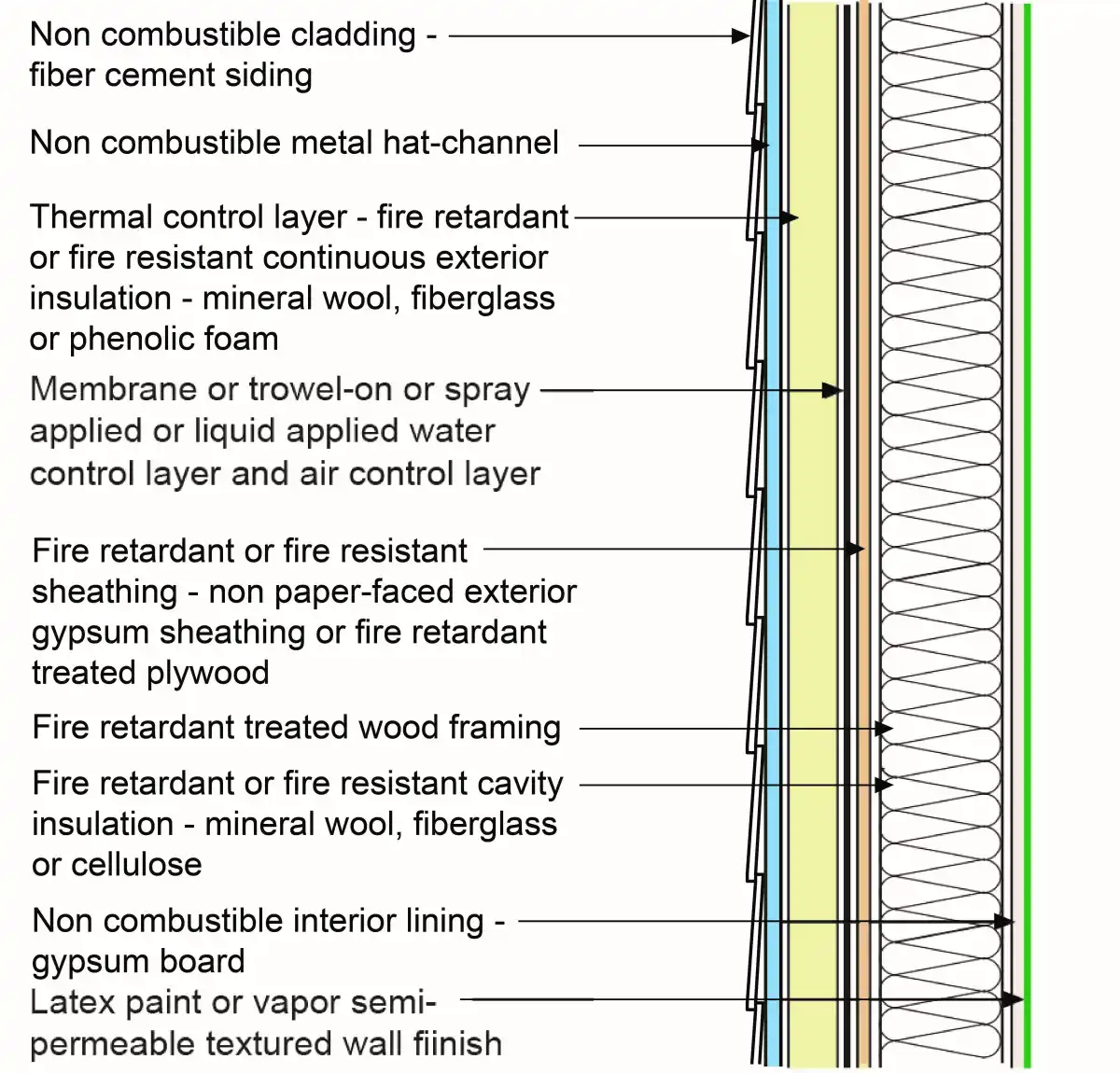
Timber is not always the correct answer. It is generally unsuitable on buildings where the external wall must follow a non-combustible route. It is also a poor choice where the geometry makes proper ventilation continuity impossible, where the client insists on a zero-maintenance coated appearance, or where the project budget cannot support the level of detailing the façade actually needs. Timber works best when it is allowed to behave like timber inside a disciplined build-up. If the building cannot offer that, another façade material may be more honest and more durable.


Weathered timber cladding façade with natural silver grey ageing after years of outdoor exposure


Frequently Asked Questions

How long does timber cladding last in the UK?

In UK conditions, timber cladding commonly lasts anywhere from around 15 years to well over 80 years depending on species, exposure and system quality. The biggest variable is not the timber label on its own but whether the façade is built as a ventilated rainscreen that allows moisture to escape. A good system keeps the timber closer to equilibrium moisture levels and slows decay dramatically. A poor system shortens lifespan regardless of how good the timber looked on the original specification sheet.

Which timber cladding lasts the longest?

Charred timber systems associated with Shou Sugi Ban usually sit at the top end of the service-life conversation because the carbonised surface resists UV and moisture-related surface degradation well. ThermoWood also performs strongly because of its dimensional stability and reduced moisture uptake. That said, “longest lasting” only makes sense if the full façade build-up is correct. A badly ventilated charred façade can still underperform a well-designed ThermoWood or larch façade.

Does maintenance affect timber cladding lifespan?

Yes, but the relationship is more nuanced than people assume. Maintenance supports lifespan when it preserves the intended finish and keeps moisture from being trapped. It harms lifespan when a failing coating is left in place and starts holding water against the timber. This is why untreated façades sometimes outperform coated ones structurally. A natural weathering strategy can be very durable because it avoids the failure cycle that comes when appearance retention is prioritised but maintenance intervals are missed.

Is ThermoWood better than Siberian Larch for service life?

ThermoWood is often the safer choice where dimensional stability and long-term predictability matter most. Its lower moisture uptake reduces movement stress and helps the façade hold cleaner lines. Siberian Larch can still provide strong service life and has excellent architectural character, but it normally demands more respect in board sizing, fixing and detailing because movement is more active. So the answer depends on whether the project values stability first or natural grain character and cost balance first.

How does UK weather affect timber cladding lifespan?

UK weather affects timber by repeatedly wetting and drying the façade rather than attacking it in one simple way. Driving rain pushes water into joints and details, high humidity slows drying, and colder periods introduce freeze–thaw stress where moisture is trapped. These cycles create the movement that eventually causes checking, finish breakdown and localised weakness. A well-ventilated rainscreen reduces that stress by allowing the timber to dry quickly after wetting.

Do I always need a ventilated cavity behind timber cladding?

In normal UK best practice, yes. A ventilated cavity is fundamental to long service life because it lets moisture drain and dry away from the back of the boards. Without it, the system relies too heavily on the timber surface alone and begins to accumulate moisture where decay risk rises sharply. A ventilated rainscreen is not a luxury detail. It is one of the main reasons a timber façade can survive for decades rather than only a few seasons.

What causes timber cladding to fail early?

Early failure usually comes from trapped moisture, restrained movement or poor detailing rather than from the species itself. Common causes include no meaningful cavity ventilation, poor base clearances, inadequate junction design around windows and heads, incorrect stainless grade or fixing method, and neglected coatings that start trapping water. These faults often begin as cosmetic issues such as staining or slight distortion, then progress into decay, board replacement and loss of structural confidence.

Can timber cladding really last more than 50 years?

Yes. Many timber systems can exceed 50 years if the build-up is designed correctly, the species is appropriate for the exposure, and maintenance expectations are realistic. This is especially true with high-performing modified timbers and charred systems. Longevity at that level depends less on optimistic marketing claims and more on disciplined detailing: cavity continuity, correct support timber classes, suitable fixings, sound moisture management and a façade that is allowed to dry properly.

Does board width affect timber lifespan?

Yes, because board width directly affects movement behaviour. Wider boards move more visibly across the grain and place greater stress on fixings, joints and finish systems. That does not mean wide boards are impossible, but they require more careful specification and are generally more forgiving in stable timbers than in active ones. If board width is chosen only for visual reasons without regard to dimensional stability, service life often pays the price later.

Is untreated timber better than painted timber?

Structurally, untreated timber often has an advantage because it can weather naturally without relying on a coating to remain intact. Painted timber can look more controlled at completion, but the coating system becomes a maintenance dependency. Once paint starts failing, moisture can be trapped and deterioration accelerates. That is why an untreated façade that silvers honestly may outlast a painted façade whose appearance was better initially but whose maintenance regime was not sustained.

What is the single biggest factor affecting timber cladding lifespan?

The single biggest factor is moisture control, and in practice that means ventilation. If the system allows water to drain and the back of the boards to dry, service life increases dramatically. If the façade traps moisture, decay pressure rises and even good timber loses years of service life. Species matters, but it is secondary to whether the whole façade can manage moisture effectively through a real ventilated rainscreen strategy.

Can timber cladding rot?

Yes. Timber can rot whenever it remains persistently damp enough for fungal decay to develop. That usually happens because the design prevented drying rather than because the timber spontaneously failed. Rot is therefore best understood as a system warning sign. It tells you the façade is holding moisture where it should not. Proper cavities, correct base detailing, sensible clearances and coherent ventilation paths are what keep that risk under control.

0.0 0 Reviews
Leave review
Rate
Upload Photos
Cancel