
- Loglap cladding is a horizontal timber profile with a rounded convex face that creates the appearance of a traditional log cabin — widely used on garden rooms, summerhouses, sheds, and agricultural buildings.
- Available in Siberian larch and Nordic spruce — larch for natural durability without treatment, spruce for the most affordable entry point.
- Standard UK size is 24x146mm in both species — available from UK stock with nationwide delivery in 7–14 days.
- Material costs £20–£35 per m² for spruce and £40–£60 per m² for larch — one of the most affordable cladding profiles in either species.
- Loglap vs shiplap — loglap has a rounded convex face for a cabin look; shiplap has a flat face for a cleaner contemporary result.
Loglap cladding is one of the most recognised and popular horizontal timber cladding profiles in the UK — the rounded convex face of each board creates an instantly recognisable cabin aesthetic that has been used on garden buildings, agricultural structures, and rural homes for decades. This guide covers exactly what loglap cladding is, how it differs from shiplap, which timber species to specify, what it costs, and how to install it correctly for long-term performance.
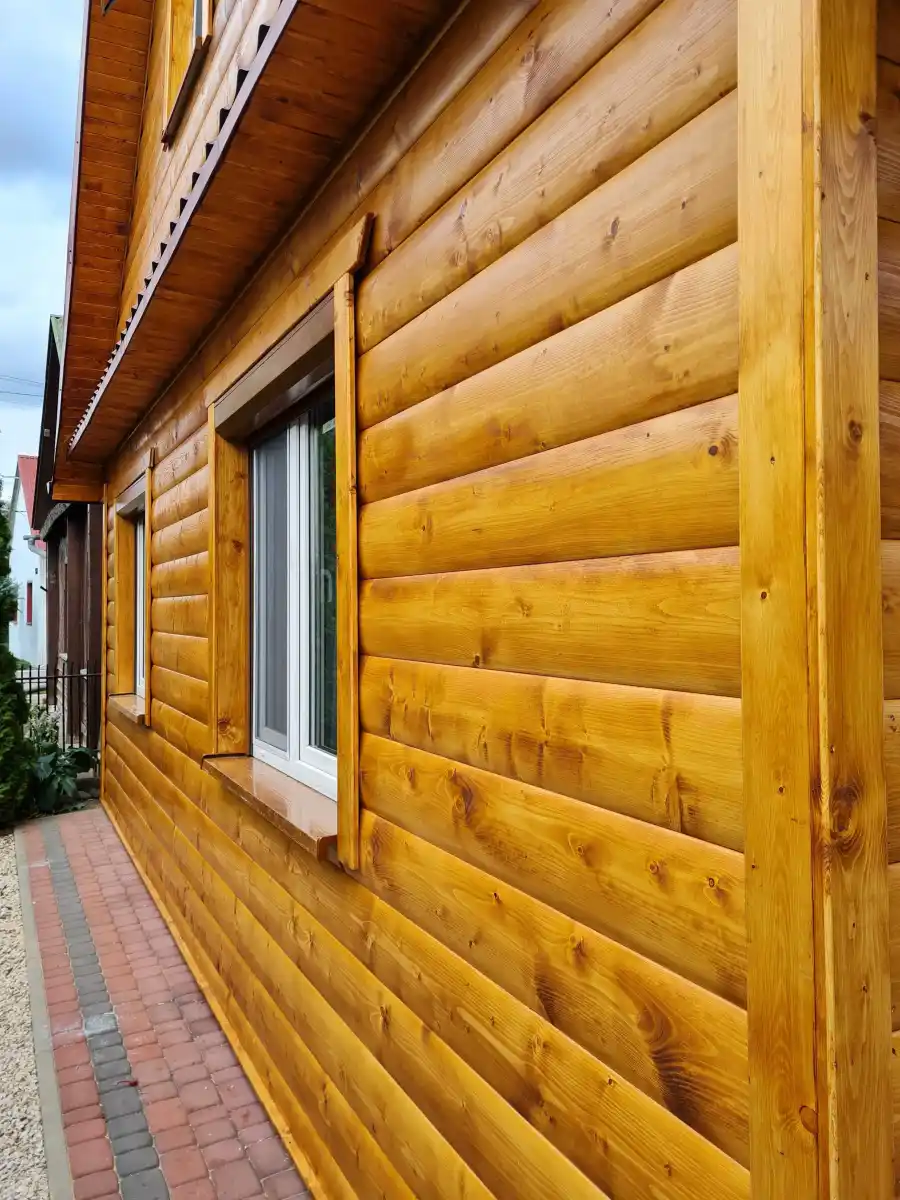
Loglap cladding close-up — the rounded convex face of each board is the defining characteristic of the profile, creating shadow depth at the overlap that gives loglap its distinctive log cabin appearance.
We stock loglap cladding in Siberian larch 24x146mm and Nordic spruce 24x146mm from UK stock with nationwide delivery in 7–14 days.
What Is Loglap Cladding?
Loglap cladding is a machined timber profile where the exposed face of each board is shaped with a rounded convex curve — mimicking the appearance of a round log when the boards are installed horizontally in an overlapping arrangement. Each board has a rebated top and bottom edge that allows the boards to overlap, with the rounded face of the lower board visible below the overlap of the board above. The result is a series of curved ridges across the elevation that create the distinctive log cabin appearance associated with loglap.
The loglap profile takes its name directly from what it does — it creates the visual appearance of a traditional log lap construction (where round logs are stacked horizontally) using standard machined timber boards. It is one of the oldest and most widely used timber cladding profiles in the UK and across northern Europe, where the log cabin aesthetic has deep cultural roots in traditional rural and agricultural building.
In contemporary UK use, loglap is primarily associated with garden buildings — garden rooms, summerhouses, log cabins, storage sheds, and playhouses. It is also used on agricultural buildings, rural outbuildings, and some residential projects where a traditional or countryside aesthetic is wanted. It is rarely specified on contemporary architect-designed projects, where shadow gap, rainscreen, and shiplap profiles are more typical — but it remains one of the highest-volume cladding profiles in the UK garden building market.
Loglap vs Shiplap — Key Differences
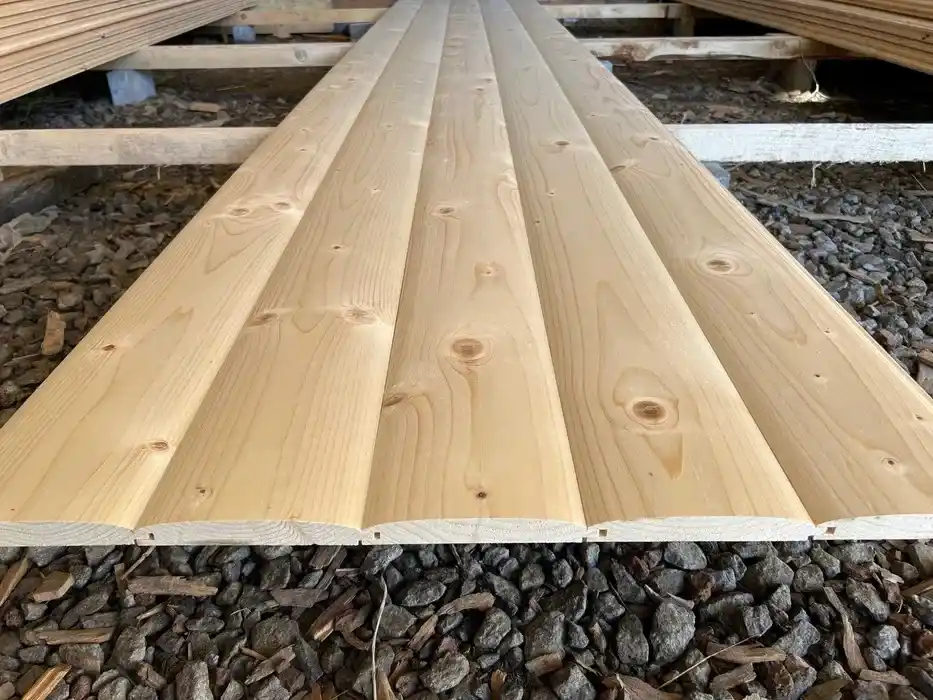
Loglap cladding boards stacked — the rounded convex face of each board is clearly visible in cross-section. The rebated edges allow the boards to overlap cleanly when installed horizontally.
| Feature | Loglap | Shiplap |
|---|---|---|
| Board face shape | Rounded convex — log cabin look | Flat — clean contemporary look |
| Visual style | Traditional, rustic, cabin-style | Cleaner, more modern |
| Shadow depth | Deep — pronounced ridge at each board | Shallow — subtle shadow line at overlap |
| Installation | Horizontal only | Horizontal or vertical |
| Typical use | Garden buildings, sheds, rural | Residential, garden rooms, sheds |
| Cost | Similar to shiplap | Similar to loglap |
The choice between loglap and shiplap comes down almost entirely to aesthetic preference. Loglap creates a traditional, characterful cabin look with strong three-dimensional texture across the elevation. Shiplap creates a flatter, more restrained surface that suits both traditional and contemporary buildings. Both profiles perform identically from a weather resistance and installation perspective — both overlap to shed water and both are installed horizontally from the base of the wall upward. For contemporary residential extensions and garden offices, shiplap is more typical. For garden rooms, summerhouses, and buildings where a cabin aesthetic is specifically wanted, loglap is the natural choice. For a full shiplap guide see our shiplap cladding guide.
Loglap Cladding — Timber Species
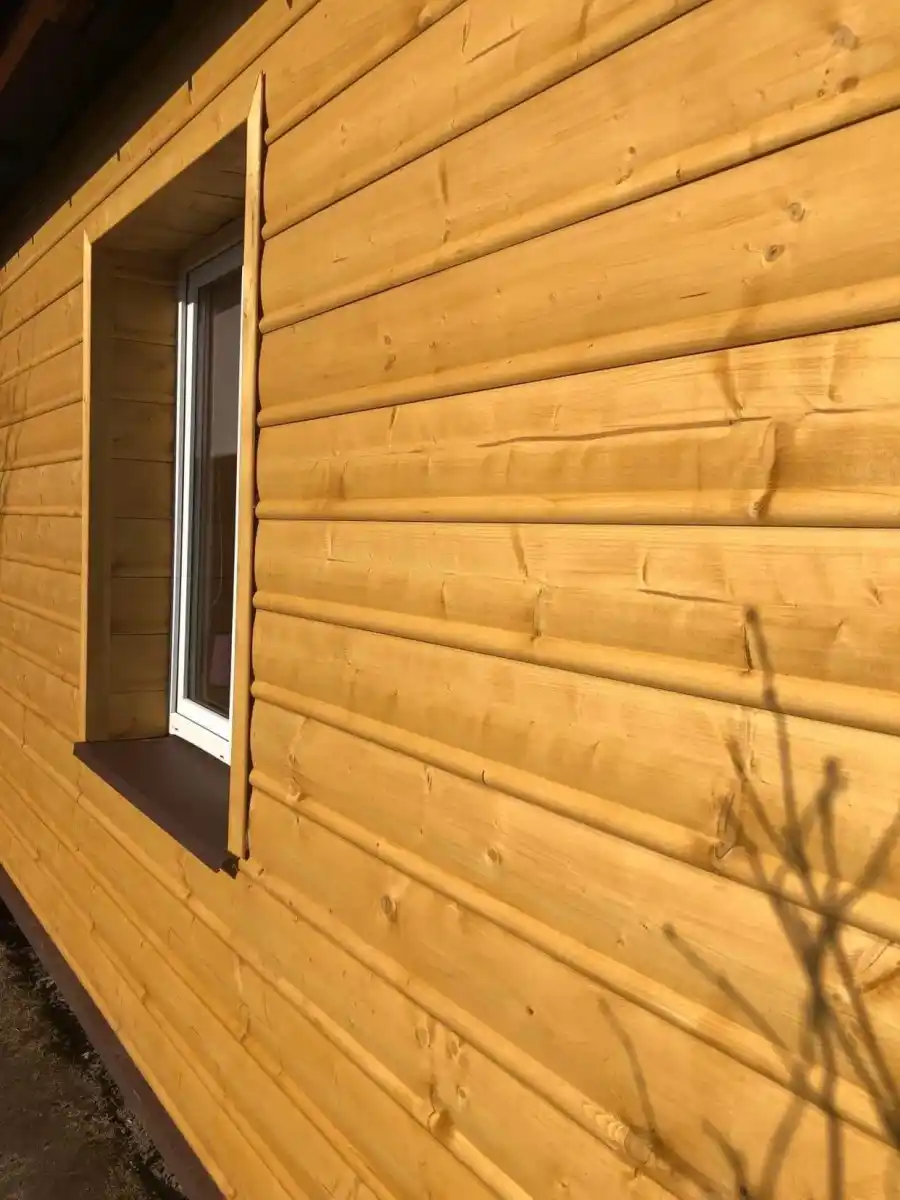
Loglap external cladding — the horizontal rounded boards create a warm, characterful exterior well suited to garden buildings and rural structures. Siberian larch in loglap weathers attractively from golden-yellow to silver-grey without any maintenance.
Nordic spruce is not naturally durable in above-ground exterior use without preservative treatment. Left untreated in a UK exterior, spruce will begin to show signs of biological decay within 3–5 years. Always apply a quality exterior preservative before installation and maintain a regular treatment schedule of every 2–3 years throughout the service life. Siberian larch is the stronger long-term specification for any exterior loglap project where ongoing maintenance is a consideration.
Loglap Cladding in Use — Garden Rooms & Outbuildings
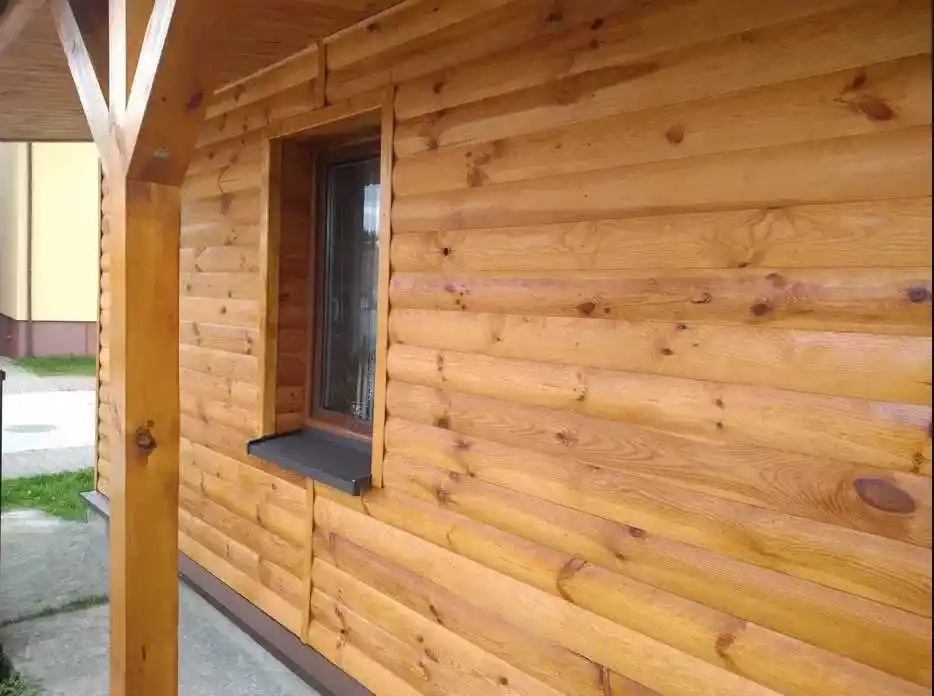
Loglap cladding on a UK garden building — the warm golden colour and rounded board profile creates an instantly recognisable cabin aesthetic that remains one of the most popular choices for garden rooms and summerhouses.
Loglap cladding is the dominant profile in the UK garden building market — the vast majority of commercially produced garden rooms, summerhouses, log cabins, and storage sheds in the UK are clad in loglap profile, most commonly in Nordic spruce. The profile's immediate visual association with traditional log cabin construction makes it the instinctive choice for buyers who want their garden building to look like a cabin rather than a contemporary extension.
For self-build and custom garden room projects, the choice between loglap and more contemporary profiles is one of the most fundamental design decisions. Loglap in Siberian larch creates a building that feels warm, natural, and characterful — it sits comfortably in a garden setting, particularly when surrounded by planting, and weathers to an attractive silver-grey that requires no maintenance. Contemporary shadow gap or rainscreen profiles in larch or ThermoWood create a building that reads as more architectural and considered — better suited to modern garden offices that need to signal professionalism. For full guidance on garden room cladding options see our garden room cladding guide.
Loglap Cladding Cost UK 2026
| Species | Profile | Materials per m² | Battens & fixings | Total materials per m² |
|---|---|---|---|---|
| Nordic Spruce | 24x146mm | £20–£35 | £8–£12 | £28–£47 |
| Siberian Larch | 24x146mm | £40–£60 | £8–£12 | £48–£72 |
A typical 4x3m garden room or summerhouse with approximately 25m² of loglap cladding costs £700–£1,175 in materials for Nordic spruce or £1,200–£1,800 in materials for Siberian larch. These figures include the loglap boards, battens, and stainless steel fixings. Add £625–£1,125 for professional installation if not self-installing — loglap is one of the most DIY-friendly cladding profiles and is widely self-installed on garden buildings.
How to Install Loglap Cladding
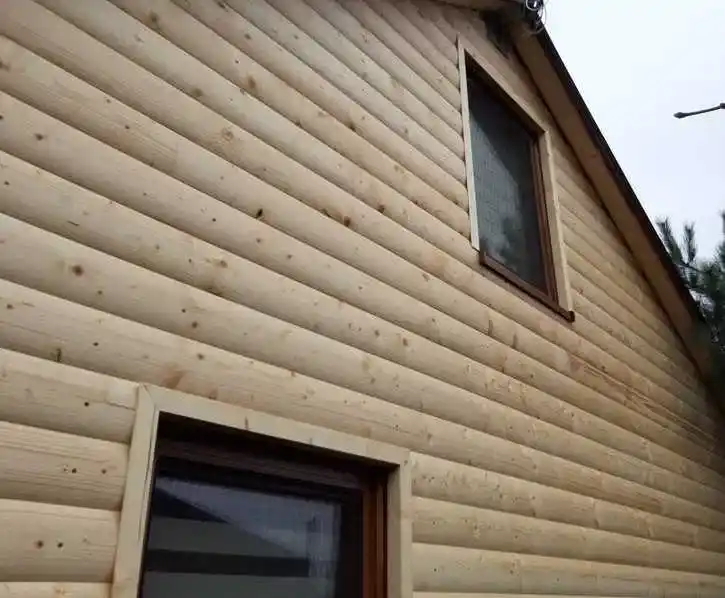
Loglap timber cladding installation — boards are fixed horizontally working from the bottom of the wall upward, with each board overlapping the one below to shed water away from the wall surface.
Loglap cladding installs horizontally, working from the bottom of the wall upward. Each board overlaps the board below, with the rebated edges engaging to create a consistent overlap. Installation is straightforward compared to more complex profiles — the overlapping fixing method means each board is fixed through its face into the batten below, with the next board covering the fixing point of the one beneath.
The key installation requirements are:
- Fix battens horizontally at centres to suit the board width — for 24x146mm loglap, batten centres of approximately 120mm work well to provide support at each board overlap
- Start with a starter strip at the base — a thin packing piece at the bottom fixes the angle of the first board and establishes the correct overlap for all subsequent courses
- Work bottom to top — each board overlaps the one below, shedding water away from the wall surface
- Minimum 150mm ground clearance — keep the base of the lowest board at least 150mm above finished ground level to prevent ground splash and capillary moisture uptake
- Seal all end grain — apply compatible exterior oil or end grain sealer to every site cut before fixing, particularly on Nordic spruce where end grain is the primary moisture entry point
- A4 stainless steel fixings throughout — standard steel nails or screws will rust and stain the timber within 1–2 years, particularly on Siberian larch where the natural tannins react with ferrous metals
- Pre-treat Nordic spruce before installation — apply preservative to all faces including the back face and any cut ends before the boards go up, as access to the back face is impossible once installed
For full fixing guidance including secret fix options and spacing see our timber cladding fixings guide.
For a garden room, summerhouse, or cabin where a traditional look is wanted and maintenance will be kept up — Nordic spruce loglap is the most affordable and widely used option. Treat before installation and refresh every 2–3 years. For a garden building where minimal maintenance is the priority or the structure is in a difficult-to-maintain location — Siberian larch loglap is the stronger long-term specification. Leave it to weather naturally to silver-grey and do nothing for 20+ years, or oil every few years to maintain the golden colour. Both are available from UK stock with nationwide delivery.
What is loglap cladding?
Loglap cladding is a timber profile where the face of each board is machined with a rounded convex curve, giving the appearance of a traditional log cabin when boards are installed horizontally in an overlapping arrangement. It is widely used on garden rooms, summerhouses, sheds, and agricultural buildings in the UK.
What is the difference between loglap and shiplap cladding?
Loglap has a rounded convex face creating a traditional cabin look with strong shadow depth. Shiplap has a flat face creating a cleaner, more contemporary result. Both are horizontal overlapping profiles and perform identically from a weather resistance perspective — the difference is purely aesthetic.
What timber is best for loglap cladding?
Siberian larch is the best timber for loglap cladding where natural durability is the priority — no treatment required, weathers to silver-grey, 20–35 year service life. Nordic spruce is the most affordable option and suits budget projects well when treated with exterior preservative every 2–3 years.
How much does loglap cladding cost per m² in the UK?
Nordic spruce loglap costs £20–£35 per m² for materials. Siberian larch loglap costs £40–£60 per m². Add £8–£12 per m² for battens and fixings. A typical 4x3m garden room costs £700–£1,800 in loglap materials depending on species.
Does loglap cladding need treatment?
Nordic spruce loglap requires preservative treatment every 2–3 years. Siberian larch loglap does not require treatment — it can be left unfinished to weather naturally or oiled every 3–5 years to maintain colour. Always pre-treat Nordic spruce on all faces including the back face before installation.
Loglap Cladding UK — Siberian Larch & Nordic Spruce from Stock
We supply loglap cladding in Siberian larch and Nordic spruce 24x146mm from UK stock with nationwide delivery in 7–14 days. FSC and PEFC certified. Send us your dimensions for a precise material quantity and price.