- Durability: Class 3 — naturally durable, no treatment required. 20–30 year service life above ground.
- Maintenance: Zero — no painting, staining, or preservative treatment needed. Weathers naturally to silver-grey.
- Best profiles: Feather edge (traditional), hit and miss (semi-private), slatted (contemporary), closeboard (privacy).
- vs treated pine: Lasts 20–30 years vs 10–15 for treated pine. Zero maintenance vs re-treatment every 3–5 years. Better whole-life cost.
- Black/charred: Charred larch fencing (Shou Sugi Ban) is one of the most popular contemporary garden fencing finishes — bold, durable, genuinely low maintenance.
- Cost: Feather edge boards from £2–4/lm. Panels £40–90 each. Supply and install £80–150/lm of fence run.
- Planning: Most garden fencing under 2m does not need planning permission — check if in a conservation area or on a listed property.
Siberian larch fencing is one of the best-value, lowest-maintenance timber fencing choices available in the UK — a naturally Class 3 durable species that requires no preservative treatment, no painting, and no staining throughout a 20–30 year service life, while weathering gracefully to a clean silver-grey that most homeowners find more attractive than the starting honey-gold. This guide covers everything you need to know about Siberian larch fencing in the UK in 2026 — which profiles work best, how larch compares to treated pine, what finishes are available including charred black, what it costs, and how to install it correctly.
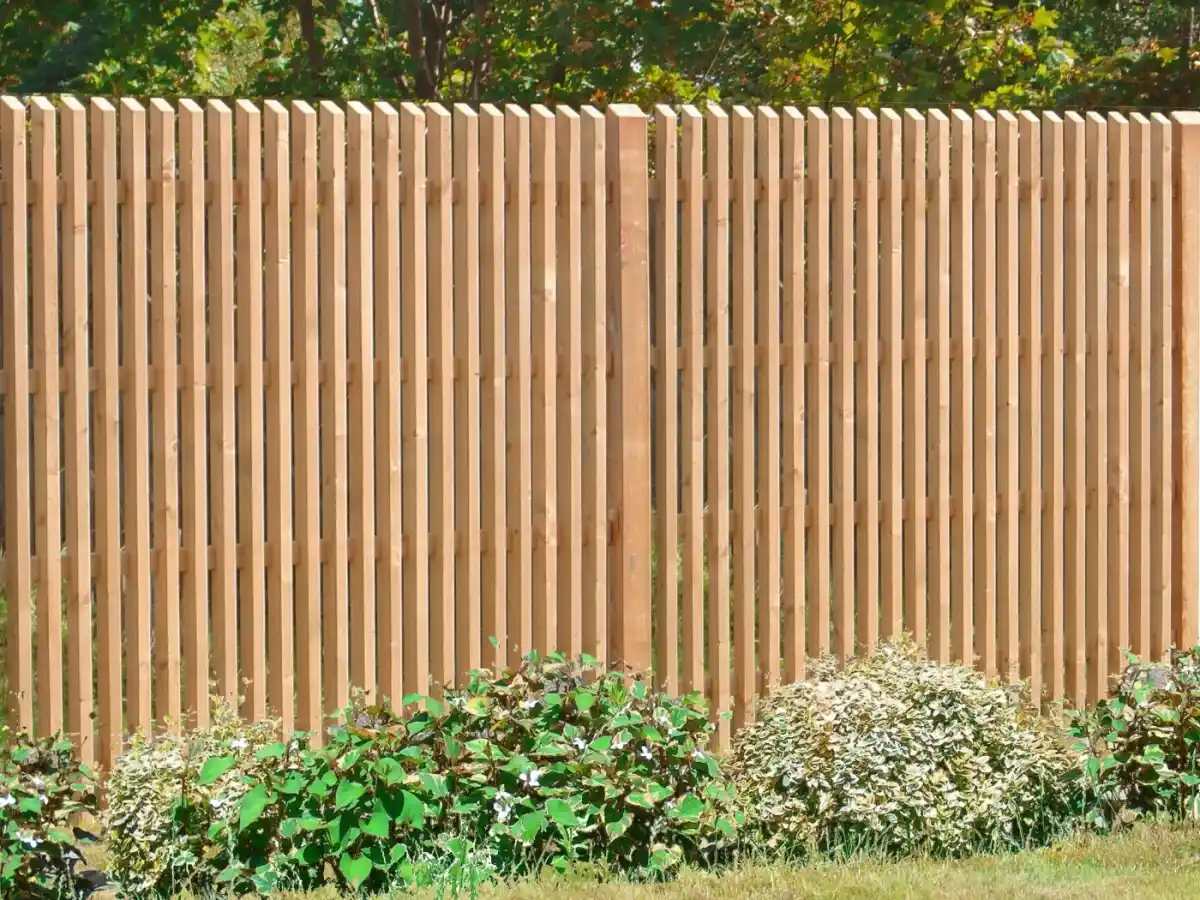
Siberian larch fencing — naturally Durability Class 3, no treatment required, 20–30 year service life. The warm honey-gold of fresh larch weathers to a clean silver-grey over 2–5 years without any maintenance. A significantly better specification than treated pine for any garden fence that needs to last and look good for decades.
Why Siberian Larch Is the Best Timber for UK Garden Fencing
The vast majority of garden fencing in the UK is built from pressure-treated pine — a Durability Class 4 softwood that requires preservative treatment to survive exterior conditions and needs re-treating every 3–5 years to maintain performance. Most homeowners never re-treat their fence panels, which means most treated pine garden fences begin to structurally deteriorate within 8–12 years, well before their supposed 15-year service life.
Siberian larch is a fundamentally different proposition. It is naturally Durability Class 3 — not chemically treated, not relying on a treatment programme to survive — and performs above ground for 20–30 years with zero maintenance. The difference over a 25-year garden fence lifespan:
- Treated pine: Replace at 12–15 years, re-treat 3–4 times during service life, costs of treatment (materials + access) typically £150–400 per treatment visit for a typical garden fence
- Siberian larch: Still performing structurally at 25 years, zero treatment visits, zero treatment cost. Left untreated, weathers to an even silver-grey that many homeowners prefer to the treated pine alternative
The upfront cost of Siberian larch fencing is higher than treated pine — but the whole-life cost, factoring in replacement and maintenance, is consistently lower for any fence expected to last more than 15 years. See our full Siberian larch guide for the complete performance picture.

Siberian larch feather edge fence panel — the traditional overlapping feather edge profile is the most widely used larch fencing style in the UK. The natural grain and honey-gold colour of fresh larch boards weathers to an even silver-grey over time, distinguishing it from the patchy, grubby grey of aging treated pine panels.
Siberian Larch Fencing Profiles UK — Which to Choose
Tapered overlapping boards fixed vertically to horizontal arris rails. The most widely used garden fence profile in the UK. Full privacy, traditional appearance. Available in larch in multiple widths. The classic choice for most residential gardens.
Alternating boards on front and back of the fence rail — semi-private with airflow between boards. Suits contemporary gardens and coastal or windy sites where a solid fence would create excessive wind load. Strong architectural character.
Horizontal larch boards fixed with gaps between them — the contemporary garden fence aesthetic increasingly seen on new build houses and modern garden designs. Various gap widths from near-solid to widely spaced. Often specified in shadow gap profile to match house cladding.
Boards fixed edge to edge with no gap — maximum privacy, traditional character. Less common in larch than feather edge but available. Particularly suited to boundary fences on rural plots where maximum privacy and wind protection are required.
Natural wavy edge retained on the board — the most rustic larch fencing style, producing a genuinely characterful fence that looks aged and natural from the outset. Suited to rural gardens and barn conversion settings. See our waney edge guide.
Shou Sugi Ban inspired charred larch or Nordic spruce fencing — deep black, contemporary, genuinely low maintenance. One of the most popular contemporary garden fence finishes in the UK. Browse our SSB range.
Siberian Larch Fencing vs Treated Pine — Full Comparison
| Property | Siberian Larch | Pressure Treated Pine | Winner |
|---|---|---|---|
| Durability class | Class 3 — naturally durable | Class 4 + chemical treatment | Larch |
| Service life | 20–30 years | 10–15 years (if maintained) | Larch |
| Maintenance required | None | Re-treat every 3–5 years | Larch |
| Weathered appearance | Clean silver-grey | Patchy, uneven grey | Larch |
| Chemical preservatives | None | Copper/boron based | Larch |
| Upfront cost | Higher | Lower | Pine |
| Whole-life cost (25 years) | Lower — no maintenance | Higher — replacement + treatment | Larch |
| FSC/PEFC certified | Yes | Yes (most suppliers) | Equal |
Black and Charred Larch Fencing UK — Shou Sugi Ban
Shou Sugi Ban fencing — deep charred timber fence panels in a contemporary garden setting. The carbonised surface provides genuine weather resistance and requires significantly less maintenance than black-painted timber alternatives. One of the most popular contemporary garden fence finishes in the UK.
Charred and black timber fencing has become one of the most searched garden design choices in the UK — and it is not just a trend. Black garden fences recede visually, making the garden feel larger and allowing planting to stand out rather than compete with the fence colour. Charred Shou Sugi Ban inspired larch or Nordic spruce fencing delivers this black aesthetic with genuine durability advantages over painted timber:
- Carbonised surface: The charring process carbonises the outer layer of the wood, creating a surface that is inherently resistant to moisture, UV, and insect attack — reducing the maintenance obligation significantly compared to painted or stained black timber
- Permanent black: Unlike black paint or stain that fades and requires re-application every 3–5 years, the charred surface maintains its black character permanently — the colour is the carbon itself, not a surface coating
- Texture and depth: The charred surface retains and reveals the natural grain of the timber — producing a textured, tactile black that paint cannot replicate
Our Shou Sugi Ban range includes charred, brushed, and stained black finishes on Nordic spruce and Siberian larch — available in feather edge, hit and miss, and slatted profiles for fencing applications. See our Shou Sugi Ban fencing UK guide, our full charred timber guide, and our Shou Sugi Ban cladding guide for the complete picture.
Charred and brushed black timber fencing — the brushed charred surface reveals the natural grain of the timber beneath the carbonised layer, creating a textured black finish with genuine depth and character. Lower maintenance than painted or stained timber alternatives.
Where Siberian Larch Fencing Is Specified UK
- Residential gardens: The primary application — larch feather edge, hit and miss, or slatted fencing as boundary or screen fencing in domestic gardens. The zero-maintenance credential is particularly valued by homeowners who do not want a recurring maintenance obligation
- New build housing developments: Developers increasingly specify larch fencing on private sale new build schemes — the premium material quality is visible to buyers and the zero-maintenance credential is a genuine selling point
- Garden rooms and garden offices: Matching larch fence panels around a larch-clad garden room creates a unified, cohesive garden design — same species, same weathering character, same maintenance profile (zero)
- Commercial and landscape: Larch hit and miss fencing is increasingly specified in commercial landscape schemes, hotel gardens, and public realm projects where a premium, low-maintenance timber fence is required. See our commercial timber guide for the broader picture
- Rural and agricultural: Larch feather edge and waney edge fencing suits rural settings — natural weathering to grey fits the agricultural vernacular without looking out of place in landscape settings
Siberian Larch Fencing Cost UK — 2026 Prices
| Product | Price (supply only) | vs treated pine |
|---|---|---|
| Larch feather edge boards 100mm | £2.50–4.00 per lm | +£1.00–1.50 vs pine |
| Larch feather edge boards 125mm | £3.00–5.00 per lm | +£1.50–2.00 vs pine |
| Larch hit and miss boards | £3.50–5.50 per lm | +£1.50–2.00 vs pine |
| Larch slatted/horizontal boards | £4.00–6.00 per lm | +£2.00–2.50 vs pine |
| Larch fence panels (pre-assembled) | £45–90 per panel | +£15–30 vs pine panels |
| Supply and install (fence run) | £80–150 per lm | +£20–40 vs pine installed |
A 20m run of treated pine feather edge fence (including posts and gravel boards) costs approximately £800–1,200 installed. With re-treatment every 4 years (approximately £150–300 per visit) and replacement at 12–15 years, the 25-year total cost is typically £2,500–4,000. A 20m run of Siberian larch feather edge fence costs approximately £1,400–2,000 installed — and the 25-year total cost is the same figure, with zero additional treatment costs and no replacement within the period. The larch fence whole-life cost is lower than treated pine over any ownership period beyond 10 years — making it the better value choice for any permanent garden boundary. See our Siberian larch cost guide for detailed pricing.
Planning Permission for Larch Fencing UK
Most garden fencing in the UK does not require planning permission — but there are important exceptions:
- Fences under 2m high: Generally permitted development in most locations — no planning permission required
- Fences over 2m high: Require planning permission regardless of location
- Fences under 1m adjacent to a highway: Require planning permission — this includes fences fronting a public footpath or road
- Conservation areas: Any fence over 1m in a conservation area may require planning permission — check with your local planning authority
- Listed buildings: Any fence in the curtilage of a listed building requires listed building consent regardless of height
- Permitted development removed: Some properties have permitted development rights removed by planning condition — check your planning documents
See our larch fence planning permission guide, our building regulations guide, and our Shou Sugi Ban fencing panels guide for the full picture.
How long does Siberian larch fencing last UK?
20–30 years above ground with zero treatment. Naturally Class 3 durable — no preservative treatment required. Left untreated, weathers from honey-gold to silver-grey and continues to perform structurally for 20–30 years. Significantly longer than treated pine (10–15 years even with maintenance).
Does Siberian larch fencing need treating UK?
No — naturally Class 3 durable, zero treatment required. Optional treatments: clear UV oil to slow weathering to grey, grey stain to achieve consistent grey from day one, or black/charred finish for a dark contemporary look. No structural need to re-treat, unlike Class 4 treated pine.
How much does Siberian larch fencing cost UK?
Feather edge boards from £2.50–4.00/lm supply only. Fence panels £45–90 each. Supply and install £80–150/lm of fence run. Higher upfront than treated pine but lower whole-life cost over 15–25 years when maintenance and replacement costs are included.
Is Siberian larch fencing better than treated pine UK?
Yes for most applications — longer service life (20–30 vs 10–15 years), zero maintenance vs re-treatment every 3–5 years, better weathered appearance (clean grey vs patchy pine), no chemical preservatives. Higher upfront cost but lower whole-life cost over any ownership period beyond 10 years.
Siberian Larch Fencing — Supply UK Wide, 7–14 Days
We supply Siberian larch feather edge, hit and miss, slatted, and waney edge fencing boards and panels across the UK. Natural, grey-stained, and Shou Sugi Ban charred black finishes. FSC and PEFC certified. 7–14 day delivery. Contact us for a quote or free samples.