
- ThermoWood wins on: Appearance (real grain vs manufactured pattern), sustainability (natural renewable vs plastic-based), repairability (can be sanded and refinished), and is comparable or cheaper at every quality tier.
- Composite wins on: Marginally less cleaning needed in heavily shaded, algae-prone positions — its sole genuine practical advantage.
- Cost: ThermoWood £75–£140/m² installed. Composite £85–£170/m² installed. ThermoWood is comparable or cheaper at every quality tier.
- Durability: ThermoWood BRE endorsed 25–40 years. Composite realistic service life 15–25 years before fade or panel issues.
- Our honest verdict: For most UK projects, ThermoWood is the stronger specification on every criterion that matters.
Composite cladding has been marketed heavily in the UK over the past decade as the "zero maintenance" alternative to timber — and it has won market share on that promise. But the marketing claims deserve scrutiny against an honest natural timber alternative: ThermoWood. Both are genuinely low-maintenance specifications. See our full ThermoWood decking vs composite comparison for the equivalent picture on decking. Only one is a natural, renewable, repairable material with a longer realistic service life and comparable cost. This guide compares ThermoWood and composite cladding honestly across every criterion that matters — cost, appearance, durability, maintenance, and sustainability — from a supplier who sells natural timber and does not sell composite.
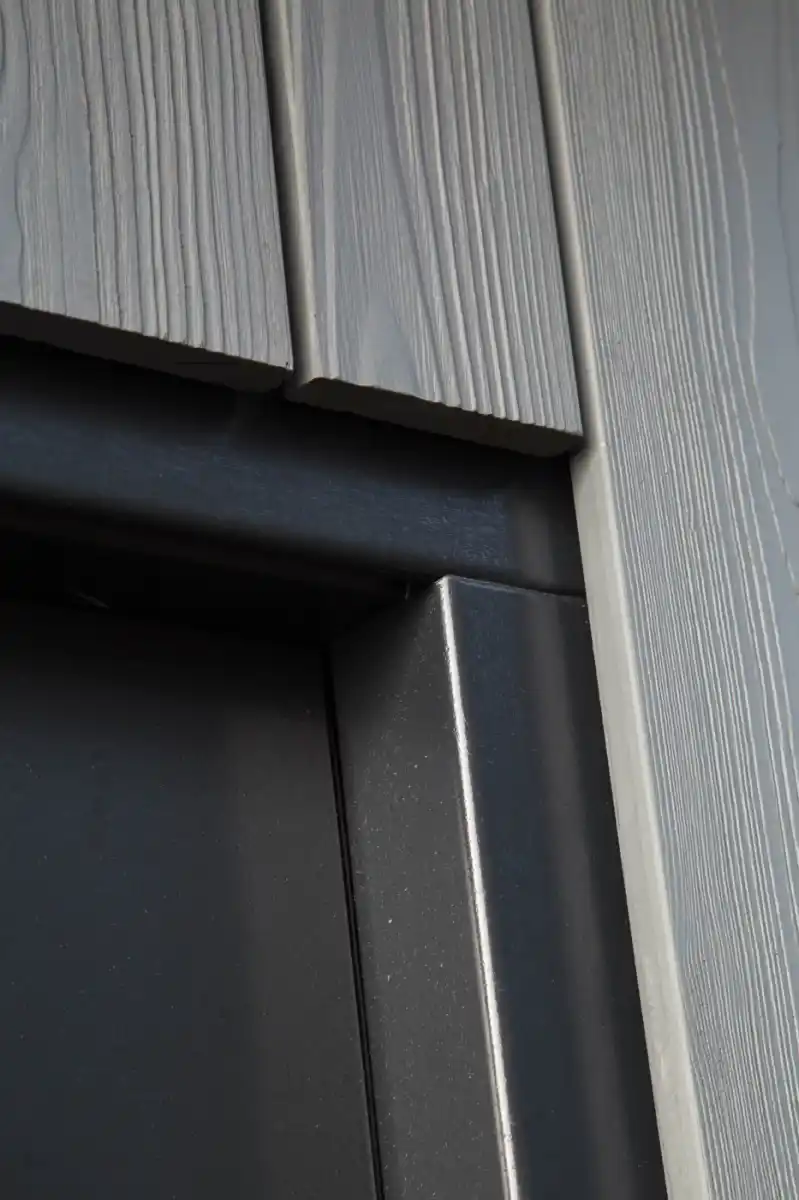
Composite cladding close up — a manufactured wood-plastic composite material marketed as a zero-maintenance alternative to natural timber. The repeating grain pattern and uniform surface texture are visible up close in a way that distinguishes it clearly from real timber cladding.
ThermoWood vs Composite Cladding — Full Comparison
| Criterion | ThermoWood | Composite Cladding | Winner |
|---|---|---|---|
| Appearance | Natural grain, real timber, unique boards | Manufactured simulation — repeating patterns | ThermoWood |
| Service life | 25–40 years (BRE endorsed) | 15–25 years (premium). 10–15 years (budget) | ThermoWood |
| Maintenance — algae cleaning | Annual brush clean recommended | Slightly less frequent in shaded positions | Composite (specific conditions) |
| Preservative treatment | Never required — Class 2 | Never required | Draw |
| Colour stability | Weathers to silver-grey (oil to maintain warm tone) | Fades — UV bleaching, can yellow over time | Draw — both change over time |
| Repairability | Damaged boards replaceable, can be sanded/refinished | Hard to match discontinued colours, cannot be refinished | ThermoWood |
| Sustainability | Natural renewable, FSC/PEFC, heat-only modification | 50–70% recycled plastic, energy-intensive, hard to recycle | ThermoWood |
| Surface feel / thermal | Natural timber feel, stays cooler in sun | Can get hot in direct summer sun | ThermoWood |
| Board cost/m² | £45–£90 | £55–£120 | ThermoWood |
| Installed cost/m² | £75–£140 | £85–£170 | ThermoWood |
| 40-year whole-life cost | No replacement needed | 1–2 replacements likely needed | ThermoWood |
| End of life | Biodegradable — compostable | Difficult to recycle — plastic component to landfill | ThermoWood |
Appearance — Why No Composite Replicates Real ThermoWood Grain
Composite cladding manufacturers have invested significantly in improving the visual simulation of natural timber grain over the past decade. Some premium composite products are genuinely well-made and convincing at a distance. But no composite currently available replicates two fundamental characteristics of real ThermoWood: the subtle natural colour variation between boards, and the depth and three-dimensionality of genuine wood grain under close inspection or changing light.
Browse our ThermoWood shiplap and ThermoWood rainscreen profiles for the natural grain alternative. Composite boards are manufactured in batches with a limited number of repeating grain patterns — typically three to five — that cycle across a facade. Once the repeat is noticed, it becomes visible permanently. ThermoWood boards are each individually unique, sourced from real timber with its natural grain variation. The visual richness of a ThermoWood facade comes precisely from this material authenticity — it reads as the natural material it is, not a simulation of one.
Composite also performs less favourably in direct summer sun — dark composite panels can reach surface temperatures of 60–70°C, noticeably warmer than ThermoWood at equivalent exposure due to timber's lower thermal conductivity. This matters for any surface that may be touched, and for buildings where heat transfer through the cladding into internal spaces is a consideration.
The "Zero Maintenance" Claim — What Composite Marketing Gets Right and Wrong
The central marketing claim for composite cladding is "zero maintenance" — and like the equivalent claim for composite decking, this deserves honest examination because it is partially true and partially overstated.
What is true: Composite cladding does not require preservative treatment or oiling — the plastic binder means the wood fibre component cannot rot in the traditional sense. This is a genuine practical benefit specifically in heavily shaded, north-facing, or high-humidity positions where algae accumulates rapidly and frequent timber cleaning would be genuinely burdensome.
What is overstated: Composite cladding still requires regular cleaning — most manufacturers recommend cleaning two to four times per year in shaded positions to prevent algae and mould accumulation, which is a similar frequency to what ThermoWood requires (annual brushing is generally sufficient for ThermoWood due to its lower moisture content). And critically, composite cannot be sanded, oiled, or refinished if it becomes damaged, scratched, or discoloured — when composite deteriorates or is damaged, it deteriorates permanently. ThermoWood can be locally sanded and re-oiled to restore appearance.
For a typical UK elevation in reasonable light, ThermoWood requires no more maintenance effort than composite — both benefit from occasional cleaning, neither requires preservative treatment. For heavily shaded north-facing elevations where algae accumulates rapidly, composite may require marginally less frequent cleaning — this is composite's one genuine practical advantage, and it applies to a minority of UK building elevations.
Sustainability — ThermoWood Wins Clearly
Composite cladding is frequently marketed as the sustainable choice because it incorporates recycled plastic and wood waste. This narrative requires scrutiny against ThermoWood, which is genuinely one of the most sustainable cladding materials available:
- ThermoWood's modification process: Uses only heat and steam at 190–212°C — no chemicals, no resins, no adhesives. The process is entirely physical, not chemical, and the resulting timber remains 100% natural wood that can be composted or biodegrade naturally at end of life
- Composite composition: Typically 50–70% recycled polyethylene (HDPE) or PVC plastic combined with 30–50% wood fibre. The plastic component is derived from fossil fuels regardless of its recycled status, is not biodegradable, and cannot be composted
- Manufacturing carbon: Processing plastic and wood fibre into composite extrusions is significantly more energy-intensive than the thermal modification process used for ThermoWood
- End of life: Composite cladding panels cannot be meaningfully recycled in the UK at end of life — the wood-plastic blend makes material separation impractical, and most composite cladding ends its life in landfill or incineration. ThermoWood is fully biodegradable and FSC/PEFC certified timber from sustainably managed forests
- Service life impact: A composite facade replaced after 15–20 years effectively doubles the manufacturing carbon impact compared to ThermoWood lasting 25–40 years without replacement
See our ThermoWood cladding maintenance guide for the full zero-maintenance picture. For any project where sustainability credentials are part of the specification — increasingly the norm on UK residential and commercial projects — certified natural ThermoWood is the materially stronger choice. See our sustainability commitments for our full certification detail.
Cost — ThermoWood Wins at Every Quality Tier
| Specification | Installed cost/m² | Service life | 40-yr cost/m² |
|---|---|---|---|
| Budget composite | £85–£110 | 10–15 years | £255–£440 (2–3 replacements) |
| Premium composite | £130–£170 | 15–25 years | £260–£340 (1–2 replacements) |
| ThermoWood shadow gap | £75–£110 | 25–40 years | £75–£110 (no replacement) |
| ThermoWood triple shadow gap | £90–£140 | 25–40 years | £90–£140 (no replacement) |
Premium composite at £130–£170/m² installed requires replacement after 15–25 years. The replacement adds another £130–£170/m², bringing the 40-year cost to £260–£340/m². ThermoWood at £75–£140/m² installed requires no replacement for 25–40 years, making the 40-year cost identical to the installed cost. ThermoWood is cheaper whole-life than composite at every comparable quality tier.
We sell natural timber and believe ThermoWood is the better specification for most UK projects. But composite cladding makes genuine sense in two specific situations: heavily shaded, north-facing elevations in high humidity where algae accumulation is a persistent and significant problem, and situations where the client has a documented inability to carry out even minimal annual maintenance and a fully maintenance-averse specification is required. Outside these specific situations, ThermoWood is the stronger specification on appearance, sustainability, repairability, and whole-life cost.
Is ThermoWood better than composite cladding?
Yes for most UK projects — better appearance (real grain vs manufactured pattern), longer service life (25–40 yrs vs 15–25 yrs), better sustainability (natural renewable vs plastic-based), can be sanded and refinished, and cheaper at every comparable quality tier. Composite's sole genuine advantage is marginally less cleaning needed in heavily shaded, algae-prone positions.
How does the cost of ThermoWood compare to composite cladding?
ThermoWood £75–£140/m² installed. Composite £85–£170/m² installed. ThermoWood is comparable or cheaper at every quality tier. Over 40 years ThermoWood is significantly cheaper as it requires no replacement, while composite typically needs 1–2 replacements within the same period.
Does composite cladding last longer than ThermoWood?
No — ThermoWood lasts longer. ThermoWood is BRE endorsed for 25–40 years. Premium composite has a realistic service life of 15–25 years before colour fade or panel issues require replacement. Budget composite is 10–15 years. ThermoWood matches or exceeds composite at every quality tier.
Is composite cladding more sustainable than ThermoWood?
No — ThermoWood is more sustainable. FSC/PEFC certified natural timber, thermally modified with heat only (no chemicals), fully biodegradable at end of life. Composite is 50–70% recycled plastic — manufacturing is energy-intensive, and the plastic component cannot be meaningfully recycled or biodegrade.
ThermoWood Cladding — Natural, Sustainable, UK Stock
We supply ThermoWood cladding in shadow gap, triple shadow gap, shiplap, rainscreen, and tongue and groove profiles from UK stock. FSC and PEFC certified, heat-modified with no chemicals. See our ultimate ThermoWood cladding guide for full specification detail. Nationwide delivery 7–14 days. Tell us your elevation dimensions for a precise material quote.