


When homeowners compare ThermoWood and larch cladding, the discussion often starts with appearance and price. Both timbers are widely used in the UK, both are marketed as durable, and both can deliver attractive façades when first installed. The real differences only become obvious over time, once the cladding has been exposed to years of moisture, temperature fluctuation, and uneven weathering.
For residential buildings, success is rarely defined by whether the timber survives structurally. Homeowners care far more about how often maintenance is required, how evenly the façade ages, and whether the cladding continues to look intentional rather than tired after a few seasons.
Key insight: Larch relies on natural durability and surface weathering, while ThermoWood improves performance by modifying the timber itself to reduce moisture movement and long-term instability.
Larch has a long history of use in UK housing. Its natural resin content gives it a degree of resistance to decay, and when left untreated it weathers to a silver-grey tone that many homeowners find appealing. In rural or traditional contexts, this natural ageing is often seen as a benefit rather than a drawback.
However, larch remains a responsive timber. It absorbs and releases moisture readily, meaning it continues to expand, contract, and move throughout its service life. In sheltered locations this movement may be modest. On exposed elevations, particularly in high-rainfall or coastal areas, it can lead to cupping, surface checking, and uneven weathering.
These effects do not necessarily indicate failure, but they do influence long-term appearance and maintenance expectations. Where colour retention is required, larch façades often demand closer monitoring and more frequent re-coating to avoid patchy degradation. Where natural weathering is accepted, movement can still affect shadow lines and joint consistency.

ThermoWood takes a different approach. Instead of relying solely on natural resistance, the timber is thermally modified in a controlled process that alters its internal structure. This significantly reduces its ability to absorb and release moisture, resulting in a calmer and more predictable material once installed.
This is why thermally modified timber cladding is often specified where long-term consistency matters. Reduced movement means boards stay flatter, joints remain tighter, and seasonal change places far less stress on fixings and surface finishes.
Stability is the hidden driver of maintenance. When timber moves less, coatings last longer, end grain is exposed to fewer wet-dry cycles, and isolated failures are far less common. Over time, this translates into façades that age evenly rather than deteriorating in patches.

Maintenance expectations therefore differ significantly between the two materials. Larch façades typically require more active management, especially if a coloured finish is applied. As boards expand and contract, coatings can thin, crack, or fail locally, increasing the frequency of intervention.
ThermoWood offers more flexibility. Many homeowners choose to allow it to weather naturally, accepting gradual silvering with minimal intervention beyond periodic inspection. Where colour retention is important, reduced movement allows finishes to be refreshed less often and with more predictable results.
It is also useful to understand how larch compares with other commonly specified softwoods. Articles such as Douglas Fir Cladding vs. Larch Cladding show that while species characteristics vary, moisture behaviour remains a defining factor in long-term performance.

From a design perspective, ThermoWood is frequently chosen for contemporary residential architecture where clean lines and consistent detailing are important. As a category, ThermoWood cladding is closely associated with modern façades that prioritise controlled ageing over rustic variation.
At a product level, this stability becomes tangible. A profile such as ThermoWood shadow gap cladding provides defined dimensions, controlled shadow lines, and predictable behaviour that works with modern rainscreen detailing rather than fighting it.

For homeowners, specifying a stable profile like this often shifts maintenance from frequent corrective work to planned inspection and optional aesthetic refresh. This difference becomes increasingly noticeable after five to ten years, when untreated or lightly treated timbers often begin to show uneven ageing.
That does not make larch a poor choice. It makes it a material better suited to certain expectations. Homeowners who value natural variation, are comfortable with visible movement, and are prepared for more regular maintenance may find larch entirely appropriate.
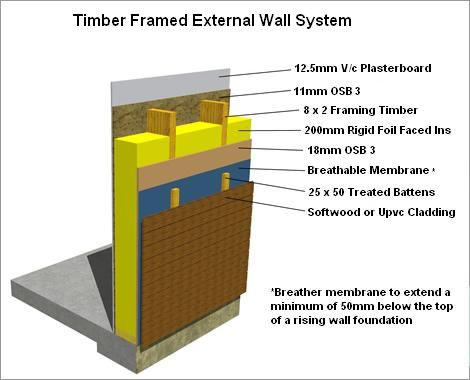
Regardless of timber choice, detailing remains critical. Ventilation, fixing selection, allowance for movement, and correct board spacing all influence long-term performance. Even the most stable timber will underperform if moisture is trapped or airflow is restricted.
Clear design guidance can significantly improve outcomes. Resources such as timber cladding layout guidance help ensure correct installation, improving drying potential and reducing the risk of long-term issues for both materials.
For UK homes, the choice between ThermoWood and larch cladding ultimately comes down to priorities. Larch offers a traditional appearance and natural weathering, with maintenance accepted as part of the material’s character. ThermoWood offers greater stability, reduced maintenance pressure, and a more predictable ageing process that suits many modern residential projects.
Where consistency, longevity, and manageable upkeep are key, thermally modified timber consistently proves to be the more forgiving option. Where natural variation and hands-on maintenance are acceptable, larch remains a viable and attractive choice.