
- Permitted: Yes, subject to height. Buildings over 18m (or 7 storeys) cannot use combustible cladding under current Building Safety Act rules — this includes most timber.
- Under 18m: Timber cladding is permitted with appropriate fire classification — typically Euroclass B-s3,d0 minimum, often B-s1,d0 specified as standard by housing associations.
- Best species: Siberian larch and ThermoWood — naturally durable, zero or near-zero maintenance, the lowest whole-life cost across large numbers of units.
- Why whole-life cost matters: Housing associations retain long-term maintenance responsibility — annual treatment across hundreds of units creates significant recurring cost and access burden.
- Fire-retardant treatment: Available for timber that needs to meet Euroclass B classification — extends species choice without compromising fire compliance.
- Always confirm: Project-specific fire strategy with a qualified fire engineer before final specification.
Timber cladding specification for social housing sits at the intersection of three competing priorities that do not always pull in the same direction: fire safety compliance, which has become significantly more stringent and scrutinised since the Grenfell Tower tragedy; whole-life maintenance cost, which matters enormously for housing associations and local authorities managing thousands of units over decades; and the genuine aesthetic and environmental benefits that timber cladding offers over render, brick, or composite alternatives. This guide is written for housing association asset managers, local authority specifiers, and architects working on social housing schemes — covering the regulatory framework, species selection for whole-life value, fire performance requirements, and practical specification guidance.
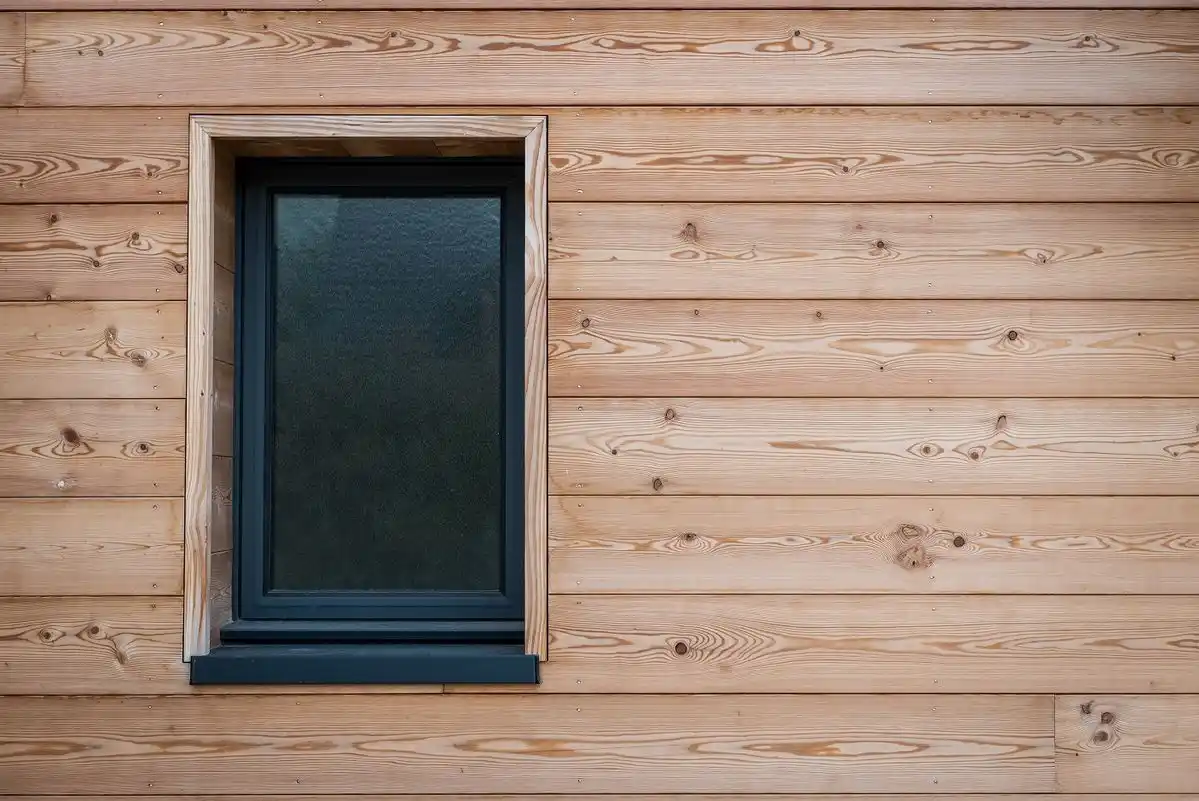
Timber cladding on a UK residential building — naturally durable species such as Siberian larch and ThermoWood are increasingly specified for social housing where low maintenance burden across large numbers of units is a key procurement consideration alongside fire safety compliance.
The Regulatory Framework — What Changed After Grenfell
The fire safety regulatory landscape for cladding on residential buildings in the UK was transformed by the Grenfell Tower fire in 2017 and the subsequent Building Safety Act 2022. For social housing specifiers, the key practical consequence is the ban on combustible materials in external wall systems on "relevant buildings" — defined as residential buildings over 18 metres in height or with 7 or more storeys.
This ban, set out in Approved Document B Volume 1 (Dwellings) and reinforced by the Building Safety Act, prohibits the use of materials that do not achieve Euroclass A1 or A2-s1,d0 classification on relevant buildings above the height threshold. In practice, this rules out most timber cladding — including fire-retardant treated timber — on tall residential blocks. For housing associations and local authorities managing high-rise stock, this means timber cladding is largely off the table for buildings above 18 metres regardless of treatment.
Below the 18 metre threshold — which covers the substantial majority of UK social housing stock, including most low-rise and mid-rise developments — timber cladding remains a viable and frequently specified material, subject to appropriate fire classification for the specific building's fire strategy. See our detailed guides on Approved Document B for timber cladding and Euroclass fire ratings explained for the complete technical picture.
Fire safety requirements for social housing cladding vary by building height, use class, escape strategy, proximity to boundary, and individual housing association or local authority policy — many of which set internal standards more stringent than the statutory minimum following increased post-Grenfell scrutiny. This guide provides general orientation only. Every social housing project must have its fire strategy confirmed by a qualified fire engineer or building control body before cladding specification is finalised. We can provide product fire test data and classification certificates to support this process but cannot determine project-specific fire compliance.
Fire Performance Classification for Social Housing Cladding
For buildings under 18 metres, the relevant fire performance standard is typically expressed as a Euroclass rating — a European classification system (BS EN 13501-1) that rates building materials by their contribution to fire, smoke production, and flaming droplets. The classification format is read as: Euroclass [reaction to fire]-s[smoke production]-d[droplets].
| Classification | Meaning | Typical social housing requirement |
|---|---|---|
| Euroclass A1 / A2-s1,d0 | Non-combustible or limited combustibility | Required above 18m — rules out most timber |
| Euroclass B-s1,d0 | Limited contribution to fire, very low smoke, no droplets | Common housing association standard below 18m |
| Euroclass B-s3,d0 | Limited contribution to fire, higher smoke allowance, no droplets | Statutory minimum for relevant under-18m applications |
| Euroclass D-s2,d0 | Untreated timber — moderate contribution to fire | Generally insufficient for social housing specification |
Untreated natural timber cladding — including untreated Siberian larch and untreated ThermoWood — typically achieves Euroclass D classification, which is generally insufficient for social housing specification under most housing association fire strategies. To achieve the B-s1,d0 or B-s3,d0 classifications commonly required, timber cladding must undergo fire-retardant treatment. We supply fire-retardant treated cladding solutions designed specifically to meet these requirements — see our fire rated timber cladding guide, our fire rated cladding cost guide and our fire-retardant treatment service for full technical specification and test certification.
Why Whole-Life Cost Drives Social Housing Specification
Private residential clients typically own a single property and make cladding decisions based on a mix of upfront budget and personal preference. Housing associations and local authorities operate fundamentally differently — they retain ownership and full maintenance responsibility for properties across multi-decade asset management cycles, often managing hundreds or thousands of units from a centralised maintenance budget.
This structural difference makes whole-life cost the dominant specification consideration for social housing cladding in a way it rarely is for private residential projects. A cladding material requiring annual oiling or treatment across a development of 200 units creates a recurring maintenance programme that must be planned, resourced, and executed consistently across every property — including units where access may be restricted by occupancy, where contractors must be procured and managed at scale, and where missed maintenance cycles on even a small percentage of units create visible inconsistency across an estate.
| Species | Durability class | Maintenance obligation | 200-unit annual maintenance estimate | Service life |
|---|---|---|---|---|
| Nordic spruce (untreated finish) | Class 4 | Annual to biennial oiling | £15,000–£30,000/year | 15–25 years |
| Siberian larch | Class 3 | None required — optional oil only | £0 (or £5,000–£10,000 if oiled for colour) | 20–30 years |
| ThermoWood | Class 2 | Zero | £0 | 25–40 years |
The maintenance cost differential at scale is substantial — a 200-unit development clad in untreated softwood could require £15,000–£30,000 annually in oiling and access costs, compounding to £225,000–£450,000 over a 15-year cycle before factoring in replacement. The same development specified in Siberian larch or ThermoWood removes this recurring cost almost entirely, making the higher upfront board cost a sound long-term capital decision rather than a budget compromise.
For housing association and local authority procurement teams, specifying Siberian larch or ThermoWood over standard softwood is rarely a like-for-like cost comparison at the point of purchase — it is a whole-life asset management decision. The reduced maintenance liability, lower long-term replacement risk, and elimination of recurring access and contractor procurement costs typically make naturally durable species the financially rational choice across any portfolio held for more than 10 years, which describes the overwhelming majority of social housing stock.
Species and Profile Specification for Social Housing
Siberian larch — the established choice
Siberian larch is the most widely specified naturally durable cladding species for UK social housing — Durability Class 3, no preservative treatment required, 20–30 year service life. For fire compliance below 18m, fire-retardant treated larch achieving Euroclass B classification is readily available. Shadow gap and rainscreen are the most commonly specified profiles for multi-unit residential developments — see our Siberian larch cladding profiles guide for full specification detail.
ThermoWood — the highest durability option
ThermoWood offers the longest service life of the naturally durable softwood-derived species (25–40 years, Durability Class 2) and the best dimensional stability, which matters for long-term appearance consistency across a large facade or estate. Fire-retardant treated ThermoWood is available for projects requiring Euroclass B classification. See our ThermoWood cladding profiles guide for the full profile range.
Sustainability certification
FSC and PEFC certification is a standard procurement requirement for social housing timber specification, reflecting both housing association sustainability commitments and increasingly common public sector procurement policy. All timber we supply for social housing projects is FSC and/or PEFC certified as standard — see our sustainability credentials for full certification detail.
Can timber cladding be used on social housing in the UK?
Yes, subject to height restrictions. Buildings over 18 metres (or 7 storeys) cannot use combustible cladding including most timber under Building Safety Act 2022 rules. Below 18 metres, timber cladding is permitted with appropriate fire classification — typically Euroclass B-s3,d0 minimum, often required to be fire-retardant treated.
What fire rating does cladding need for social housing UK?
Typically minimum Euroclass B-s3,d0 for buildings under 18 metres, though many housing associations specify B-s1,d0 as standard practice. Fire-retardant treated timber cladding can achieve these classifications. Always confirm the specific requirement with the project's fire engineer as it varies by building height, use class and individual policy.
What is the best timber cladding species for social housing projects?
Siberian larch and ThermoWood are most commonly specified for UK social housing — both naturally durable, require no preservative treatment, and have 20–40 year service lives. Their low whole-life maintenance cost matters significantly for housing association asset management budgets managing large numbers of units over decades.
Why is whole-life cost important for social housing cladding specification?
Housing associations retain long-term ownership and maintenance responsibility, making whole-life cost more important than upfront cost. A cladding material requiring annual treatment across hundreds of units creates significant recurring maintenance budget and access cost burden. Naturally durable, zero-maintenance species reduce this ongoing liability substantially compared to standard softwood.
Timber Cladding for Social Housing — Fire-Rated & Naturally Durable
We supply Siberian larch and ThermoWood cladding for social housing and multi-unit residential projects, including fire-retardant treated options to meet Euroclass B classification. FSC and PEFC certified. We can provide fire test certification and technical data to support specification and procurement. See our fire resistant timber cladding overview and full cladding cost guide for further detail. Nationwide delivery and trade pricing available for volume orders.