
- For appearance — real timber wins. Natural grain, depth, and warmth cannot be replicated by composite at any price point.
- For maintenance — composite and thermally modified timber are broadly comparable. Charred timber requires less maintenance than both.
- For cost — composite is more expensive than larch and broadly comparable to ThermoWood. It is not the budget option it is often assumed to be.
- For sustainability — FSC/PEFC certified timber wins decisively. Composite uses fossil-fuel derived plastics and cannot be recycled at end of life.
- For longevity — ThermoWood and charred timber match or exceed composite on lifespan with less maintenance than untreated softwood.
The choice between timber and composite cladding is one of the most searched questions among UK homeowners planning a garden room or garden office. Composite cladding has been heavily marketed as a low-maintenance, long-lasting alternative to timber — and in some respects that marketing is justified. But the comparison is rarely presented fairly. Most composite vs timber discussions compare composite against untreated softwood — the worst possible version of timber — rather than against the thermally modified and charred timber products that make the most accurate comparison. This guide makes the honest comparison.
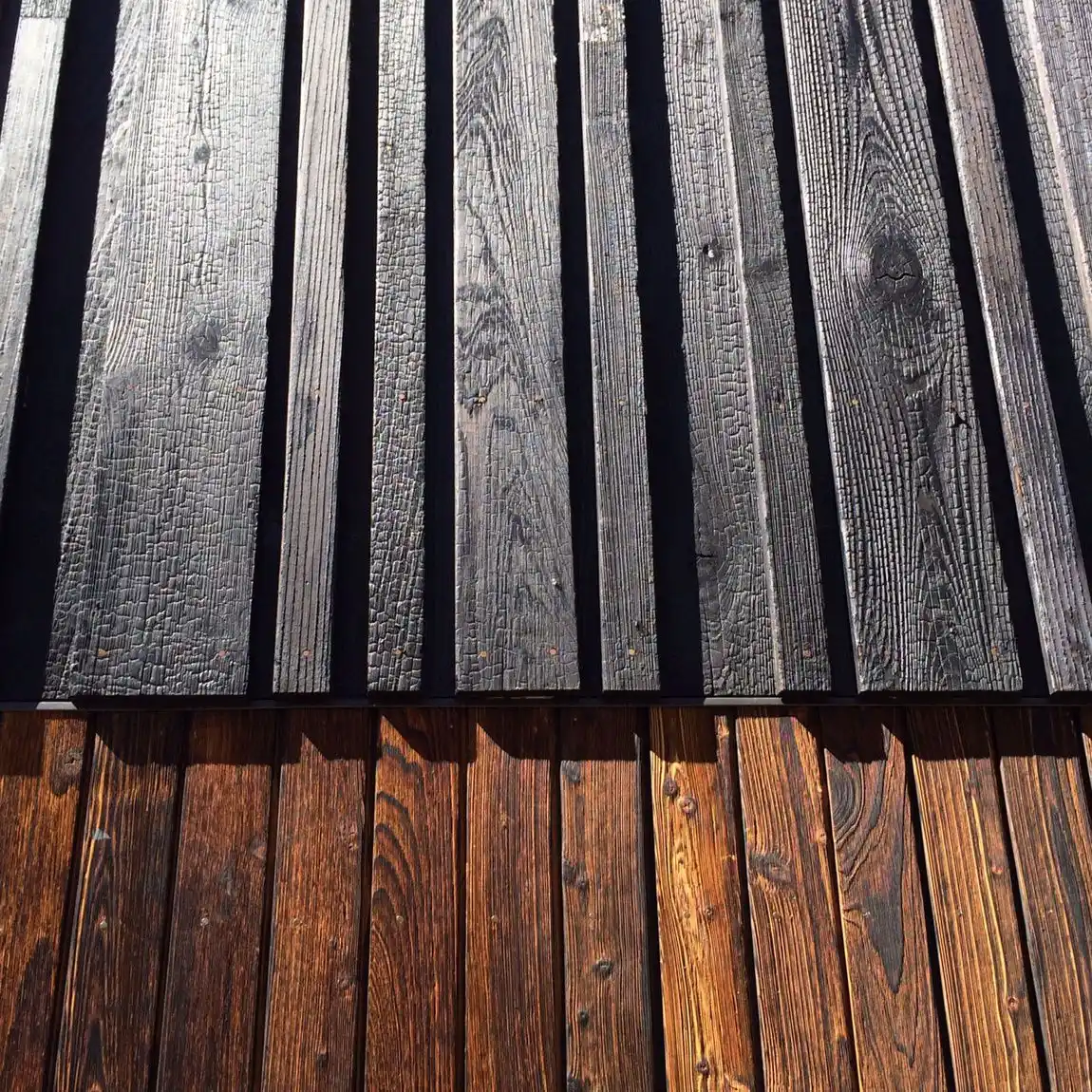
The natural grain, texture, and warmth of real timber cladding — qualities that composite materials can approximate from a distance but cannot replicate up close.
We supply timber cladding and take an obvious position in this debate — but we have tried to make this comparison as honest as possible. There are scenarios where composite is the right choice, and we have said so clearly. For most UK garden rooms and garden offices, however, the evidence points consistently towards quality timber as the better long-term specification.
What Is Composite Cladding?
Composite cladding is manufactured from a combination of recycled wood fibre and plastic polymers — typically polyethylene or PVC — bonded together under heat and pressure. Some composite products are hollow-core, others solid. Most are available in a range of colours with a surface finish designed to mimic the appearance of timber grain.
A separate category sometimes grouped with composite is fibre cement cladding — boards manufactured from cement, sand, and cellulose fibres. Fibre cement is heavier than WPC composite, has a more uniform appearance, and performs differently on installation and long-term behaviour. This guide focuses on WPC (wood plastic composite) as this is the product most commonly compared against timber for UK garden rooms.
The main selling points of composite cladding are consistent: no rotting, no warping, no regular oiling or staining required, and a fixed colour that remains stable over time. These are genuine advantages over untreated pine or spruce softwood. The question is whether they represent genuine advantages over the better quality timber options — ThermoWood, Siberian larch, and charred timber — that are available at comparable or lower cost.
Appearance — Real Timber vs Composite
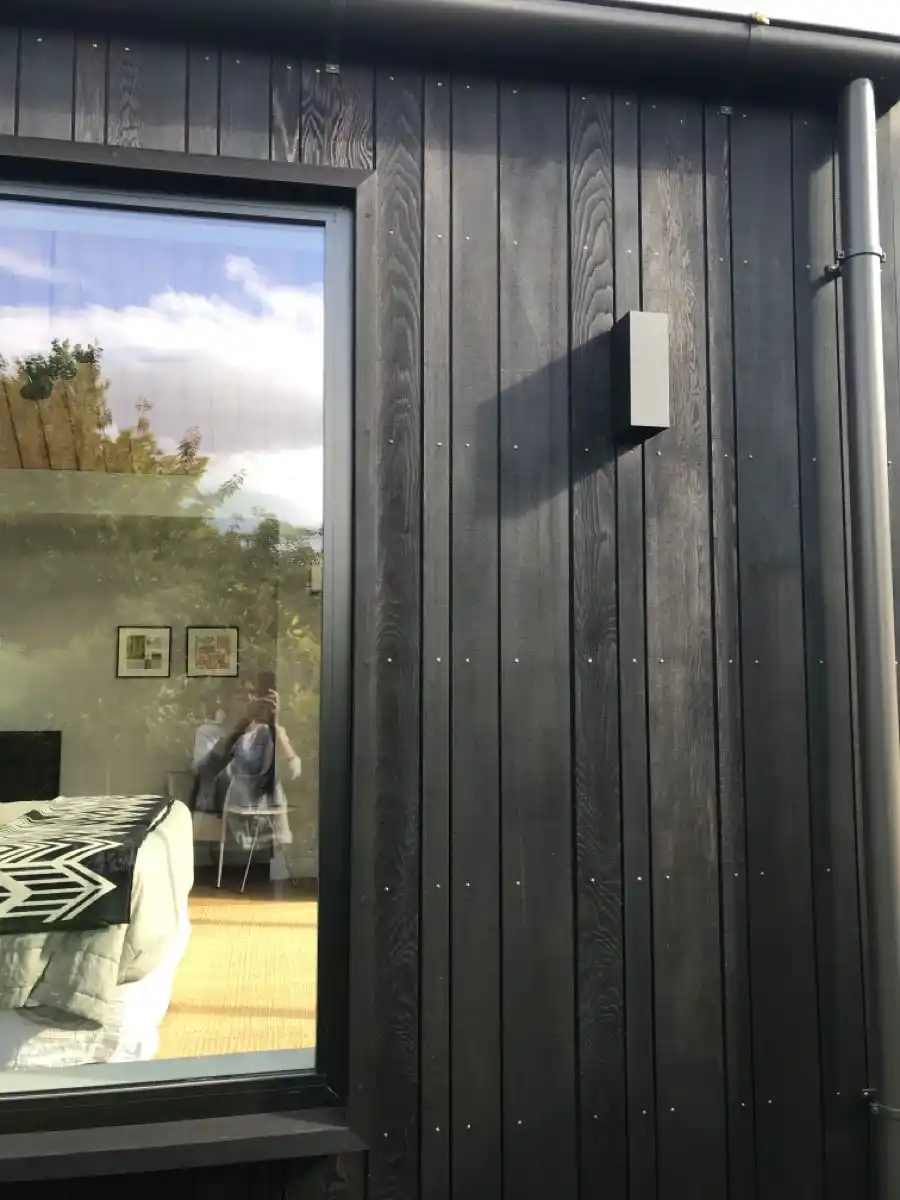
Shadow gap timber cladding on a UK garden room — the natural variation in grain, colour, and texture creates a result that composite cannot replicate at any price point.
Appearance is where the gap between timber and composite is most significant — and most consistently overlooked in composite marketing. High-quality composite has improved substantially over the past decade in its ability to mimic timber at a distance. At 10 metres, a well-installed composite garden room can look convincingly like real timber. Closer up, the difference is immediately apparent.
Real timber has natural variation — in grain pattern, colour, texture, and how it reflects light at different times of day. No two boards are identical. The surface has genuine depth and warmth that comes from the biological structure of the wood itself. Composite boards, by contrast, are manufactured to a consistent pattern that repeats across every board. The grain is embossed rather than natural, the colour is uniform rather than variable, and the surface lacks the tactile quality of real wood.
For garden offices where the building is visible from the house, photographed regularly, or intended to convey a considered design aesthetic, this distinction matters. A garden office clad in ThermoWood triple shadow gap or Siberian larch shadow gap looks and feels like a quality architectural structure. A composite-clad garden room looks like a composite-clad garden room.
Real timber wins decisively on appearance — at every distance and in every lighting condition. If appearance matters to your project, specify real timber. The gap between high-quality timber and composite is not closed by cost or brand — it is a fundamental difference in material character that no manufacturing process can replicate.
Weathering & Ageing — How Each Material Changes Over Time
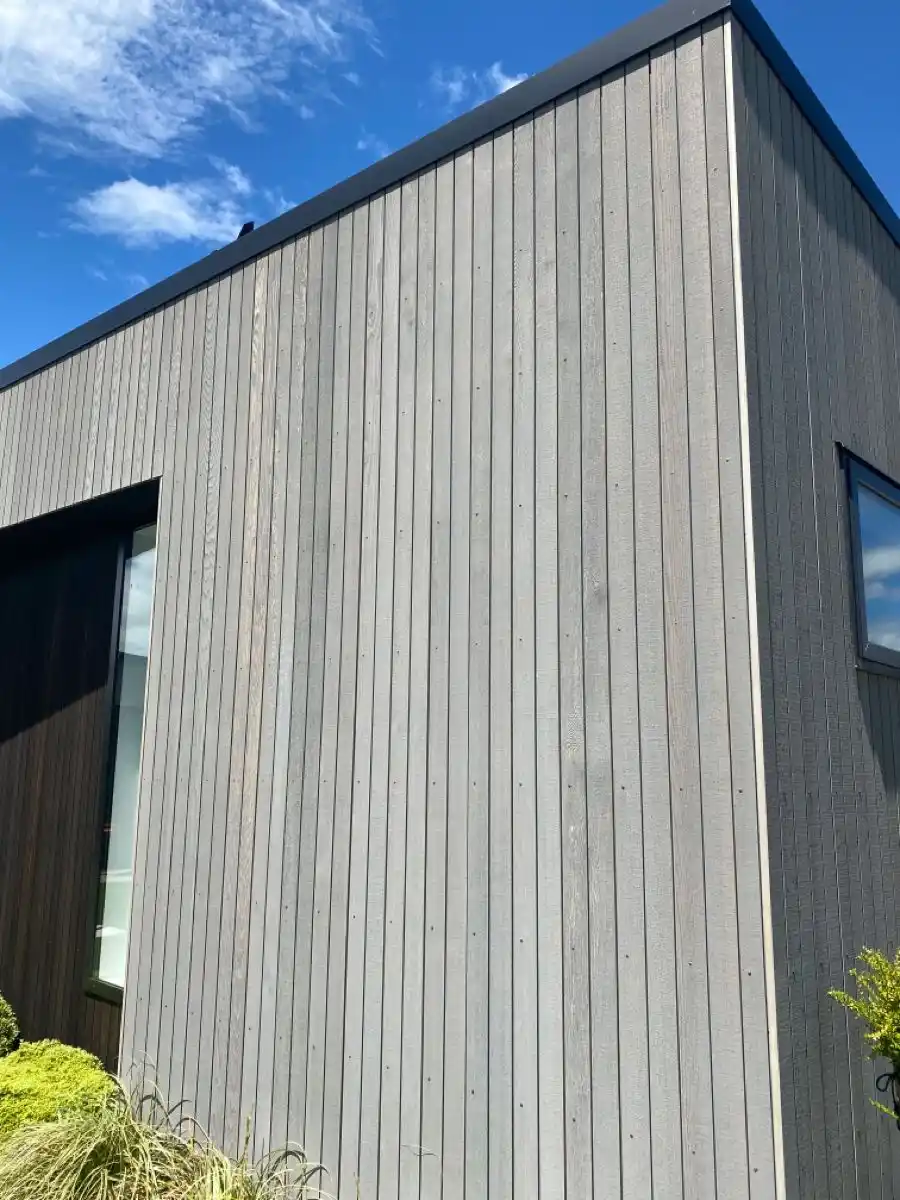
Naturally weathered timber on a UK garden room — the silver-grey patina develops consistently over 12–24 months and requires no ongoing treatment to maintain.
One of the most significant differences between timber and composite is how each material ages. This is an area where composite's marketing is particularly misleading when compared against quality timber — not untreated softwood.
How timber ages
ThermoWood and Siberian larch both weather naturally to a consistent silver-grey patina when left unfinished. This is a genuinely attractive, self-consistent finish that develops character over time. The silver-grey tone is even, does not show UV degradation or maintenance lapses, and continues to look considered decades after installation. Charred timber ages even more gracefully — the carbonised surface gradually lightens slightly with UV exposure but maintains a deep, rich appearance throughout its service life.
How composite ages
Composite cladding is designed to maintain its manufactured colour over time — but in practice, UV exposure causes fading and colour variation on UK elevations, particularly south and west-facing walls. The surface can also show staining from algae, mould, and dirt that is more difficult to remove from composite's embossed grain pattern than from a smooth timber surface. Most composite manufacturers require periodic cleaning with specific products to maintain the colour and surface appearance — removing the "zero maintenance" claim that is central to composite marketing.
Charred Timber — The Comparison Composite Marketers Avoid
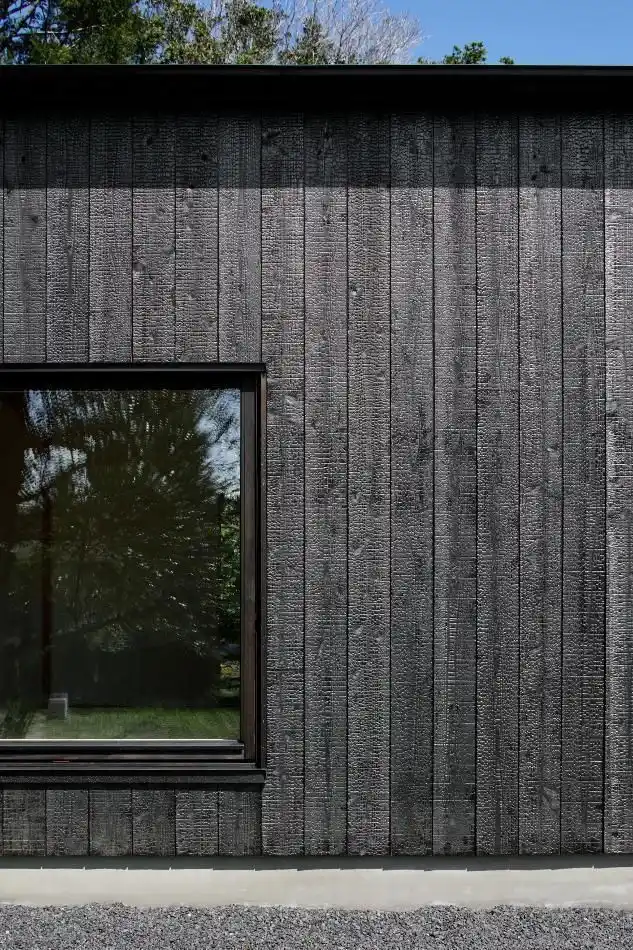
Deep charred timber on a UK garden room — the carbonised surface genuinely requires no maintenance and lasts 25–40 years. This is the timber option composite marketing never mentions.
The comparison between composite and timber is almost always framed as "composite vs untreated softwood" — because untreated softwood is the only timber product that composite consistently beats on maintenance. When the comparison is made fairly — composite vs charred timber — the result is very different.
Charred timber's carbonised surface requires no ongoing treatment — no oiling, no staining, no cleaning beyond an occasional wash down. It does not fade in the way composite does. It does not show algae growth in the way composite's embossed grain can. It lasts 25–40 years with virtually no intervention. And it looks far more striking and architecturally considered than any composite product at any price point.
The cost of charred timber (£75–£130 per m²) is broadly comparable to premium composite products. For anyone considering composite because of its maintenance advantages, charred timber deserves serious consideration as an alternative that delivers the same low-maintenance benefits with significantly better aesthetics and sustainability credentials.
Composite Cladding — Where It Has a Genuine Case
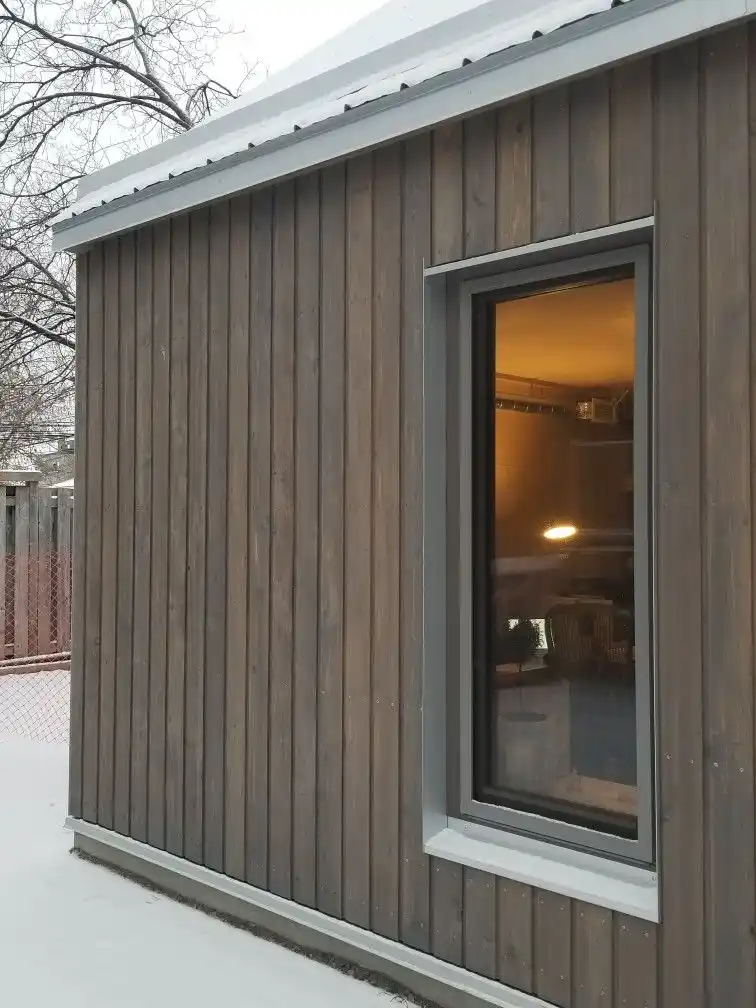
Composite cladding on a UK garden room — a reasonable choice for specific scenarios, but not the maintenance-free alternative to all timber options that its marketing suggests.
This guide has been critical of composite where that criticism is justified — but composite does have a genuine case in specific scenarios:
- Where a fixed, specific colour is required long term — composite is available in a wide range of colours that remain broadly stable over time. If you want a specific grey, cream, or anthracite finish that matches other elements of your garden or house, composite gives you more colour control than natural timber.
- Where the garden room owner is committed to zero involvement — even charred timber needs an occasional clean. If the garden room owner genuinely will not undertake any maintenance ever, composite is a reasonable specification.
- Where budget prevents ThermoWood or charred timber — composite sits in a similar price bracket to these products, but where budget is extremely tight, composite shiplap can be cheaper than larch shadow gap while delivering a cleaner, more consistent finish than budget softwood.
Composite Profiles for Garden Rooms
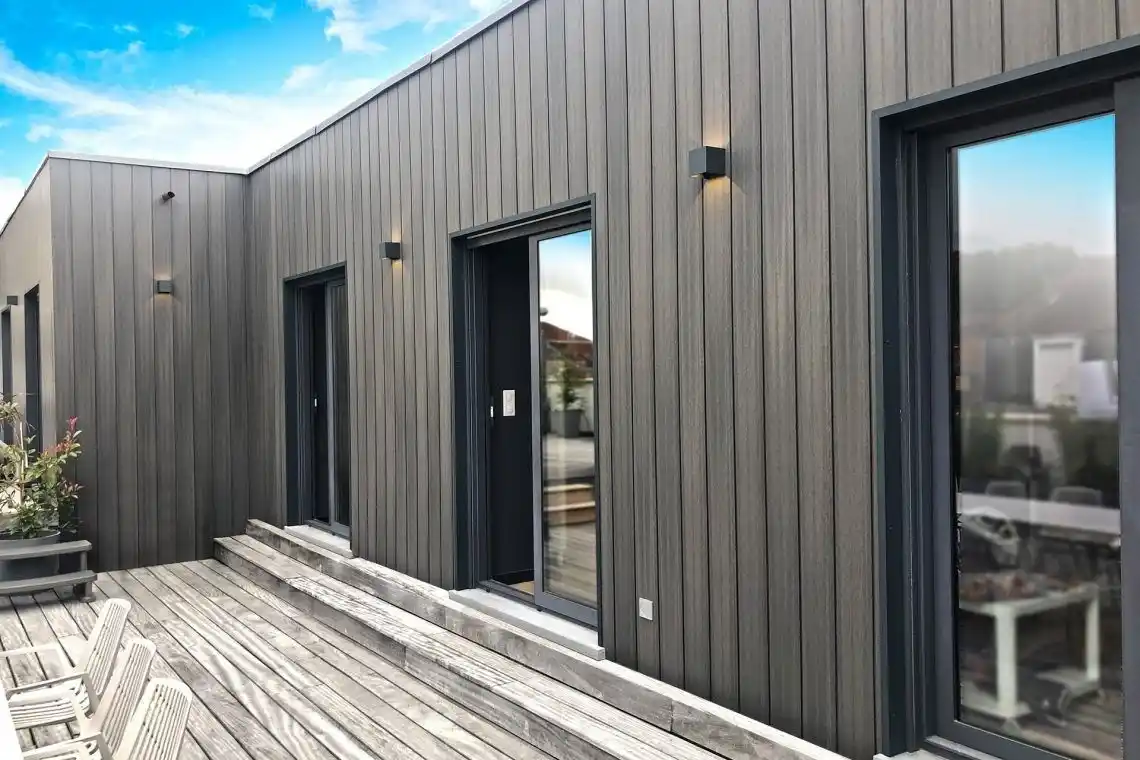
Vertical composite cladding on a UK garden room — composite is available in horizontal and vertical profiles, but the manufactured grain pattern becomes more apparent at close range.
Composite cladding for garden rooms is most commonly available in horizontal lap and vertical board profiles, with some manufacturers offering slatted and shadow gap options. The profile range is narrower than timber — you cannot specify a precise shadow gap depth, board width, or custom profile dimension in composite the way you can with timber.
Installation of composite cladding is broadly similar to timber — over a batten framework with a ventilated cavity. Composite boards are heavier than timber equivalents and require specific fixing systems from the manufacturer, which can increase installation complexity and cost compared to standard timber profiles.
The Close-Up Test — What Composite Looks Like in Reality
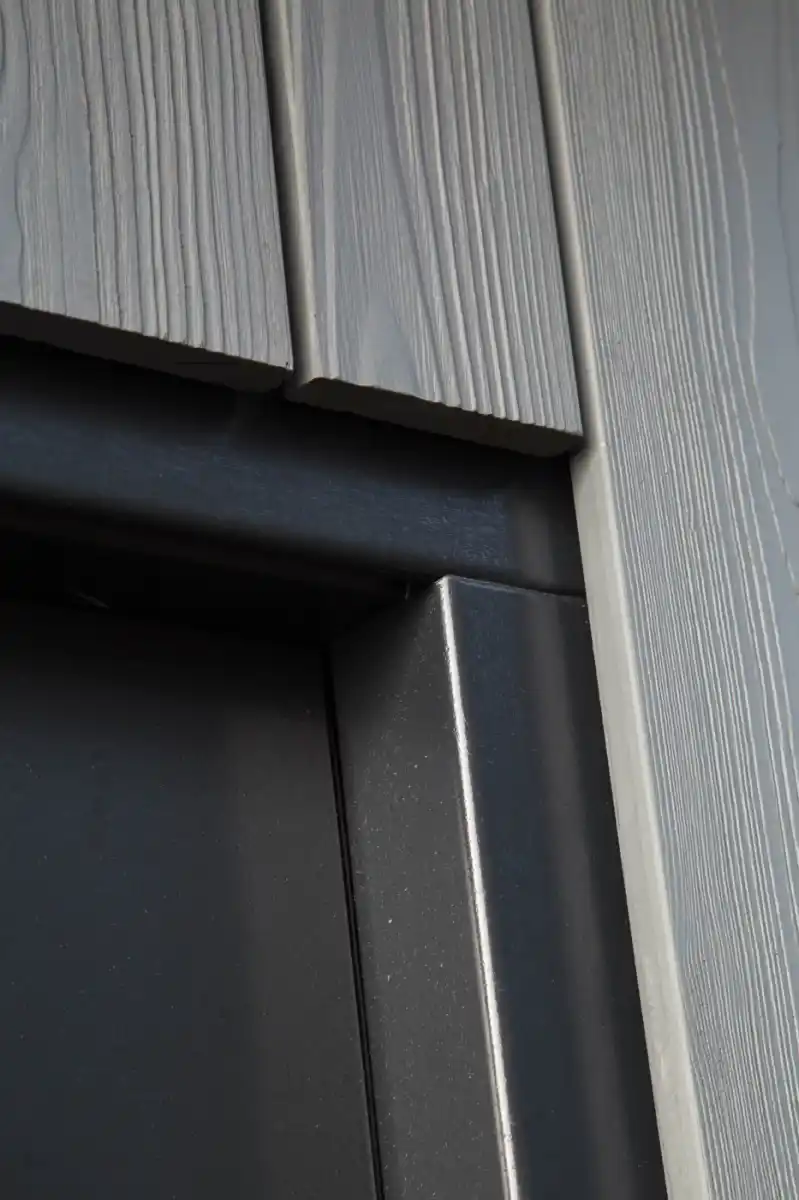
Composite cladding close-up — the embossed, repeating grain pattern is clearly distinguishable from natural timber at close range. The surface lacks the depth and variation of real wood.
The close-up test is the most honest way to assess composite cladding. At close range — when you are sitting next to your garden office, working inside it with the door open, or showing it to a visitor — the difference between composite and real timber is immediately obvious. The repeating embossed grain pattern, the uniform colour, and the plastic sheen under direct sunlight all signal a manufactured material rather than a natural one.
For most people this difference is acceptable — garden rooms are viewed mostly from a distance and the practical benefits of composite are real. For anyone who values material authenticity, or who will be in close daily contact with the exterior of their garden office, real timber is a significantly more satisfying material to live alongside.
Full Head-to-Head Comparison
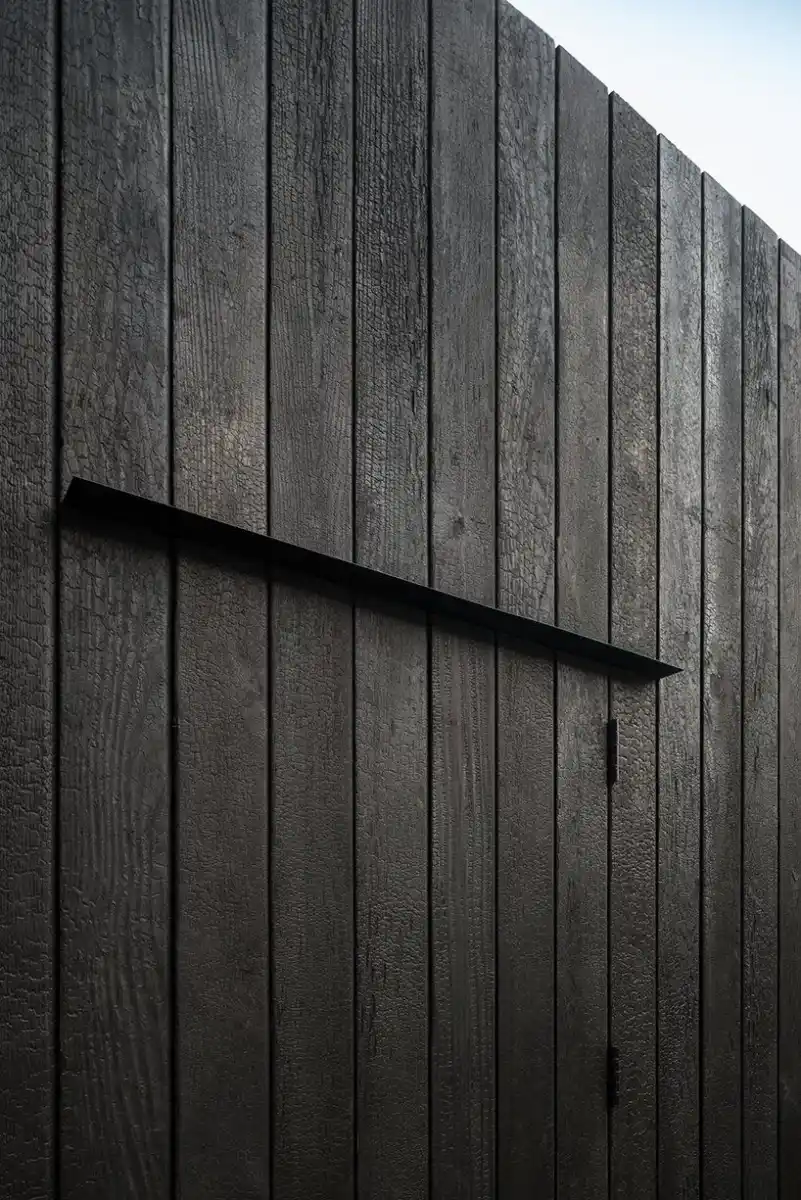
Deep charred timber close-up — the carbonised surface has a genuine depth and texture that composite materials cannot replicate, and requires no ongoing treatment throughout its 25–40 year service life.
| Factor | Quality Timber (ThermoWood / Charred) | Composite (WPC) |
|---|---|---|
| Appearance up close | Natural grain, depth, warmth — unique boards | Repeating embossed pattern — manufactured look |
| Appearance at distance | Excellent | Good — convincing at distance |
| Material cost per m² | £55–£130 — comparable or cheaper | £60–£120 |
| Maintenance requirement | Very low (ThermoWood) to none (charred) | Low — periodic clean required |
| Service life | 25–40 years — BRE accredited | 10–25 years product warranty |
| Sustainability | ✓ Renewable — FSC/PEFC certified | ✗ Fossil fuel derived — not recyclable |
| Colour stability | Weathers to silver-grey — consistent | Fixed colour — more control |
| Profile range | Extensive — custom dimensions available | Limited — manufacturer specific |
| Fire rating options | Euroclass B-s1,d0 available | Varies by product |
| Weight | Lighter — easier installation | Heavier — requires specific fixings |
| End of life | Biodegradable — natural material | Landfill — not recyclable |
Verdict — Which Should You Choose?
- Appearance and material quality matter to you
- You want the most sustainable specification
- You want 25–40 years service life
- You prefer a material that ages with character
- You want fire rated options available
- You want the widest profile choice
- You are specifying a garden office for professional use
- You want a very specific fixed colour long term
- You genuinely will not undertake any maintenance ever
- Appearance is not a priority and practicality is
- The garden room is purely functional — not a design feature
- Budget prevents ThermoWood but you still want low maintenance
Ask the composite manufacturer for an independent test report on UV colour stability and weathering performance — not just a product warranty. Warranties cover manufacturing defects, not aesthetic performance. Real-world UV fading and algae growth on UK north-facing or shaded elevations is rarely covered by product warranties. The same scrutiny should apply to any timber product — ask for the species certification, durability class, and BRE service life assessment before ordering.
Is timber or composite cladding better for a garden room?
For most UK garden rooms, high-quality timber cladding in ThermoWood, Siberian larch, or charred timber outperforms composite on appearance, sustainability, and whole-life cost. Composite has a genuine advantage over untreated softwood on maintenance, but when compared to thermally modified or charred timber — which also require minimal maintenance — the case for composite weakens significantly. Composite is a reasonable choice for homeowners who want a fixed colour and zero maintenance at a mid-range price point.
How much does composite cladding cost compared to timber for a garden room?
Composite cladding typically costs £60–£120 per m² for materials — comparable to ThermoWood and charred timber, and significantly more expensive than Nordic spruce or Siberian larch. For a 25m² garden room: composite materials cost £1,500–£3,000 versus £1,375–£2,375 for ThermoWood or £875–£1,750 for Siberian larch.
Does composite cladding look as good as real timber on a garden room?
At a distance, high-quality composite can closely mimic the appearance of timber. Close up, the difference is apparent — composite lacks the natural grain variation, depth of texture, and warmth that real timber provides. For architect-designed projects where material authenticity matters, real timber consistently produces a more considered and premium result.
Is composite cladding more sustainable than timber for a garden room?
No — FSC or PEFC certified timber cladding is significantly more sustainable than composite. Timber is a renewable material that stores carbon throughout its service life. Composite cladding is manufactured from plastic polymers derived from fossil fuels and cannot be recycled at end of life in the same way as natural wood.
Which lasts longer — timber or composite cladding on a garden room?
ThermoWood and Siberian larch both achieve 25–40 years correctly installed. Charred timber achieves 25–40 years with virtually no maintenance. Most composite products carry a 10–25 year product warranty. On a like-for-like basis, ThermoWood and charred timber match or exceed composite on lifespan while offering superior aesthetics and sustainability.
Real Timber Cladding for Garden Rooms — From UK Stock
We supply ThermoWood, Siberian larch, and charred timber cladding for garden rooms and garden offices across the UK — all from stock with nationwide delivery in 7–14 days. FSC and PEFC certified. Low maintenance options from £35 per m². Contact our team for a free quote.