

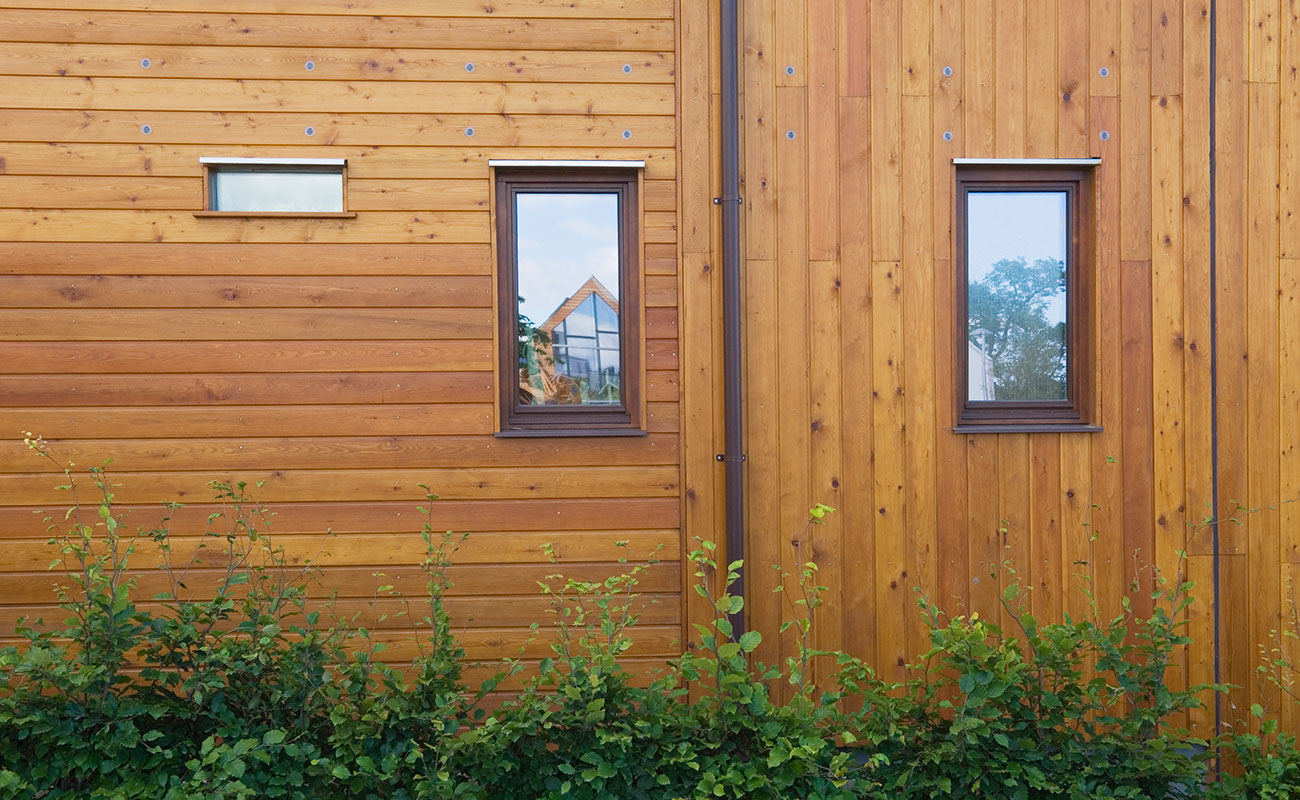
Choosing between vertical and horizontal timber cladding is not just an aesthetic decision. In the UK climate, orientation directly affects drainage speed, cavity ventilation, movement behaviour, maintenance frequency and long-term façade stability.
This guide compares both systems using UK rainfall exposure logic, structural behaviour, ventilation detailing and lifecycle performance — so your decision is grounded in performance, not preference.
Quick Orientation Summary (UK Conditions)
- Fastest surface drainage: Vertical cladding
- Most traditional residential appearance: Horizontal overlap systems
- Most modern aesthetic: Vertical shadow-gap or rainscreen boards
- Most forgiving for minor timber movement: Horizontal overlap profiles
- Most common failure cause: Incorrect batten orientation blocking cavity airflow
1) How UK Weather Interacts with Cladding Orientation
The UK experiences frequent wind-driven rain, high humidity cycling and limited winter drying windows. On exposed elevations, rainfall is often driven horizontally by wind pressure before gravity takes effect.
Orientation determines how quickly water leaves the surface and how effectively the cavity behind the boards dries. In prolonged damp conditions, drying efficiency often matters more than initial water contact.
A well-detailed system in either direction can perform well — but orientation changes how water behaves.
2) Drainage Speed & Water Path Behaviour
Vertical Boards – Direct Gravity Drainage
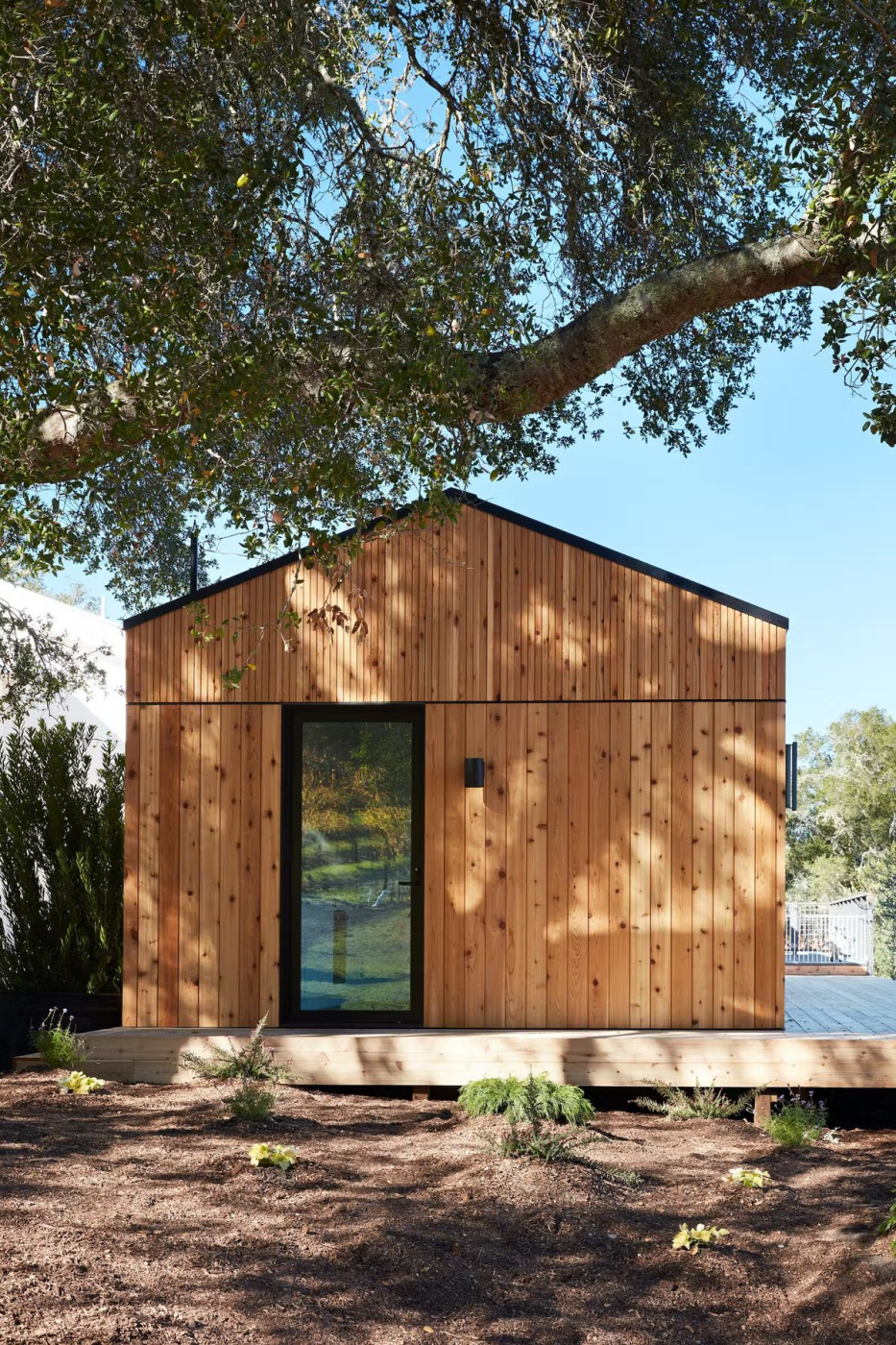
With vertical cladding, water follows gravity with minimal horizontal interruption. Surface runoff is typically uninterrupted, reducing pooling at joints.
Systems such as rainscreen cladding boards are often installed vertically to maximise airflow separation and rapid drying.
- Faster downward drainage
- Less horizontal edge exposure
- Lower debris accumulation
- Improved performance in high rainfall regions
Horizontal Boards – Profile-Controlled Shedding
Horizontal systems rely on profile geometry to shed water outward. Overlap systems like shiplap and loglap are shaped specifically to deflect rain.
For detailed geometry comparison, see: shiplap cladding explained and loglap cladding explained .
When installed correctly, horizontal overlap cladding performs extremely well in UK conditions. Failure typically results from poor detailing rather than direction.

3) Numerical Movement Example (Why Orientation Changes Appearance)
Timber expands and contracts across its width as moisture content changes. A typical 145mm softwood board can move approximately 2–4mm seasonally depending on species and exposure.
In horizontal orientation, this movement is visually distributed along horizontal shadow lines. Overlap profiles conceal small changes effectively.
In vertical orientation, width movement affects board spacing along long clean vertical lines. Even small dimensional shifts can disrupt shadow consistency in modern façades.
For modern vertical systems, stable materials and precise spacing tolerance become more important.
4) Ventilation Path & Batten Strategy (Critical Detail)
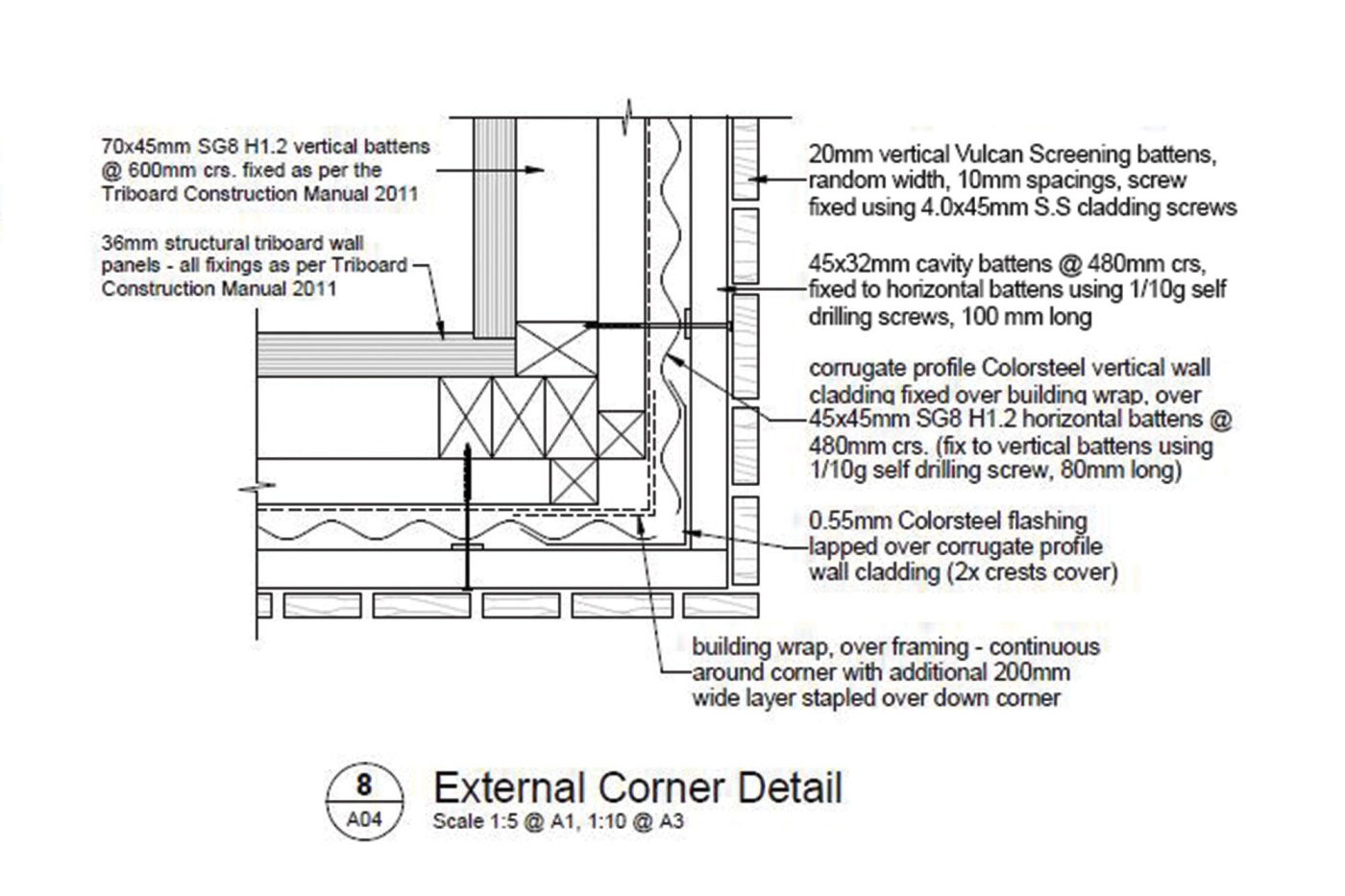
Most cladding failures are ventilation failures. Orientation changes subframe configuration.
Horizontal Cladding Setup
- Vertical battens
- Continuous airflow from base to top
- Simpler ventilation path
Vertical Cladding Setup
- Primary horizontal battens
- Secondary vertical counter-battens
- Maintains uninterrupted cavity airflow
Ventilated Build-Up Diagram (Simplified)
[ Timber Cladding Boards ]
[ Fixings ]
[ Counter-Battens (if vertical system) ]
[ Primary Battens ]
[ Breather Membrane ]
[ Structural Wall ]
[ Timber Cladding Boards ]
[ Fixings ]
[ Counter-Battens (if vertical system) ]
[ Primary Battens ]
[ Breather Membrane ]
[ Structural Wall ]
If vertical boards are installed directly onto vertical battens without counter-battens, the airflow path is blocked. Moisture becomes trapped, increasing decay risk.
5) Drying Speed & Shading Effects
Vertical cladding generally dries faster because water runs directly down board faces. Horizontal systems can retain moisture slightly longer at overlap points, especially on shaded north-facing elevations.
However, horizontal overlap profiles can protect fixings and joints more effectively when properly designed.
6) Installation Spacing Logic
- Approx. 400mm batten centres are common for residential cladding support.
- Exposed sites may require reduced spacing.
- Vertical boards demand stricter alignment tolerance to avoid visual deviation.
- Stainless steel fixings are strongly recommended for UK exterior conditions.
Support consistency is more important than orientation alone. Poor spacing causes board flex and long-term stress at fasteners.

7) Lifecycle Cost Comparison
| Orientation | Installation Complexity | Material Impact | Maintenance Tendency |
|---|---|---|---|
| Vertical | Moderate (counter-battens required) | Slightly higher labour cost | Often dries faster, reducing staining risk |
| Horizontal | Simpler subframe | Moderate labour | Overlap protects joints, but debris retention possible |
In real-world projects, detailing quality influences lifespan more than orientation.
8) Architectural Perception
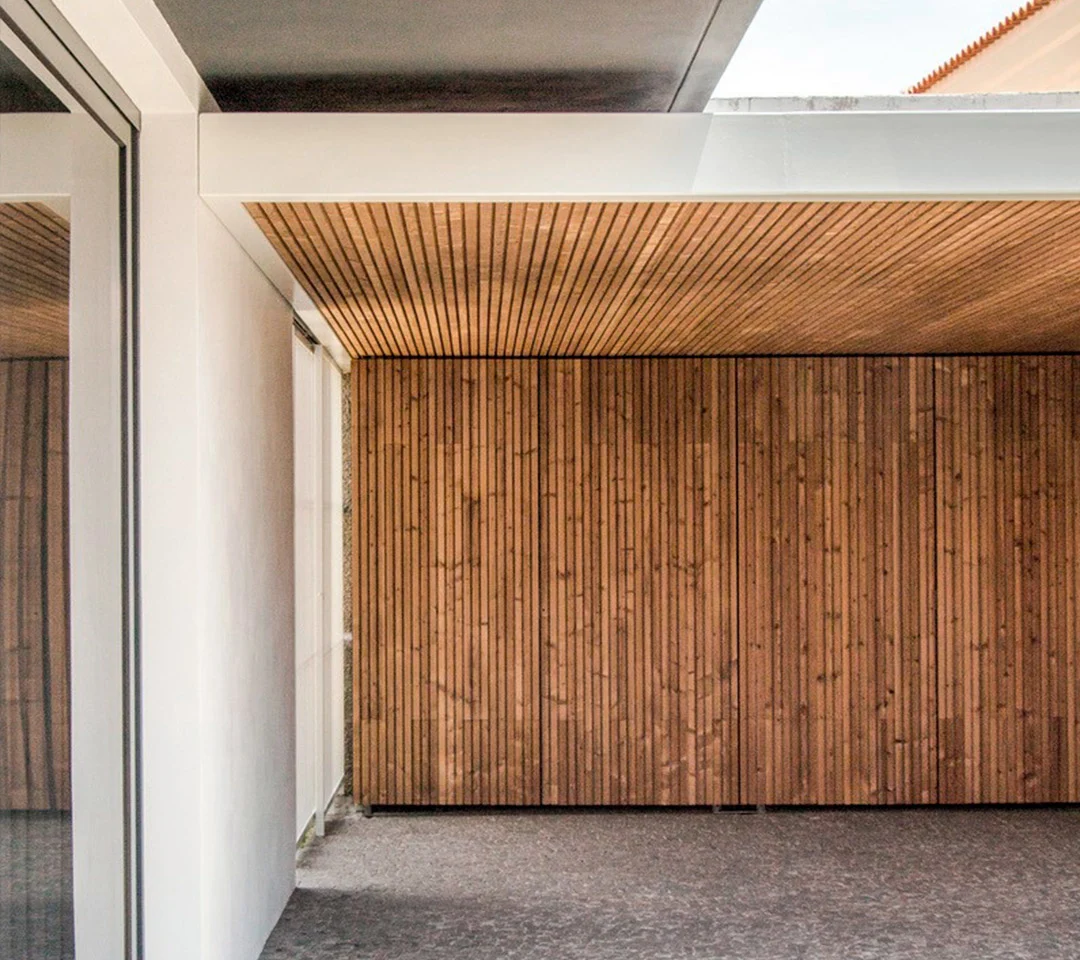
- Vertical: Emphasises height, modern minimalism, contemporary extensions.
- Horizontal: Emphasises width, tradition, domestic familiarity.

For profile ideas in modern builds: best timber cladding for modern UK homes .
9) When NOT to Choose Each Orientation
Avoid Vertical If:
- Ventilation counter-batten detailing cannot be guaranteed.
- The design includes many irregular interruptions.
- Wide unstable boards are being specified.
Avoid Horizontal If:
- You want a sharp contemporary shadow-gap façade.
- You are designing a tall, narrow elevation where vertical emphasis is desired.
- Debris build-up is likely and maintenance access is limited.
10) Specification Support & Technical Review
If orientation affects junction detailing, airflow modelling or façade transitions, technical review is recommended.
For drawing support and façade specification advice: cladding detail design service .
Expanded FAQs – Vertical vs Horizontal Cladding
Is vertical cladding better in heavy rain?
It promotes faster gravity drainage, but ventilation and base detailing are equally critical.
Does horizontal cladding trap water?
Not when properly profiled and ventilated. Overlap systems are designed to shed water outward.
Which orientation lasts longer?
Lifespan depends more on detailing quality, airflow and material stability than orientation alone.
Is vertical cladding more expensive?
It may require additional counter-battens, slightly increasing labour cost.
Does orientation affect maintenance?
Vertical systems often dry faster. Horizontal overlaps may require periodic cleaning at joints.
Can I mix vertical and horizontal on one façade?
Yes, but cavity continuity and junction detailing must remain uninterrupted.
Is one more suitable for coastal areas?
Vertical systems can improve drainage speed, but species durability and fixings matter more.
Does orientation affect thermal performance?
No direct effect. Thermal performance depends on insulation and wall build-up, not board direction.
Are modern designs better suited to vertical?
Vertical cladding is commonly used in contemporary UK architecture to emphasise height and minimalism.
Is horizontal cladding outdated?
No. It remains one of the most common residential cladding orientations in the UK.