
- What it is: Traditional horizontal overlapping timber cladding — boards fixed in overlapping courses to shed rainwater. Covers feather edge, shiplap, waney edge, loglap and shadow gap profiles.
- Most traditional profiles: Feather edge and waney edge — the original agricultural weatherboarding used on barns and farm buildings across England for centuries.
- Most contemporary: Shadow gap — gives weatherboarding a clean, refined horizontal rhythm suited to modern UK residential architecture.
- Best species: Siberian larch — no treatment, 20–30 years, weathers beautifully. ThermoWood for zero maintenance 25–40 years. Nordic spruce for lowest upfront cost.
- Cost: Nordic spruce £46–£87/m² installed. Siberian larch £63–£110/m² installed. ThermoWood £73–£120/m² installed.
- Planning permission: Usually not required for like-for-like replacement or additions under permitted development — but check for listed buildings and conservation areas.
Weatherboarding is one of the most recognisable and most enduring exterior building finishes in England — horizontal overlapping timber boards that have protected walls against UK weather for centuries. From the painted white weatherboarded cottages of Essex and Kent to the black-tarred agricultural barns of the Home Counties, weatherboarding is woven into the fabric of English vernacular architecture. Today it is equally at home on contemporary house extensions, barn conversions, garden rooms, and new builds — available across a wider range of species, profiles, and finishes than ever before. This complete guide covers everything you need to know about weatherboarding in the UK in 2026 — what it is, every profile type, the best species for each application, costs, installation, and planning considerations.
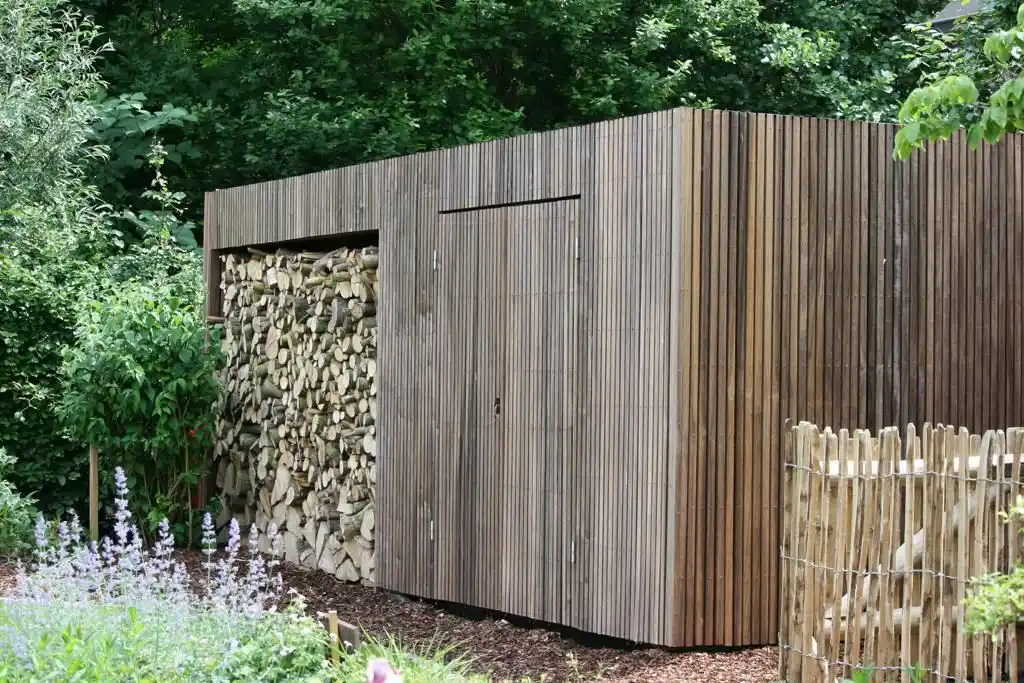
Weathered timber cladding on a garden room — the natural silver-grey patina that all untreated weatherboarding develops over time. On naturally durable species like Siberian larch and ThermoWood this weathered grey is self-maintaining and requires no ongoing treatment.
What Is Weatherboarding?
Weatherboarding is the traditional English term for exterior horizontal overlapping timber cladding — specifically boards that are installed in overlapping courses so that each board overlaps the one below it, directing rainwater downward and outward off the building face. The term is closely associated with the historic agricultural and vernacular architecture of rural England, where barns, cottages, and outbuildings were routinely clad in overlapping timber boards as the most practical, available, and weather-resistant exterior finish.
In modern usage, "weatherboarding" covers any horizontal overlapping external timber cladding regardless of the specific profile. The most traditional weatherboard profiles — feather edge, waney edge, and shiplap — remain widely used. But the term also extends in contemporary usage to include shadow gap cladding, which uses a different joint detail but is fundamentally the same concept: horizontal timber boards protecting a wall from UK weather.
The appeal of weatherboarding in modern UK architecture rests on exactly the same qualities that made it the default rural cladding material for centuries — it is simple to install, easy to repair (individual boards can be replaced without disturbing the whole elevation), naturally effective at shedding water, and visually connected to a long tradition of English building that gives even contemporary structures an immediate sense of place.
Weatherboarding Profile Types — All Options Compared
Tapered boards — thick at the bottom, thin at the top — overlapping without a machined joint. The original agricultural weatherboard profile. Deep shadow at each lap. Available in Siberian larch, Nordic spruce, and ThermoWood.
Irregular natural tree edge retained on the board — organic, variable, uniquely authentic. More naturalistic than feather edge. Available in Siberian larch and Nordic spruce. The most honest and direct weatherboard specification for rural and barn projects.
Overlapping boards with a machined rebated joint — slightly more refined than feather edge with a more consistent joint line. The UK's most widely used shed and outbuilding weatherboarding. Available in Nordic spruce, Siberian larch, and ThermoWood.
Rebated board face creates a recessed horizontal joint — the contemporary evolution of weatherboarding. Technically not overlapping but the same concept: horizontal timber protecting a wall. The most specified weatherboard-style profile on modern UK residential projects.
Convex-faced overlapping boards that mimic the appearance of horizontal log construction. Distinct rounded texture — popular for cabin-style garden buildings, glamping structures, and rural projects where a naturalistic, handcrafted character is the intent.
Coloured and Painted Weatherboarding — The UK Tradition
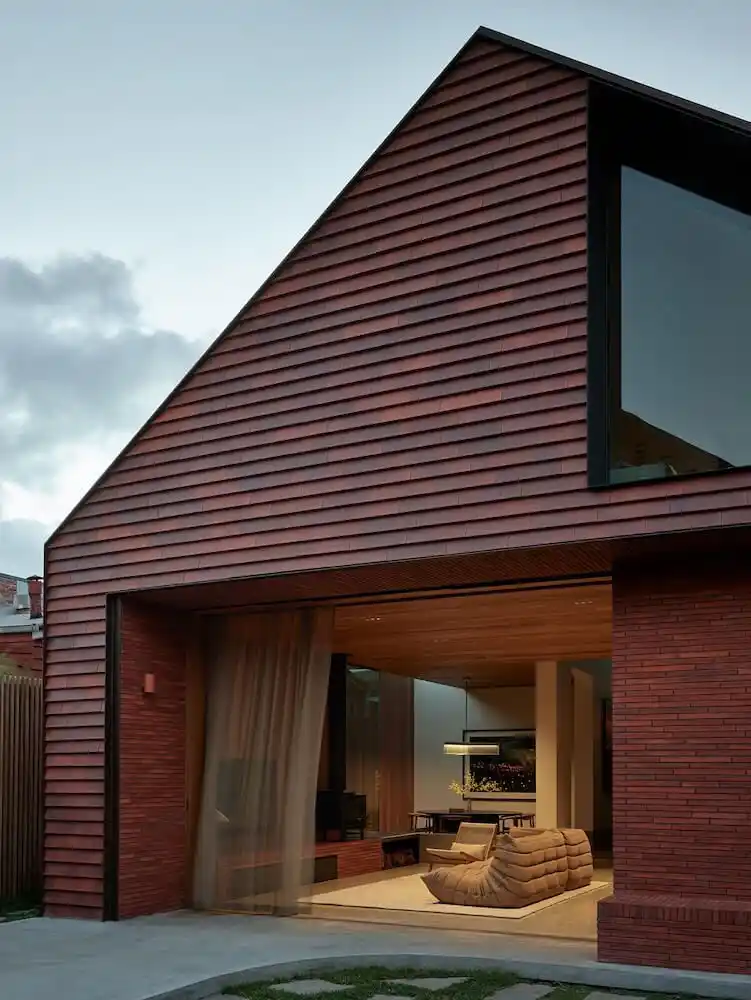
Feather edge weatherboarding stained in a warm red-brown to complement adjacent brick — one of the most traditional weatherboarding colour approaches in the UK, referencing the painted and tarred weatherboard cottages of Kent, Essex and Sussex. Exterior stain accepts colour equally well on all weatherboard species.
The painted or stained weatherboard house is one of the most distinctively English building types — the white weatherboarded cottage of Kent and Essex, the cream-painted fisherman's house of the Suffolk coast, the black-tarred barn of the Surrey Hills. Colour has always been part of weatherboarding's identity in England, and the tradition continues in contemporary UK architecture through both heritage paint systems and modern exterior stain products.
Black weatherboarding
Black is the most searched colour for UK weatherboarding — referencing the traditional tarred agricultural boards of English barns and creating one of the most striking contemporary exterior finishes available. Both charred (Shou Sugi Ban) and black exterior stain approaches work on all weatherboard profiles. For the full guide see our black feather edge cladding guide and black timber cladding UK guide.
Heritage colours — white, cream, green
The painted white or cream weatherboard house is found across Essex, Kent, Sussex, and Suffolk — a colour tradition that goes back centuries. Remmers HK Stain in white, cream, or soft green provides a durable exterior stain finish that references these heritage colour traditions while providing modern weather protection and a much longer re-coating interval than traditional oil paint.
Colour-matched to adjacent materials
Where weatherboarding abuts or returns alongside brick, flint, render, or stone, staining the weatherboard to complement rather than contrast with the adjacent material produces a more integrated and considered result. Red-brown tones to complement red brick, warm grey to complement flint or stone, and off-white to complement render are all achievable with exterior stain products across any weatherboard species.
Waney Edge Weatherboarding — The Most Authentic Traditional Finish
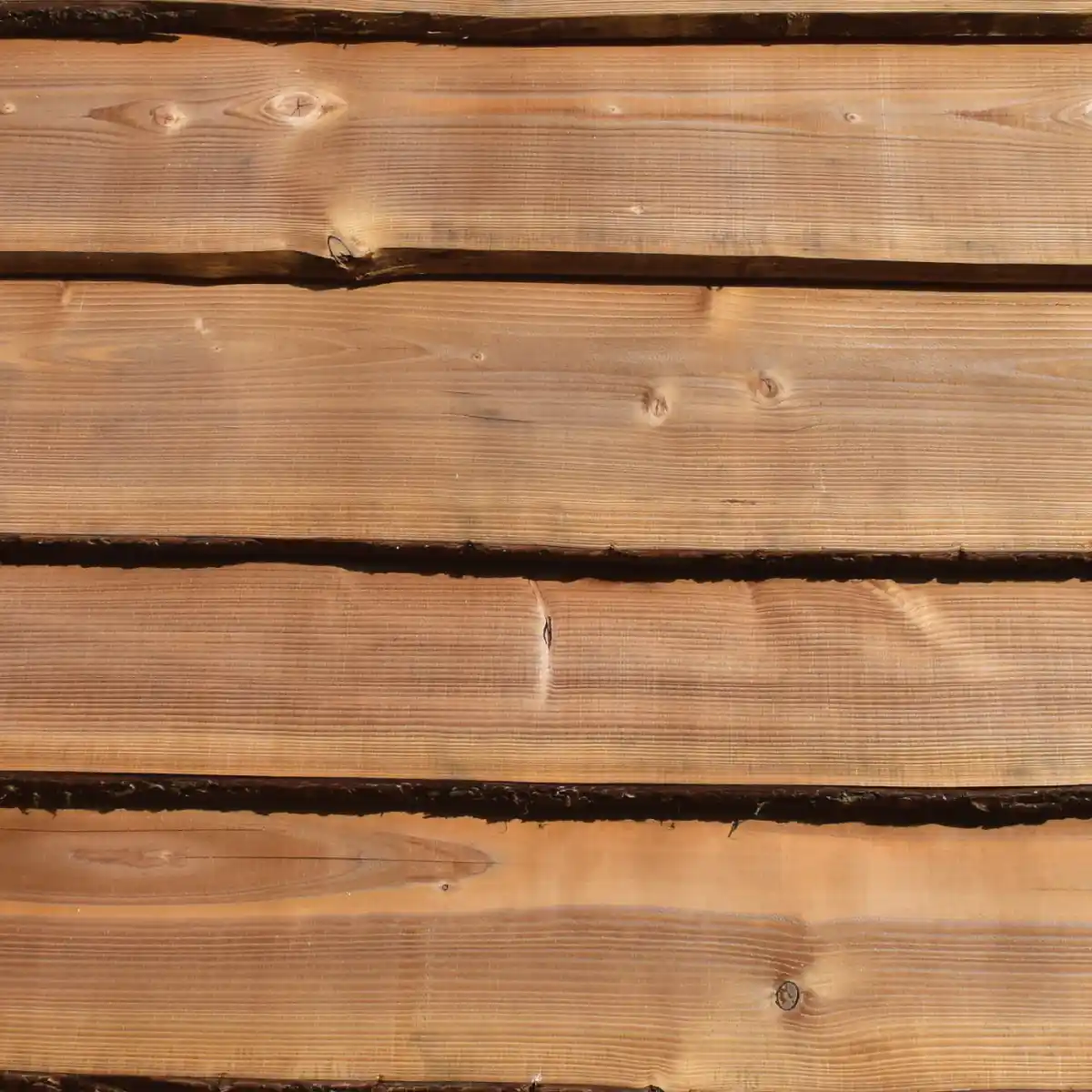
Waney edge larch weatherboarding — the retained natural tree edge gives each board an irregular organic profile that references the material's origin more directly than any machined profile. The most authentic specification for barn conversions and rural buildings where genuine material honesty is the design intent.
Waney edge weatherboarding is the closest living relative of the original English agricultural cladding — boards sawn from the log with the natural curved tree edge retained, installed in overlapping courses just as they would have been on English barns four centuries ago. The result is a facade that is inherently variable, genuinely authentic, and impossible to replicate with machined profiles.
For barn conversions, rural new builds, and agricultural buildings where material authenticity is the design brief rather than a stylistic preference, waney edge weatherboarding in Siberian larch is the most appropriate specification available. For the complete guide to waney edge see our waney edge cladding guide.
Best Species for Weatherboarding UK 2026
| Species | Durability | Treatment | Service life | Board cost/m² | Best for |
|---|---|---|---|---|---|
| Siberian larch | Class 3 | None | 20–30 yrs | £35–£55 | Houses, extensions, barn conversions |
| ThermoWood | Class 2 | Zero | 25–40 yrs | £45–£65 | Garden rooms, any zero-maintenance project |
| Nordic spruce | Class 4 | Every 2–4 yrs | 15–20 yrs | £18–£32 | Sheds, budget projects, charred black |
| Douglas fir | Class 3 | None | 20–30 yrs | £42–£58 | Rural projects, warm orange-red character |
Weatherboarding Cost UK 2026 — All Species and Profiles
| Specification | Boards/m² | + Battens, fixings, membrane | + Labour | Installed/m² |
|---|---|---|---|---|
| Nordic spruce shiplap | £18–£28 | £8–£15 | £20–£40 | £46–£83 |
| Nordic spruce feather edge | £22–£32 | £8–£15 | £20–£40 | £50–£87 |
| Siberian larch feather edge | £40–£55 | £8–£15 | £20–£40 | £68–£110 |
| Siberian larch shiplap | £38–£50 | £8–£15 | £20–£40 | £66–£105 |
| Siberian larch shadow gap | £48–£62 | £8–£15 | £20–£40 | £76–£117 |
| ThermoWood shiplap | £45–£65 | £8–£15 | £20–£40 | £73–£120 |
| ThermoWood feather edge | £48–£65 | £8–£15 | £20–£40 | £76–£120 |
All installed costs include treated softwood counter and support battens, breather membrane, A4 stainless fixings, and professional installation. Excludes VAT on labour, scaffolding, window reveals, and groundworks. For the full UK cladding cost comparison see our timber cladding cost guide 2026.
Installing Weatherboarding — Key Requirements
- Ventilated batten system: All weatherboarding must be installed on a ventilated batten system — breather membrane on the wall, counter battens vertically, horizontal support battens at 400–600mm centres. Boards fixed direct to masonry or sheathing without ventilation behind will fail significantly faster than the service life figures quoted for any species
- Start from the bottom: Fix the first board at the base of the elevation with the thick or lower edge down. Work upward, each board overlapping the one below by minimum 25mm — typically 30–40mm for feather edge and waney edge
- A4 stainless fixings throughout: A4 stainless steel screws or ring-shank nails — standard steel corrodes within 3–5 years regardless of species
- 150mm ground clearance: Bottom of weatherboarding minimum 150mm above finished ground level to prevent ground-splash moisture accumulation at the base boards
- Seal all cut ends: Apply exterior oil or end grain sealer to every site-cut end before fixing — end grain is the primary moisture entry point on all timber boards
- Head flashing at windows and doors: Install drip flashing above every window and door head projecting minimum 25mm beyond the board face — water tracking behind frames is the most common cause of localised deterioration on weatherboarded elevations
Adding or replacing weatherboarding on an existing house is usually permitted development for most UK properties — no planning application needed. However, listed buildings and conservation areas remove permitted development rights, and Article 4 directions in some local authority areas do the same. Always check with your local planning authority before starting work. Our timber cladding planning permission guide covers this in full.
In UK usage, "weatherboarding" specifically refers to horizontal overlapping profiles — feather edge, shiplap, waney edge, loglap. "Cladding" is the broader term covering all exterior wall covering methods including shadow gap, rainscreen, tongue and groove, and any vertical profiles. All weatherboarding is cladding; not all cladding is weatherboarding. When a homeowner says "I want weatherboarding on my house" they typically mean the traditional horizontal overlapping board appearance — which in 2026 is most commonly delivered in Siberian larch feather edge, shadow gap, or shiplap. For the full cladding profile comparison see our timber cladding profiles guide.
What is weatherboarding?
Traditional UK term for exterior horizontal overlapping timber cladding — boards fixed in overlapping courses to shed rainwater. Covers feather edge, shiplap, waney edge, loglap, and shadow gap profiles. Used on English buildings for centuries from agricultural barns to Victorian cottages and contemporary extensions.
What is the best wood for weatherboarding UK?
Siberian larch — Class 3 durability, no treatment, 20–30 years. ThermoWood for zero maintenance 25–40 years. Nordic spruce for lowest upfront cost (£18–£32/m²) with treatment every 2–4 years. Douglas fir for distinctive bold grain and natural durability. Best choice depends on budget and maintenance commitment.
How much does weatherboarding cost in the UK?
Nordic spruce £46–£87/m² installed. Siberian larch £63–£110/m² installed. ThermoWood £73–£120/m² installed. All include battens, fixings, membrane and professional installation. Feather edge and shiplap at the lower end of each species range; shadow gap at the higher end.
Does weatherboarding need planning permission?
Usually not for most UK houses under permitted development rights — replacing or adding weatherboarding does not require a planning application in most cases. However, listed buildings, conservation areas, and Article 4 directions remove permitted development rights. Always check with your local planning authority before starting work.
Timber Weatherboarding — All Species & Profiles from UK Stock
We supply weatherboarding in feather edge, shiplap, shadow gap, loglap, and waney edge profiles across Siberian larch, ThermoWood, Nordic spruce and Douglas fir. FSC and PEFC certified. Tell us your elevation dimensions and preferred profile for a precise board quantity. Nationwide delivery 7–14 days.