

Key Takeaways
- The best low maintenance cladding materials in the UK are thermally modified timber, Siberian Larch, charred timber and factory-coated systems — each requiring very different levels of upkeep.
- ThermoWood is the lowest maintenance natural timber cladding option — requiring treatment every 3–5 years at most, or none at all if left to weather naturally.
- Siberian Larch is naturally durable without chemical treatment, weathering to a distinguished silver-grey that needs no intervention to remain structurally sound.
- Charred timber (Shou Sugi Ban technique) requires almost no maintenance — the carbonised surface is inherently resistant to moisture, decay and UV degradation.
- Factory-applied coatings significantly extend maintenance intervals for all timber species and should be considered on south and west-facing elevations.
Low Maintenance Cladding — Maintenance Intervals by Material
| ThermoWood (untreated) | No maintenance required — weathers naturally to silver-grey |
| ThermoWood (oiled) | Re-oil every 3–5 years to maintain original colour |
| Siberian Larch (untreated) | No structural maintenance — occasional clean sufficient |
| Charred timber (sealed) | Inspect annually — re-seal every 5–7 years depending on exposure |
| Nordic Spruce (factory-coated) | Inspect annually — refresh coat every 8–12 years |
| Untreated softwood | Treat every 1–2 years — high maintenance |
| Composite cladding | Annual clean only — no treatment required |
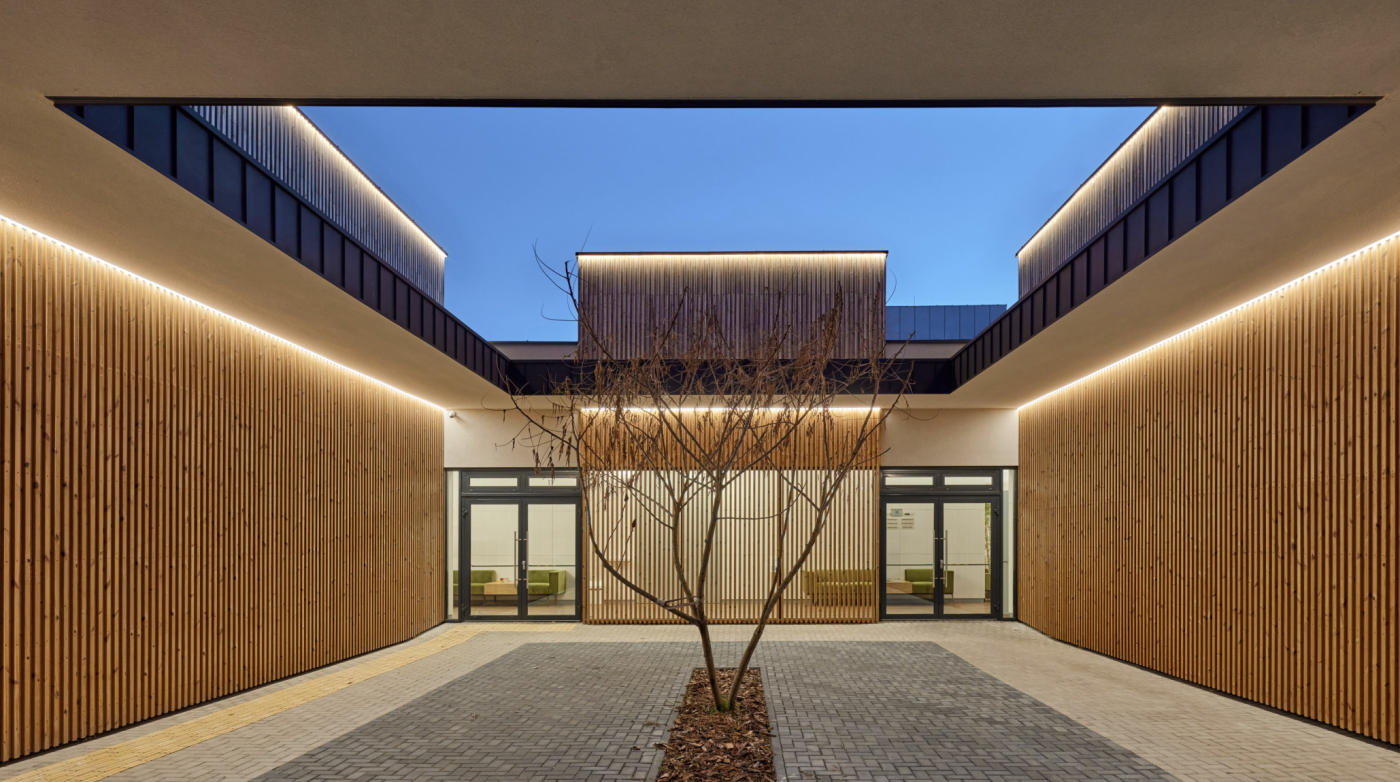
The question of maintenance is often the deciding factor when choosing exterior cladding for a UK project. The British climate — frequent rainfall, temperature fluctuation, UV exposure and damp winters — places real demands on any material used on the outside of a building. For homeowners who want the warmth and character of real timber without committing to annual treatment cycles, choosing the right species and finish from the outset makes the difference between a satisfying long-term result and an ongoing maintenance burden.
This guide covers the best low maintenance cladding options available in the UK, with a particular focus on timber — the most widely specified natural material — and the specific choices that minimise ongoing upkeep without sacrificing appearance or performance.
What makes cladding low maintenance?
Low maintenance cladding is any exterior wall material that retains its structural integrity and acceptable appearance over an extended period with minimal intervention. For timber, this means species or treatment systems that resist moisture absorption, biological decay and UV degradation without requiring frequent reapplication of preservatives or coatings. The key factors are inherent durability, dimensional stability, and resistance to the biological processes — fungal decay, mould, algae — that cause untreated softwood to deteriorate rapidly in UK conditions.
Why most guides get this wrong
Most articles about low maintenance cladding in the UK jump immediately to composite, fibre cement or UPVC. These materials are genuinely low maintenance — but they are also not timber, and for a significant proportion of homeowners, self-builders and architects, only real timber delivers the warmth, character and authenticity they are looking for.
The good news is that within the timber category, there is a substantial range of maintenance requirements. The gap between an untreated softwood pine board — which may need treatment within 12 months of installation in a UK climate — and a thermally modified or naturally durable species is enormous. Choosing the right timber species is the single most effective thing you can do to reduce long-term maintenance, without giving up the aesthetic qualities that make timber worth specifying in the first place.
For a full overview of the species and profile options available, our ultimate guide to timber cladding in the UK covers the complete picture across all species and applications.

The best low maintenance timber cladding options for UK projects
ThermoWood — lowest maintenance natural timber
Thermally modified timber is the lowest maintenance natural timber cladding option available in the UK. The thermal modification process permanently alters the timber's cell structure, reducing moisture absorption by up to 50% and improving resistance to biological decay — without any chemical treatment. Left untreated, ThermoWood weathers gradually and evenly to silver-grey. If the original honey-brown colour is preferred, a UV-protective oil applied every 3–5 years is sufficient. No preservative treatment is required at any stage.
Siberian Larch — naturally durable, no treatment required
Siberian Larch is one of the most naturally durable softwoods available, achieving Durability Class 3 to BS EN 350 without any modification or treatment. Its high resin content provides inherent resistance to moisture and biological decay that makes it suitable for above-ground external applications with minimal intervention. Left untreated, Siberian Larch weathers to a characteristic silver-grey patina that many architects and homeowners consider an asset rather than a deterioration. Structural performance is unaffected by weathering.
Charred timber — near zero maintenance
Charred timber cladding — produced using the traditional Japanese Shou Sugi Ban technique — has one of the lowest maintenance requirements of any exterior cladding material. The charring process creates a carbonised surface layer that is inherently resistant to moisture, biological decay, UV degradation and insect damage. Deep-charred and sealed boards require almost no intervention beyond an annual visual inspection. Brushed and stained variants may require re-sealing every 5–7 years depending on exposure. The deep black aesthetic also masks any minor surface weathering very effectively.
Nordic Spruce (factory-coated) — excellent value low maintenance
Nordic Spruce in its untreated form requires regular maintenance, but when supplied with a factory-applied coating the picture changes significantly. Factory coatings are applied under controlled conditions before installation, achieving better penetration and adhesion than site-applied finishes. A properly factory-coated Nordic Spruce cladding system can deliver 8–12 year intervals between maintenance cycles, making it a cost-effective low maintenance option for projects where budget is a key consideration. Our factory coating service covers the available systems and colours.
How timber compares to other low maintenance cladding materials
For completeness, it is worth placing timber options in context against non-timber alternatives that are frequently cited as low maintenance cladding solutions in the UK market.
| Material | Maintenance interval | Natural appearance | Sustainability | Typical cost per m² |
|---|---|---|---|---|
| ThermoWood (oiled) | 3–5 years | Excellent — real timber | FSC / PEFC certified | £45–£95+ |
| Siberian Larch (untreated) | None required | Excellent — real timber | FSC certified options | £35–£75+ |
| Charred timber | 5–7 years | Distinctive — real timber | FSC certified options | £55–£120+ |
| Composite cladding | Annual clean only | Wood-effect — not real timber | Recycled content varies | £40–£80+ |
| Fibre cement | Annual clean — repaint 10–15 years | Can mimic timber — not real | Moderate | £25–£60+ |
| UPVC | Annual clean only | Plastic appearance | Poor | £15–£40+ |
The key point this comparison makes is that the best low maintenance timber cladding options — ThermoWood, Siberian Larch and charred timber — come very close to composite and fibre cement in terms of practical maintenance requirements, while delivering genuine natural timber aesthetics, better sustainability credentials and in many cases superior longevity. For a detailed cost breakdown across all species, see our timber cladding cost per m² guide.
Factors that affect how much maintenance your cladding will need
The species or material you choose is only part of the equation. Several installation and design decisions significantly affect how quickly your cladding ages and how much maintenance it requires in practice.
Orientation and exposure
South and west-facing elevations receive the highest UV and rain exposure in the UK. Cladding on these faces will weather faster and require more frequent attention than north-facing boards. If maintenance reduction is a priority, consider factory-applied coatings specifically for south and west elevations, or choose naturally durable species like charred timber cladding for the most exposed faces.
Ventilation and drainage
The most important single factor in timber cladding longevity is the installation system. A properly designed and installed ventilated rainscreen system — with a minimum 25mm drained and ventilated cavity — allows boards to dry out between wet periods. Timber that dries quickly deteriorates significantly more slowly than timber that remains damp. Skimping on the cavity or failing to provide adequate drainage at the base is the most common cause of premature failure in otherwise correctly specified cladding systems. See our timber cladding installation guide for full ventilation and drainage requirements.
Profile choice
Profile design affects how water interacts with the cladding surface. Shadow gap and rainscreen profiles that allow water to drain away freely from the face of the board and dry from both sides perform significantly better over time than profiles that trap moisture or create horizontal surfaces where water can pond. For maximum longevity with minimum maintenance, rainscreen cladding profiles consistently outperform closed-joint systems.
Ground clearance and detailing
Timber cladding should never be installed within 150mm of finished ground level. Boards close to the ground are exposed to splash-back and persistent moisture that accelerates biological decay even in naturally durable species. Correct ground clearance, combined with stainless steel fixings and properly sealed end grain at cuts, significantly extends the service life of any timber cladding installation.

ThermoWood: the best choice for low maintenance natural timber cladding
If low maintenance is the primary driver and natural timber is non-negotiable, ThermoWood cladding is the strongest overall choice for most UK projects. It combines the lowest maintenance requirements of any natural timber — no preservative treatment required, oil refresh every 3–5 years at most — with a 30-year BRE-accredited service life, full FSC and PEFC certification, and a wide range of profiles to suit contemporary and traditional architectural styles.
The thermal modification process gives ThermoWood a dimensional stability that significantly reduces the movement-related problems — board cupping, joint cracking, fastener pull-through — that cause maintenance headaches with standard softwood. Boards that move less stay looking better for longer, without any intervention from the homeowner or building manager.
For projects where fire performance is part of the specification, ThermoWood with fire retardant treatment can achieve Euroclass B classification while maintaining its low maintenance credentials. This makes it one of very few cladding materials that can satisfy both fire compliance requirements and the desire for a genuinely low maintenance natural exterior. See our ThermoWood performance guide for full technical specifications.
Charred timber: the lowest maintenance timber finish for high-exposure locations
For elevations where maintenance access is difficult, or where exposure conditions are particularly demanding — coastal locations, tall buildings, rural sites with high wind-driven rain — charred timber cladding offers the closest thing to a fit-and-forget natural timber finish currently available.
The charring process creates a surface that is fundamentally different from any coating or treatment: it is a permanent structural change to the outer layer of the timber, not a film that can wear away. Deep-charred larch boards in particular have demonstrated exceptional longevity in exposed UK conditions. The dark aesthetic also has a practical advantage — any surface weathering or minor discolouration is virtually invisible against the deep black base. For a detailed comparison of the maintenance profiles of charred timber versus other dark finishes, see our charred timber vs painted timber guide.
Frequently asked questions
What is the lowest maintenance timber cladding in the UK?
ThermoWood and charred timber cladding have the lowest maintenance requirements of any natural timber options. ThermoWood can be left untreated to weather naturally with no structural maintenance required, or oiled every 3–5 years to maintain colour. Deep-charred timber requires only occasional inspection with re-sealing every 5–7 years on sealed variants. Both significantly outperform untreated softwood, which requires treatment every 1–2 years in UK conditions.
Does Siberian Larch cladding need treating?
No preservative treatment is required for Siberian Larch used as above-ground external cladding. Its natural resin content provides inherent durability at Durability Class 3 to BS EN 350. Left untreated it will weather to silver-grey — a process that affects appearance only, not structural performance. If the original natural colour is preferred, a UV oil can be applied and refreshed periodically, but this is a cosmetic choice rather than a maintenance requirement.
How often does ThermoWood cladding need to be maintained?
ThermoWood cladding left to weather naturally requires no structural maintenance — the thermal modification provides the decay resistance permanently. If oiled to maintain the original honey-brown colour, the oil should be refreshed every 3–5 years depending on exposure. This compares favourably to standard softwood, which typically requires treatment every 1–2 years to maintain performance.
Is composite cladding more low maintenance than timber?
Composite cladding requires only an occasional clean and no treatment — making it technically the lowest maintenance option overall. However, the best natural timber cladding options — ThermoWood, Siberian Larch and charred timber — come very close in practical maintenance terms while offering genuine natural timber aesthetics, better sustainability credentials and in many cases superior longevity. For homeowners and specifiers who want real timber, choosing one of these species eliminates most of the maintenance disadvantage traditionally associated with timber cladding.
What timber cladding is best for coastal or high-exposure locations?
For coastal and high-exposure UK locations, charred timber and ThermoWood are the strongest choices. Charred timber's carbonised surface is inherently resistant to salt, moisture and UV. ThermoWood's dimensional stability means boards move less with moisture fluctuation — important in locations with persistent damp. Siberian Larch also performs well in coastal conditions. All three should be installed as a ventilated rainscreen system with adequate ground clearance. See our coastal cladding guide for detailed exposure-specific recommendations.
Find the Right Low Maintenance Cladding for Your Project
We supply ThermoWood, Siberian Larch, charred timber and Nordic Spruce from stock with nationwide UK delivery. Not sure which species is right for your project? Our team can help.
