

- Triple shadow gap (26x92mm or 32x140mm) is the best ThermoWood profile for garden sauna exteriors in the UK — clean, contemporary, and excellent for wet weather drainage.
- Tongue and groove is the standard profile for sauna interior walls and ceilings — flush, smooth, and the most comfortable against skin at high temperatures.
- ThermoWood Pine is the most widely recommended species for sauna interiors — lightweight, low thermal conductivity, and stable under repeated heat and humidity cycles.
- ThermoWood does not require chemical preservative treatment inside or outside a sauna — thermal modification provides all the decay resistance needed.
- Expected exterior lifespan of a correctly installed ThermoWood garden sauna is 25–40 years in UK conditions.
Garden saunas have become one of the most popular outdoor projects in the UK over the past five years — and for good reason. A well-built garden sauna adds genuine value to a property, provides year-round use, and in our experience is one of the most rewarding timber projects a homeowner can undertake. Choosing the right cladding material and profile for the exterior, and the right lining for the interior, makes a significant difference to how the sauna performs, looks, and holds up over time.
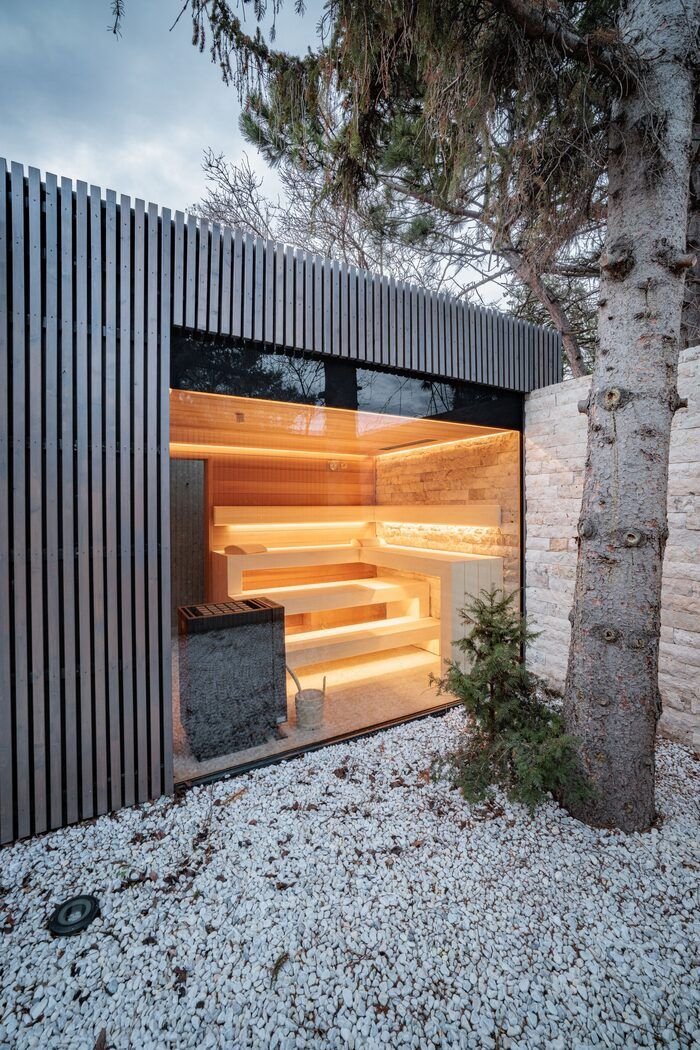
ThermoWood is consistently the most specified material for garden sauna exteriors in the UK, and increasingly for interiors too. Its thermal modification process makes it uniquely well-suited to the extreme conditions inside a sauna — high heat, rapid humidity changes, and the repeated wet-dry cycles that destroy untreated softwoods within a few years. If you are still deciding whether ThermoWood is the right species for your sauna, our guide to the best wood to use for a sauna covers all the main options in detail. This guide focuses specifically on which ThermoWood profiles work best — for the exterior and interior — and what to consider when specifying them for a UK garden sauna build.
Why ThermoWood Is the Right Choice for a Garden Sauna
Timber that has been heated to between 185°C and 215°C in a low-oxygen, steam-controlled environment. The process permanently alters the cell structure of the wood — reducing moisture absorption, improving dimensional stability, and increasing resistance to biological decay — without the use of chemical preservatives. ThermoWood is produced from sustainably sourced softwoods including pine, ash, and spruce, and carries FSC and PEFC certification.
The interior of a sauna is one of the most demanding environments any timber product will face. Temperatures regularly reach 80–100°C in a Finnish-style dry sauna. Humidity swings from very high during a session to very low between uses. The timber expands, contracts, and is exposed to steam, sweat, and occasional water. Untreated softwoods — and even many hardwoods — warp, crack, resin bleed, and degrade under these conditions within a few years.
ThermoWood handles these conditions significantly better than untreated alternatives for three reasons. First, its reduced moisture absorption means it moves less in response to humidity changes — the boards stay stable, joints stay tight, and surfaces stay flat. Second, its improved decay resistance means biological deterioration is not a concern even in the warm, damp conditions of a sauna. Third — and critically for interior use — its lower thermal conductivity means the surface of the timber feels cooler to the touch than untreated softwood at the same ambient temperature, which matters significantly when skin is in contact with walls and benches.
On the exterior, ThermoWood cladding performs equally well. It resists the UK's wet climate without chemical treatment, weathers predictably, and is available in a range of contemporary profiles that suit the clean architectural style of most modern garden saunas.
Best ThermoWood Profiles for Garden Sauna Exteriors
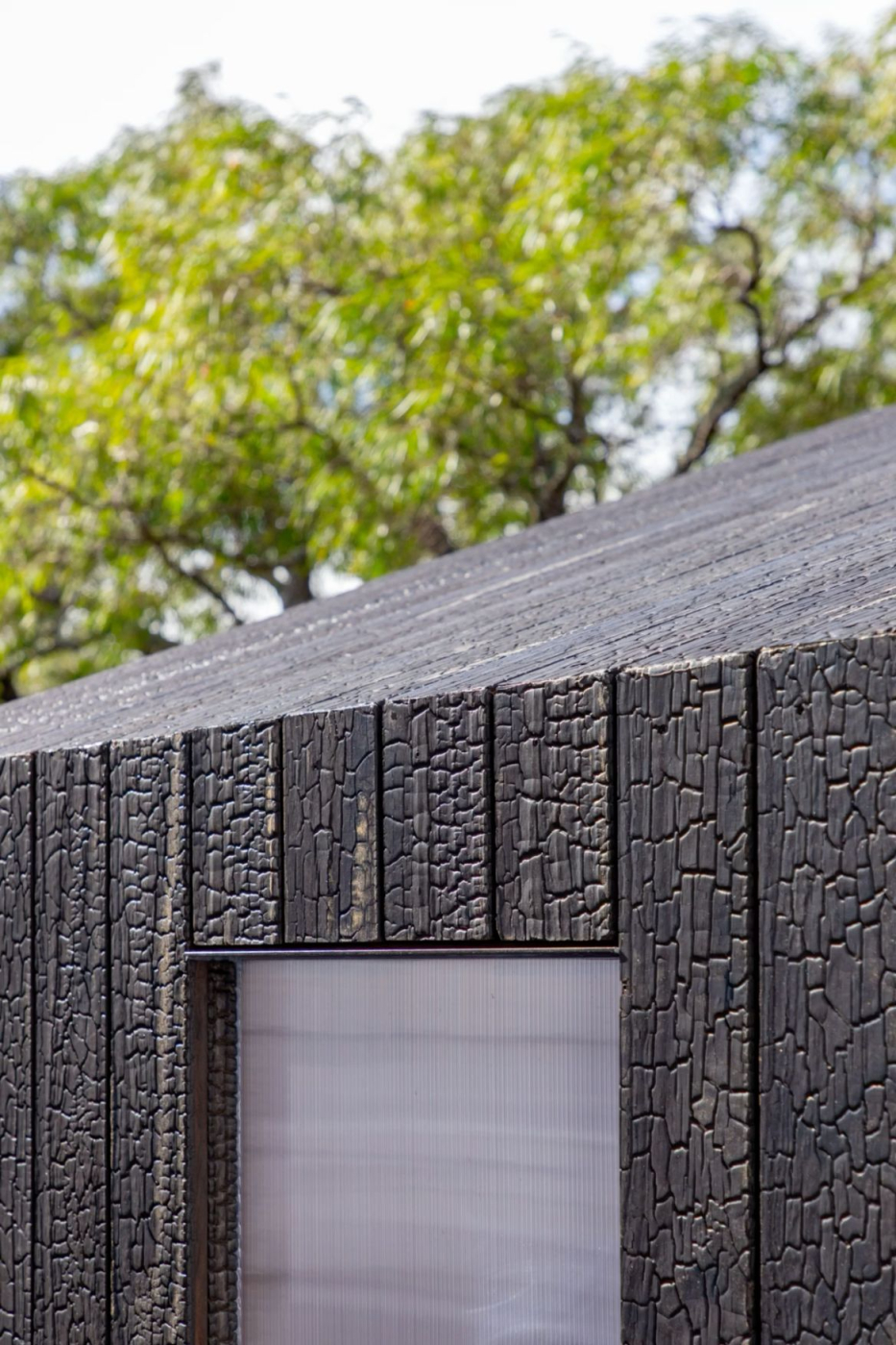
Contemporary garden sauna exterior — ThermoWood and charred timber profiles are the most popular choices for modern UK sauna builds.
The exterior profile you choose affects both the appearance of the sauna and how well it handles the UK climate. Here are the four most commonly used ThermoWood profiles for garden sauna exteriors, with an honest assessment of where each works best:
For most UK garden saunas, the triple shadow gap 26x92mm is the starting point. It is the most widely specified profile, drains well in British weather, looks clean and contemporary, and is available from stock for delivery in 7–14 days. Step up to the 32x140mm if you want a bolder, more architectural result on a larger sauna structure.
Best ThermoWood Profiles for Sauna Interiors
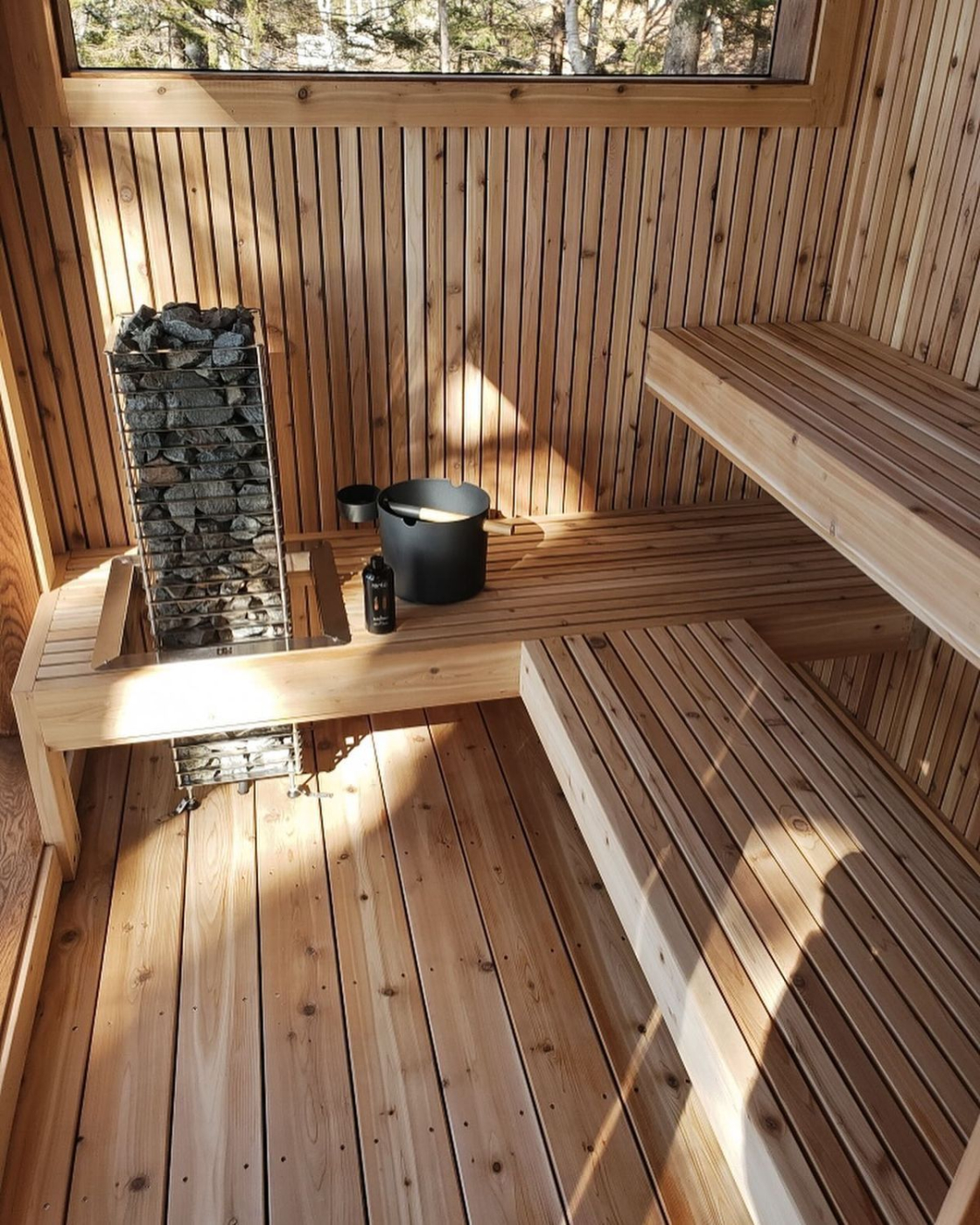
ThermoWood tongue and groove interior cladding — the standard choice for sauna walls and ceilings across the UK and Scandinavia.
The interior of a sauna has different requirements to the exterior. The priority is a smooth, comfortable surface that stays stable under heat and humidity, feels cool to the touch, and does not release resins or volatile compounds at high temperatures — all of which rule out most untreated softwoods.
A cladding profile where a projecting tongue on one edge of each board fits into a corresponding groove on the adjacent board, creating a tight interlocking joint. Produces a flush, smooth surface with no exposed fixings. The standard profile for sauna interior walls and ceilings — the interlocking joint accommodates the small amount of timber movement that occurs with temperature and humidity changes while maintaining a consistent surface appearance.
For sauna interior walls and ceilings, tongue and groove is the standard profile across the UK and Scandinavia for good reason. The interlocking joint creates a flush, smooth surface with no sharp edges or protruding fixings — important when skin is in contact with the walls. It also accommodates the small degree of board movement that occurs with temperature and humidity changes while keeping the surface consistent and joint-free in appearance.
For sauna interior benching, ThermoWood PAR boards (planed all round) in a smooth finish are the standard choice. These are used for bench slats, backrests, and flooring — anywhere direct skin contact is expected. The smooth planed surface is comfortable and easy to keep clean.
ThermoWood Pine vs ThermoWood Ash — Which Species for Your Sauna?
Two ThermoWood species are most commonly specified for garden saunas — ThermoWood Pine (Thermo Pine) and ThermoWood Ash. They perform differently and suit different applications within the same sauna build.
| Property | ThermoWood Pine | ThermoWood Ash |
|---|---|---|
| Weight | Lightweight — easy to work with | Heavier — denser timber |
| Thermal conductivity | Low — cool to the touch at sauna temperatures | Moderate — slightly warmer feel |
| Grain appearance | Fine, consistent, pale brown | Pronounced grain, contemporary look |
| Interior walls & ceiling | ✓ Recommended | Acceptable but less common |
| Sauna benching | ✓ Standard choice | ✓ Good alternative |
| Exterior cladding | ✓ Excellent | ✓ Excellent |
| Typical cost/m² | £55–£75 | £70–£95 |
For most garden sauna projects in the UK, ThermoWood Pine is the right choice for the interior — its low thermal conductivity is the key advantage, keeping surfaces feeling comfortable even when the sauna reaches 90°C+. ThermoWood Ash is a strong choice for the exterior where its slightly denser structure and contemporary grain make it visually striking on a modern sauna build.
Exterior Installation — What to Get Right
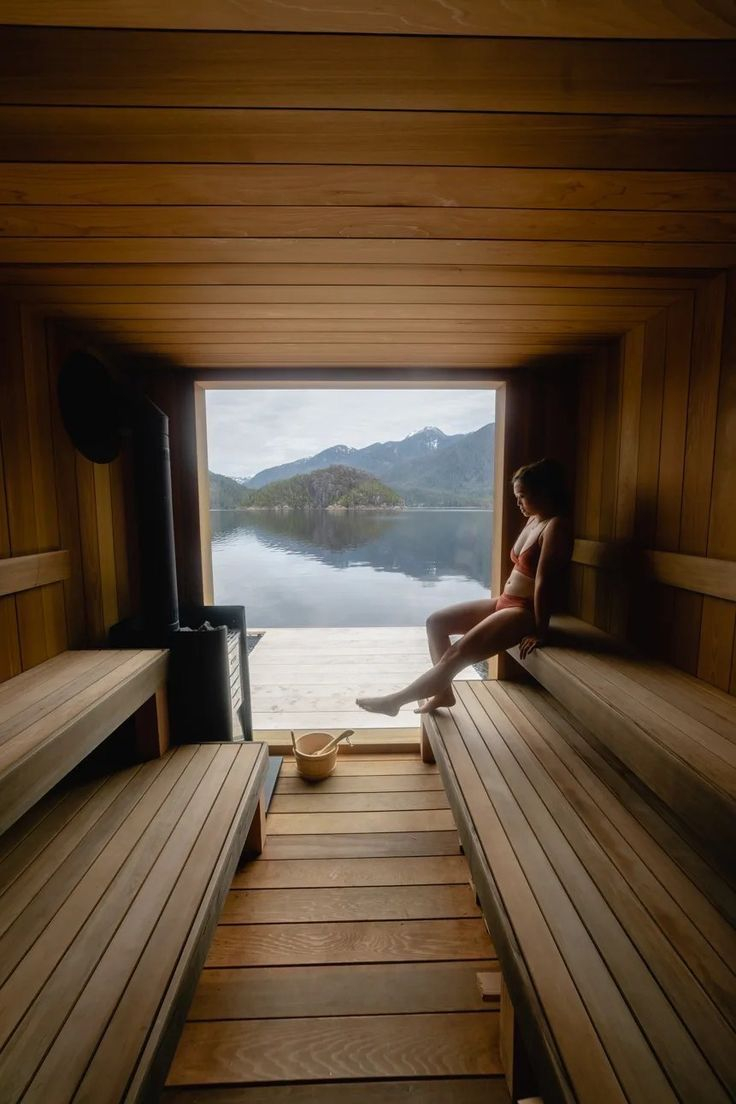
Correct batten framework and ventilated cavity are as important as the cladding profile itself — get the installation right and the timber will last decades.
The profile you choose only performs as well as the installation behind it. For garden sauna exteriors, the following installation principles make the biggest difference to long-term performance:
- Ventilated cavity — always install ThermoWood exterior cladding over a ventilated cavity of at least 25mm. This allows moisture that gets behind the boards to drain and dry, which is the single most important factor in long-term cladding performance.
- Open base detail — the bottom of the cladding should be open and clear of the ground by at least 150mm. Ground splash-back is a major cause of premature deterioration at the base of garden structures.
- Head flashings — any horizontal projections (roof overhangs, window heads) should be properly flashed to prevent water tracking back behind the cladding.
- Stainless steel fixings — always use A4 stainless steel screws or hidden fixings. Standard steel fixings will rust and stain the timber.
- End grain sealing — seal all cut end grain with a quality exterior oil before installation. End grain absorbs moisture significantly faster than face grain and is the most common point of deterioration on any cladding installation.
For a full step-by-step guide to external cladding installation, see our timber cladding installation guide.
Finishing and Maintenance — Inside and Outside
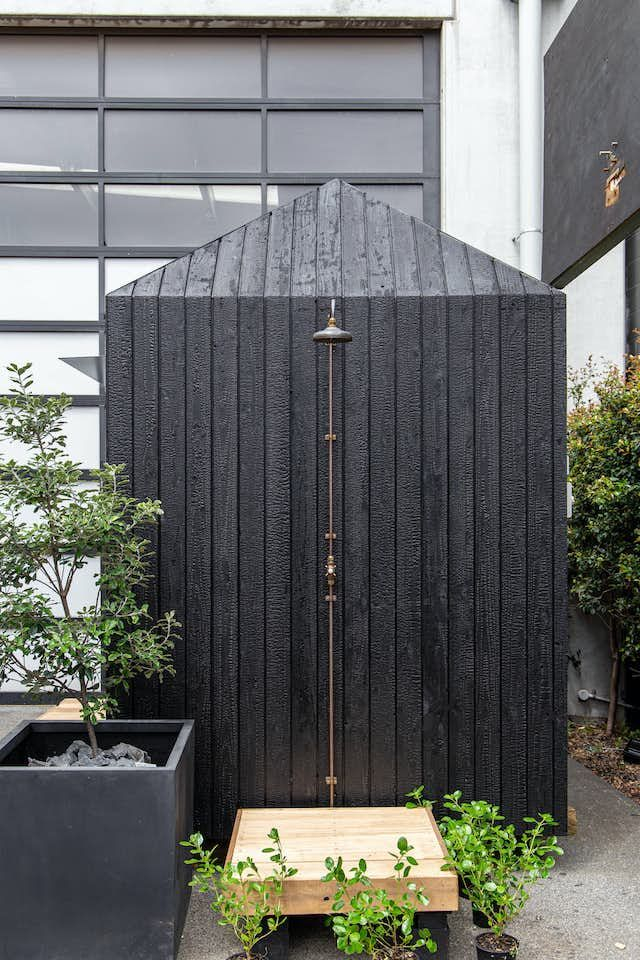
Garden sauna exterior — ThermoWood can be left to weather naturally or finished with a UV-stable oil to maintain the original warm brown colour.
Exterior finishing
ThermoWood does not require preservative treatment on the exterior — the thermal modification process has already addressed decay resistance. You have two options for finishing:
- Leave untreated — ThermoWood will naturally weather to a consistent silver-grey patina. This is a genuinely attractive, low-maintenance finish that many garden sauna owners actively choose. No ongoing maintenance required beyond keeping the boards clean.
- Apply a UV-stable exterior oil — maintains the warm brown colour of the fresh timber and extends the period before weathering begins. Requires re-application every 2–4 years depending on exposure. A quality exterior oil such as Koopmans Houtolie or Remmers HK Stain are both well suited to ThermoWood. Browse our fixings and woodcare range for available options.
Interior finishing
For sauna interior walls, ceilings, and benching, ThermoWood should not be painted or coated with a film-forming finish. At sauna temperatures, paint and varnish can release volatile compounds and will blister and peel rapidly. ThermoWood performs best inside a sauna when left completely natural, or finished with a light application of a sauna-specific oil that is safe at high temperatures.
Never use standard exterior paint, varnish, or decking oil on sauna interior surfaces. These products are not safe at sauna temperatures. If you want to apply a finish to interior ThermoWood, use only a product specifically formulated for sauna use and confirmed safe at temperatures above 100°C.
How Much ThermoWood Do You Need for a Garden Sauna?
Estimating the right quantity of cladding for a garden sauna involves calculating the total external surface area, allowing for openings (door, window if any), and adding a standard 10–15% wastage allowance for cuts and fitting. As a rough guide for a typical UK garden sauna:
| Sauna Size | Approx External Surface | Cladding Required (inc. 15% wastage) | Approx Material Cost |
|---|---|---|---|
| Small (2x2m footprint) | ~20m² | ~23m² | £1,265–£1,725 |
| Medium (3x2m footprint) | ~30m² | ~35m² | £1,925–£2,625 |
| Large (4x3m footprint) | ~45m² | ~52m² | £2,860–£3,900 |
These are indicative figures based on ThermoWood triple shadow gap at £55–£75 per m². For a precise quote based on your specific sauna dimensions, contact our team with the measurements and we will calculate the exact quantity and cost. For a full breakdown of timber cladding costs by species, see our timber cladding cost guide.
For garden sauna exteriors in the UK, the triple shadow gap profile (26x92mm or 32x140mm) is the most popular choice. It provides excellent weather resistance through its recessed drainage detail, suits the clean contemporary aesthetic of most modern garden saunas, and performs reliably in the UK's wet climate. The double shadow gap (26x142mm) is a good alternative where fewer horizontal joints are preferred on larger facades.
Yes. ThermoWood — particularly ThermoWood Pine — is one of the most widely used materials for sauna interior walls and ceilings. Its thermal modification process reduces heat conductivity compared to untreated softwood, meaning the timber feels cooler to the touch at high sauna temperatures. It also resists the repeated cycles of heat and humidity that cause untreated softwoods to warp, crack, or degrade over time. Tongue and groove is the standard profile for sauna interiors.
On the exterior, ThermoWood does not require preservative treatment — the thermal modification process provides the necessary decay resistance. A UV-stable exterior oil can be applied to maintain the warm brown colour, or the timber can be left untreated to weather naturally to a silver-grey patina. For sauna interiors, ThermoWood should not be painted or heavily coated — the timber performs best when left natural or finished with a light sauna-specific oil safe at temperatures above 100°C.
ThermoWood Pine is the most widely used species for sauna applications. It is lightweight, has low thermal conductivity, and is widely available in tongue and groove profiles suited to sauna interiors. ThermoWood Ash is a denser, harder species with a finer grain and more contemporary appearance. It is more commonly used for sauna exteriors and decking where durability and aesthetics are the priority. For sauna interior walls and ceilings, ThermoWood Pine is the standard recommendation.
When correctly installed with a ventilated cavity, appropriate head flashings, and open base details, ThermoWood cladding on a garden sauna exterior can realistically achieve 25–40 years of service life in UK conditions. The thermal modification process provides decay resistance that significantly outlasts untreated softwood, making it one of the most durable and low-maintenance choices for garden sauna exteriors.
ThermoWood Cladding for Garden Saunas — UK Stock, Nationwide Delivery
We supply ThermoWood cladding for garden sauna exteriors and interiors across the UK, from stock. All profiles available including triple shadow gap, double shadow gap, shiplap, and tongue and groove. FSC and PEFC certified. Delivery in 7–14 days. Not sure which profile or quantity you need? Contact our team for a free quote.