
- Three ways to achieve black featheredge: Charred (Shou Sugi Ban) — zero maintenance, permanent; factory black stained — consistent, re-treat every 3–5 years; site-applied black stain — flexible, re-treat every 2–3 years.
- Best for durability: Charred Siberian larch or Nordic spruce feather edge — the carbonised surface needs no re-treatment and lasts 25–40 years.
- Best value: Black stained Nordic spruce feather edge — the most affordable black featheredge specification, 15–20 years with consistent treatment.
- Why feather edge works so well in black: The deep shadow lines of the overlapping boards are dramatically amplified by a dark finish — more visually striking in black than almost any other profile.
- Most popular use: Barn conversions, garden buildings, rural house extensions — black featheredge references the traditional tarred agricultural buildings of the English countryside.
- Cost: Black stained spruce £46–£97/m² installed. Charred larch £95–£165/m² installed.
Black feather edge cladding is one of the most striking exterior finishes available for UK buildings — a traditional overlapping timber profile given a bold contemporary identity through charring, staining, or painting in deep black. The feather edge profile has been used on English agricultural buildings for centuries, and the black or near-black finish references the traditional tarred timber barns that define the rural British landscape. Today that vernacular reference is as likely to appear on a contemporary garden room or London house extension as on an actual barn — black featheredge has crossed over from agricultural vernacular into mainstream residential design, and it reads distinctively well regardless of context. This guide covers all three approaches to black feather edge cladding, compares them honestly on cost, durability, and maintenance, and shows where each works best.
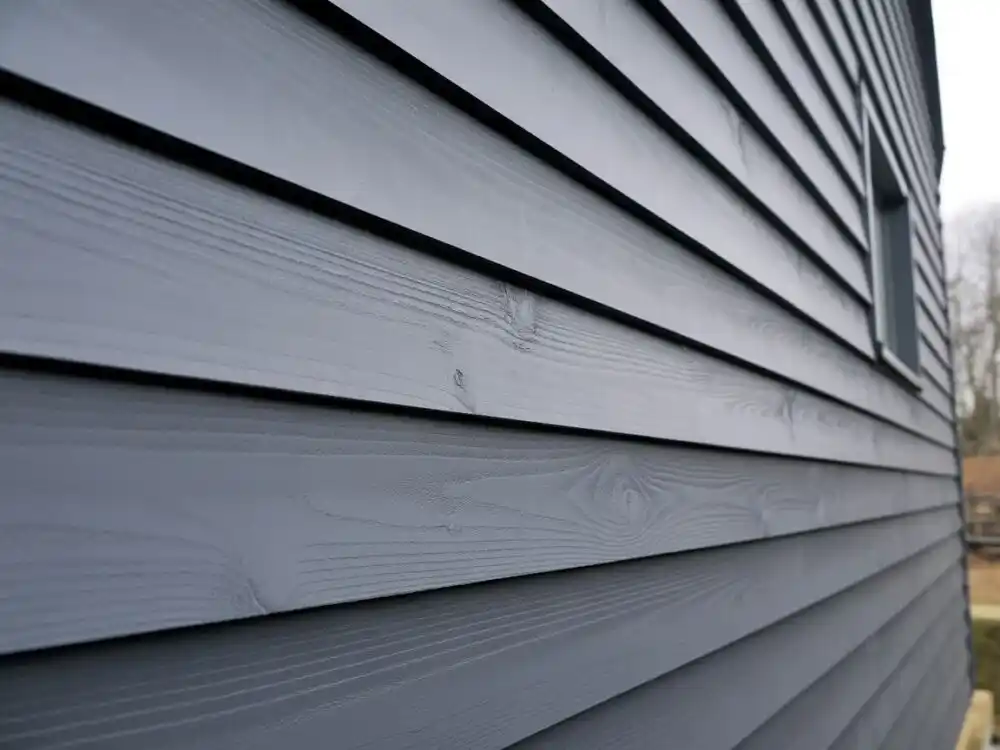
Black feather edge cladding — Nordic spruce featheredge boards finished in a deep black stain. The overlapping profile creates bold shadow lines between boards that are dramatically amplified by the dark colour, making black the most visually impactful finish for feather edge cladding.
Why Feather Edge Cladding Works So Well in Black
The feather edge profile creates deeper shadow lines between boards than almost any other cladding profile — the tapered overlap means each board casts a distinct shadow across the board below, producing a pronounced horizontal texture across the whole elevation. In natural timber colours this texture reads as rustic and agricultural. In black it becomes something dramatically different — bold, contemporary, and architectural — while retaining that connection to the traditional tarred barns and agricultural buildings that have defined the English rural landscape for centuries.
This is why black feather edge cladding spans such a wide range of building types. On an actual barn conversion it is entirely authentic — it looks exactly right because it references what was originally there. On a contemporary garden room or a London rear extension it creates a deliberately dramatic statement — the traditional profile given a modern identity through the dark finish. And on a rural new build or a farmhouse extension it sits comfortably in both worlds, respecting the vernacular while reading as a considered, designed choice rather than an imitation.
The other reason black feather edge works so well is purely practical — dark colours are the most effective at hiding the natural variation, checking, and weathering that occurs on all external timber over time. A natural feather edge shows every knot, colour variation, and surface check clearly. A black feather edge absorbs all of that variation and presents a uniform, confident facade.
Three Ways to Achieve Black Feather Edge Cladding
Charred Black Feather Edge — The Shou Sugi Ban Approach
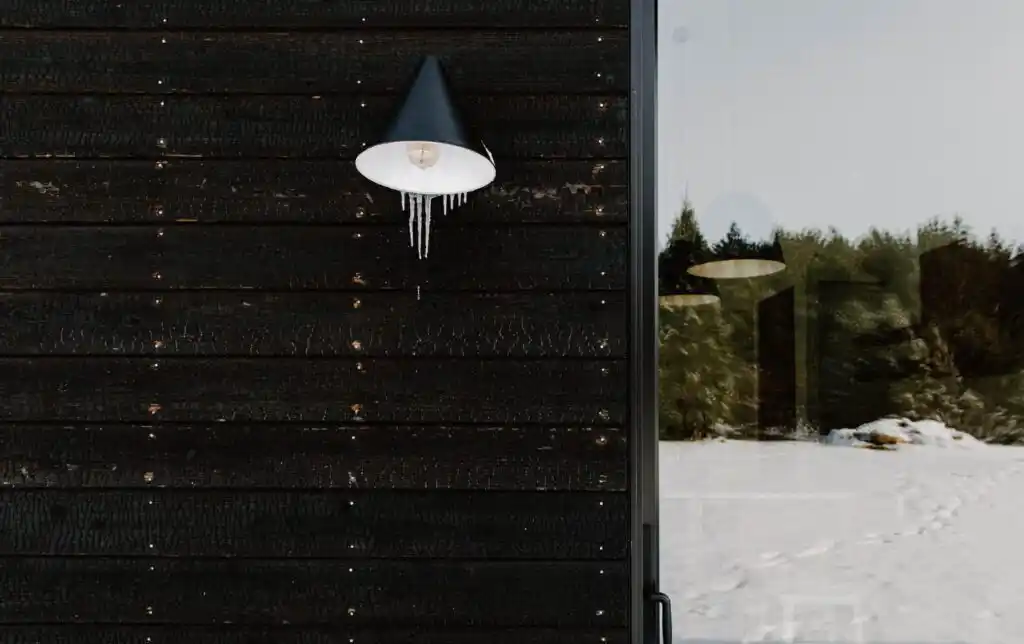
Charred Nordic spruce cladding — the deep, textured black finish of Shou Sugi Ban charring on a feather edge profile. The char layer is not a surface coating but a physical change to the timber surface itself, providing biological resistance without any ongoing treatment requirement.
Charred feather edge cladding is the specification that delivers black featheredge with the lowest lifetime maintenance burden and the strongest durability credentials. The charring process — adapted from the Japanese Yakisugi technique, known in the West as Shou Sugi Ban — carbonises the timber surface at high temperature, creating a hardened char layer that resists moisture penetration, insect attack, and UV degradation. The black colour produced is inherent to the material, not applied over it, which is why it outperforms stained or painted alternatives on longevity and fade resistance.
We produce charred feather edge cladding on two base species:
- Nordic spruce charred: The most popular and cost-effective charred featheredge base. Nordic spruce's even, consistent grain chars cleanly and evenly. Our Nordic spruce charred brushed stained black and charred stained black are factory-finished to a consistent deep black — ready to install directly
- Siberian larch charred: The premium charred featheredge specification. Larch's naturally durable heartwood provides an additional durability advantage beneath the char layer, making this the longest-lasting black featheredge specification available. Our Siberian larch charred brushed stained black combines natural Class 3 durability with a permanent charred black finish
Charred feather edge cladding on a UK exterior requires no preservative treatment, no re-staining, and no oiling throughout its service life. On south and west-facing high-UV elevations, an optional application of clear exterior oil every 5–7 years can maintain the depth of the char colour — but this is purely cosmetic and entirely optional. For a garden building, barn conversion, or any project where maintenance access is inconvenient, charred featheredge removes the obligation entirely. See our full Shou Sugi Ban guide for the complete picture.
Charred Siberian Larch Feather Edge — The Premium Black Specification

Deep charred Siberian larch cladding — maximum carbonisation produces a rich textured surface with an almost three-dimensional quality when the char layer is left unbrashed. On a feather edge profile the alligator-skin texture of deep char adds another layer of visual depth to the bold shadow lines between boards.
Deep charred Siberian larch feather edge is the most visually dramatic and most durable black featheredge specification available in the UK. The combination of three elements produces a result that is impossible to replicate with stain or paint: the pronounced horizontal shadow lines of the feather edge profile, the deep textured surface of the char layer itself, and the inherent warmth of larch's natural grain visible beneath the carbonised surface.
Deep charred finishes leave the char layer unbrashed — producing a rough, textured alligator-skin surface that maximises the visual drama of the black finish. This is the specification most closely associated with barn conversions and rural projects where a raw, honest material character is the design intent. For a slightly more refined result, brushed char removes the loose carbon to reveal a smoother, more metallic black surface with the grain pattern more clearly visible — see our larch charred brushed stained black for this specification. For the complete range of charred options and colour variants, see our full Shou Sugi Ban range.
Black Stained Feather Edge — Species, Costs & Results
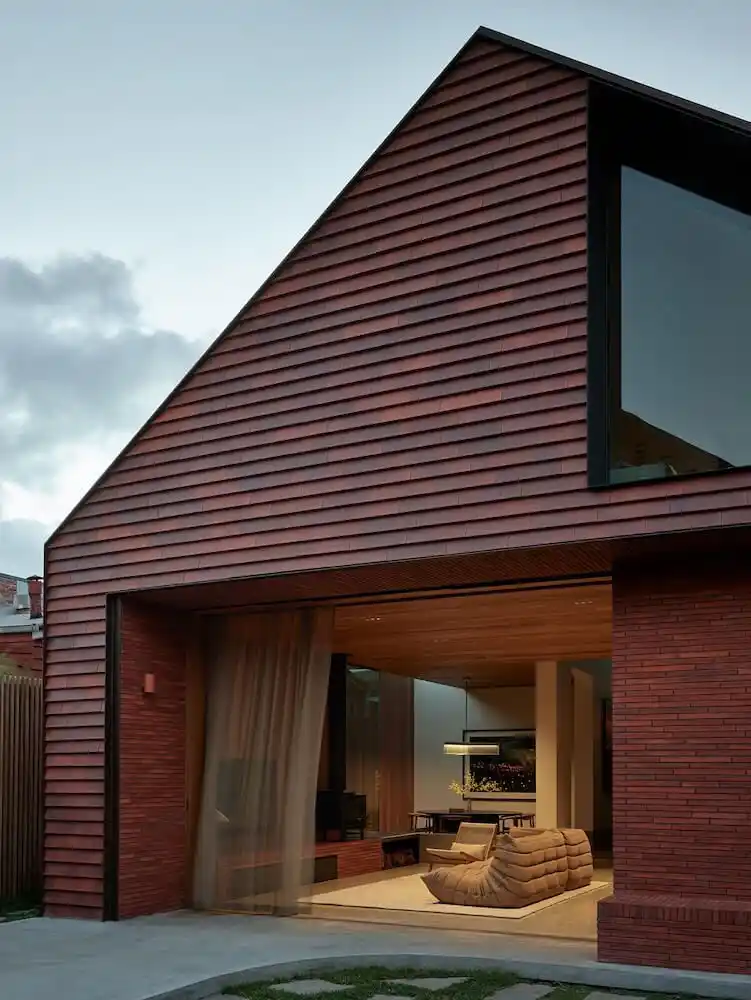
Feather edge cladding stained to complement an existing brick elevation — demonstrating how featheredge takes colour stains consistently across the full board face. The same technique applied with a black exterior stain produces a rich, even black finish that works on all feather edge species. Black is the most searched stain colour for featheredge in the UK.
Black stained feather edge is the most cost-effective route to the black featheredge look, and for most garden buildings and outbuildings it is the correct specification. The key to a good result with black stained featheredge is consistent application on all faces — including the back face of each board — before installation:
- Back prime all boards before installation: Apply the first coat of black exterior stain to all four faces of each board (including the back face and both edges) before fixing. The hidden overlapping edges and back face cannot be reached after installation — boards that are only stained on the visible face will deteriorate faster at the un-stained hidden surfaces
- Use Remmers HK Stain in a black or near-black tone: A combined preservative and stain product penetrates the timber grain rather than sitting on the surface, giving significantly better durability than surface-only paints
- Species choice: Siberian larch feather edge takes black stain more evenly than Nordic spruce due to its tighter grain, and its natural Class 3 durability means the underlying timber is protected even if the stain weathers. Nordic spruce feather edge is perfectly adequate if treatment is maintained consistently every 2–3 years
- Re-treatment interval: South and west-facing elevations typically need re-staining every 2–3 years. North-facing sheltered positions can extend to 4 years. Always clean before re-treating
Black Feather Edge Cladding Cost UK 2026
| Specification | Boards/m² | + Battens, fixings, membrane | + Labour | Installed/m² | Maintenance interval |
|---|---|---|---|---|---|
| Nordic spruce — site stained black | £22–£32 | £8–£15 | £20–£40 | £50–£87 | Every 2–3 years |
| Nordic spruce — factory black stained | £28–£42 | £8–£15 | £20–£40 | £56–£97 | Every 3–5 years |
| Siberian larch — site stained black | £40–£55 | £8–£15 | £20–£40 | £68–£110 | Every 4–5 years |
| Nordic spruce charred black | £75–£95 | £8–£15 | £20–£40 | £103–£150 | Occasional clean only |
| Siberian larch charred black | £90–£115 | £8–£15 | £20–£40 | £118–£170 | Occasional clean only |
Where Black Feather Edge Works Best — Design Applications
Barn conversions
Black feather edge is the most authentic choice for a UK barn conversion — it directly references the tarred or charred boarding that covered agricultural buildings across England for centuries. Deep charred larch or Nordic spruce feather edge on a barn conversion is not a stylistic statement but a genuine material reference to what was originally there. It reads as honest and appropriate in a way that contemporary profiles never quite achieve on a traditional agricultural structure.
Garden rooms and studios
Black featheredge garden rooms are one of the most popular builds in UK residential design — the profile is simple and affordable to install on a timber-frame garden building, and the black finish makes even a modest structure look designed and intentional. Charred Nordic spruce feather edge on a garden room means zero maintenance for the life of the building, which matters enormously for a structure that may see variable use across seasons. See our garden room cladding guide for the full specification.
House extensions
Black feather edge on a single-storey rear extension creates a deliberate vernacular reference on a contemporary structure — particularly effective on London and suburban extensions where the contrast between the traditional profile and the contemporary building is the design intent. On a rural extension it sits naturally within the agricultural landscape. Ensure fire safety compliance on extensions close to a boundary — see our fire rated cladding guide.
Sheds and outbuildings
Black feather edge elevates a garden shed from a utility structure to something that actively contributes to the garden aesthetic. Nordic spruce feather edge stained black is the most cost-effective approach for a shed where re-treatment every 2–3 years is realistic. For a shed that may go long periods without attention, charred featheredge removes the maintenance requirement entirely — see our best cladding for garden sheds guide.
Dark cladding absorbs significantly more solar radiation than light-coloured alternatives — black featheredge on a south-facing wall can reach surface temperatures of 50–65°C in summer. This is not a structural problem for the timber, but it accelerates the weathering of any surface stain on the exposed board face compared to a north-facing elevation. Factor a shorter re-treatment interval for heavily sun-exposed black stained elevations. Charred featheredge is unaffected — the carbonised surface is stable regardless of UV exposure.
What is black feather edge cladding?
The traditional tapered overlapping timber cladding profile finished in black — achieved by charring (Shou Sugi Ban), factory black staining, or site-applied black exterior stain. The feather edge profile's deep shadow lines are particularly dramatic in black, making it one of the most popular exterior cladding choices for barns, garden rooms, and house extensions in the UK.
What is the best black feather edge cladding for a UK house?
Charred Siberian larch feather edge — permanent black finish, zero maintenance, 25–40 year service life. For a more affordable option, factory black stained Nordic spruce feather edge gives a consistent black finish requiring re-treatment every 3–5 years. The charred specification is the right long-term choice for any project where maintenance access is inconvenient or unlikely to happen consistently.
How long does black feather edge cladding last?
Charred: 25–40 years. Black stained Siberian larch: 20–30 years structurally, re-stain every 4–5 years for colour. Black stained Nordic spruce: 15–20 years with treatment every 2–3 years. All figures assume correct installation with ventilated batten system and A4 stainless fixings.
Is charred feather edge cladding the same as Shou Sugi Ban?
Yes — charred feather edge uses the same controlled burning technique as Shou Sugi Ban, adapted for UK species (Nordic spruce and Siberian larch rather than Japanese cedar). The black is a physical change to the timber, not a coating, which is why it outperforms stained alternatives on durability and fade resistance.
How much does black feather edge cladding cost in the UK?
Black stained Nordic spruce feather edge: £50–£97/m² installed. Siberian larch site stained black: £68–£110/m² installed. Nordic spruce charred black: £103–£150/m² installed. Siberian larch charred black: £118–£170/m² installed. All figures include battens, membrane, fixings and professional installation.
Black Feather Edge Cladding — Charred & Stained from UK Stock
We supply charred black feather edge cladding in Nordic spruce and Siberian larch, and natural feather edge boards in both species for site staining. FSC and PEFC certified. All charred products are factory-finished and ready to install directly. Tell us your elevation dimensions for a precise board quantity and full material list. Nationwide delivery 7–14 days.