
- What it is: A tapered timber board — thick on one edge, thin on the other — installed horizontally with each board overlapping the course below by minimum 25mm. One of the most traditional and widely used UK cladding profiles.
- Species available: Nordic spruce 24x146mm, Siberian larch 26x146mm, ThermoWood 20x140mm — all from UK stock.
- Cost: Spruce £20–£30/m². Larch £35–£55/m². ThermoWood £50–£70/m².
- Lifespan: Spruce 15–25 years (treated). Larch 20–35 years (no treatment). ThermoWood 25–40 years (zero maintenance).
- Best uses: Sheds, garden buildings, agricultural buildings, barn conversions, traditional house elevations.
- vs shiplap: Feather edge gives more shadow depth and a traditional/rustic character. Shiplap is flatter and more contemporary. Both suit garden buildings equally well.
Feather edge cladding is one of the oldest and most enduring timber profiles used in the UK — found on everything from 17th century agricultural barns to contemporary garden studios. Its tapered board overlapping profile creates deep shadow lines, pronounced texture, and a distinctly characterful appearance that no other cladding profile replicates. It is also one of the most forgiving profiles to install — the overlapping system tolerates minor irregularities in the frame behind it and is genuinely achievable for a competent DIYer. This guide covers everything — what feather edge cladding is, the three species available, costs, installation, maintenance, and how it compares to shiplap.
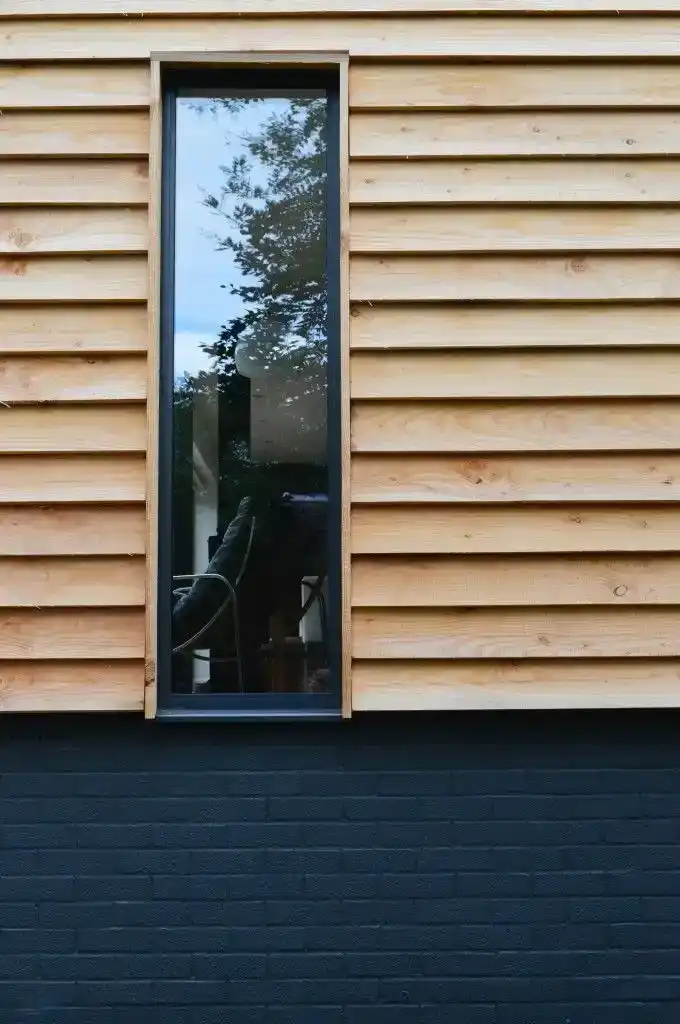
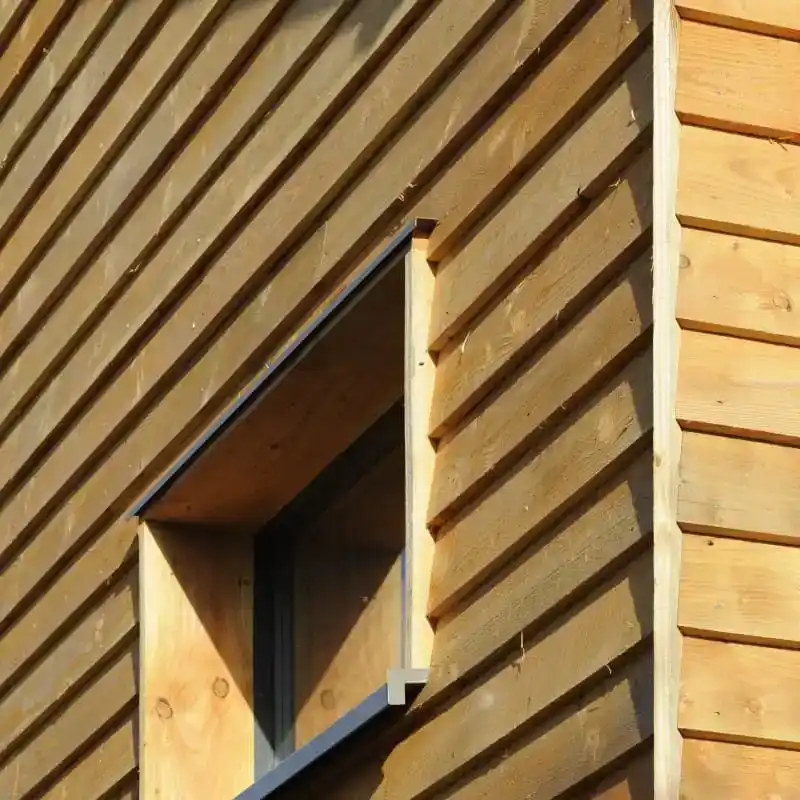
Feather edge cladding installed — the characteristic deep shadow lines created by the overlapping tapered boards give feather edge its distinctive appearance. No other cladding profile produces this depth of shadow, making feather edge one of the most visually distinctive choices for sheds, garden buildings, and traditional house elevations.
What Is Feather Edge Cladding?
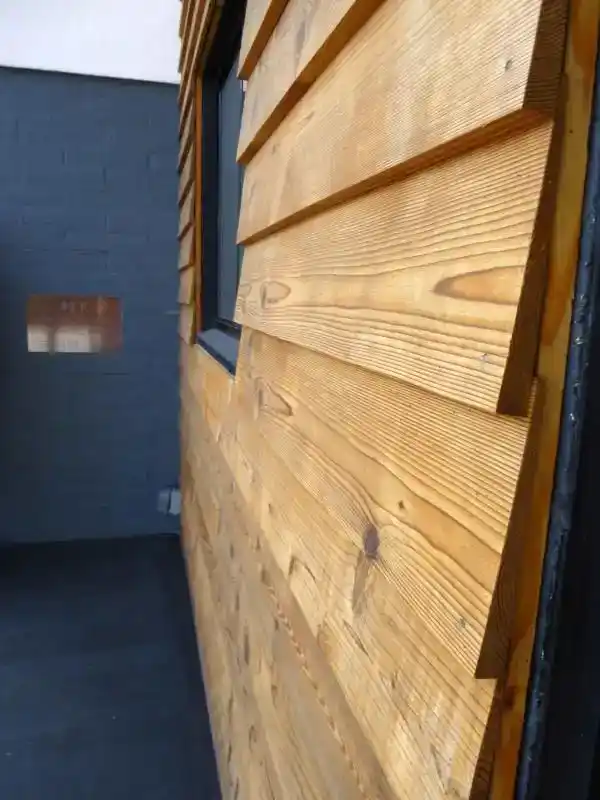
Feather edge profile close-up — each board is sawn to a tapered cross-section, thick on one edge and thin on the other. The overlapping installation creates a deep shadow line at each course junction that gives feather edge its distinctive textured, dimensional appearance.
Feather edge cladding — also known as waney edge, bevel siding, or wedge board — is a timber cladding board sawn or planed to a tapered profile across its width: thick on one long edge (typically 12–20mm) and thinning to a feathered edge on the other (typically 3–6mm). Boards are installed horizontally with each course overlapping the one below by a minimum of 25mm, with the thick edge of each board at the bottom and the thin edge tucked behind the thick edge of the board above.
This overlapping system creates a naturally weather-resistant surface — water is shed from the thick lower edge of each board over the next, with no exposed joint between courses. The profile has been used in the UK for centuries on agricultural buildings, barns, and traditional houses precisely because it sheds water effectively and is simple to install and repair. Individual boards can be replaced without disturbing adjacent courses — a practical advantage over many modern profiles.
The pronounced shadow line at each course junction — where the thick lower edge of the upper board casts a shadow on the face of the board below — gives feather edge its defining visual character. The shadow depth varies with board width and overlap, but is always more pronounced than shiplap, tongue and groove, or shadow gap profiles.
Feather Edge Cladding — All Three Species
The most affordable feather edge option. Durability Class 4–5 — must be treated with preservative before installation and every 2–3 years thereafter. For sheds, agricultural buildings, and budget projects where maintenance will be kept up. 15–25 year service life with treatment.
Naturally Durability Class 3 — no preservative treatment required. Weathers to an attractive silver-grey without treatment. Optional oiling every 2–3 years to maintain the warm honey-gold colour. 20–35 year service life. Best choice for low-maintenance sheds and garden buildings.
Thermally modified pine — Durability Class 2, zero maintenance ever, 30-year BRE endorsed service life. Premium specification for garden studios, home offices, and contemporary sheds where zero maintenance is the priority. Rich honey-brown weathering to silver-grey.
Black Feather Edge Cladding — Contemporary Takes on a Traditional Profile
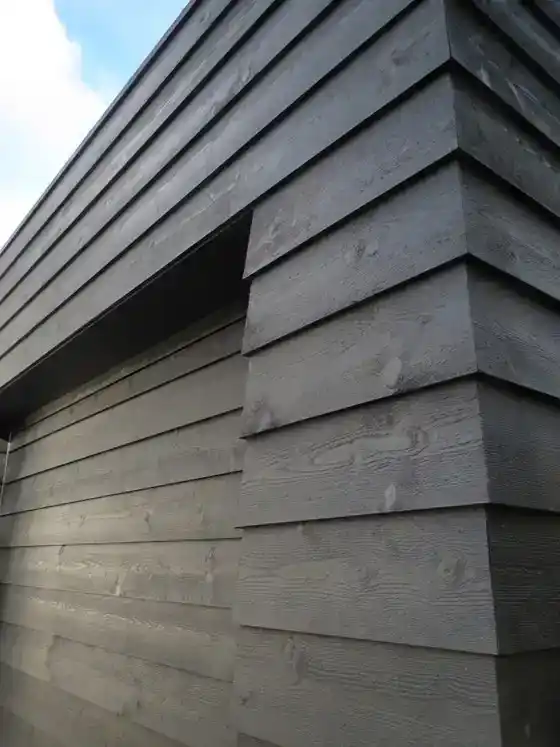
Black feather edge cladding — the traditional profile given a contemporary finish with dark stain or charring. Black and dark charcoal feather edge is one of the strongest current trends in UK residential and garden building design — the deep shadow lines of the feather edge profile are dramatically emphasised by a dark finish.
One of the most striking current trends in UK exterior design is black or dark charcoal feather edge cladding — the traditional overlapping board profile finished in a deep black stain or charred finish. The feather edge profile's pronounced shadow lines are particularly dramatic in dark finishes, creating a bold textured elevation that reads very differently from smooth contemporary profiles.
There are two approaches to black feather edge in practice. The first is stained feather edge — Nordic spruce boards finished with a black or near-black exterior preservative stain such as Remmers HK Stain in a dark colour — this requires re-staining every 2–3 years as part of the preservative maintenance cycle. The second is our Shou Sugi Ban charred cladding range — a permanently black finish achieved through the Japanese charring technique, requiring zero maintenance. For a bold black feather edge finish that never needs re-treating, charred timber is the correct specification.
Feather Edge as External House Cladding
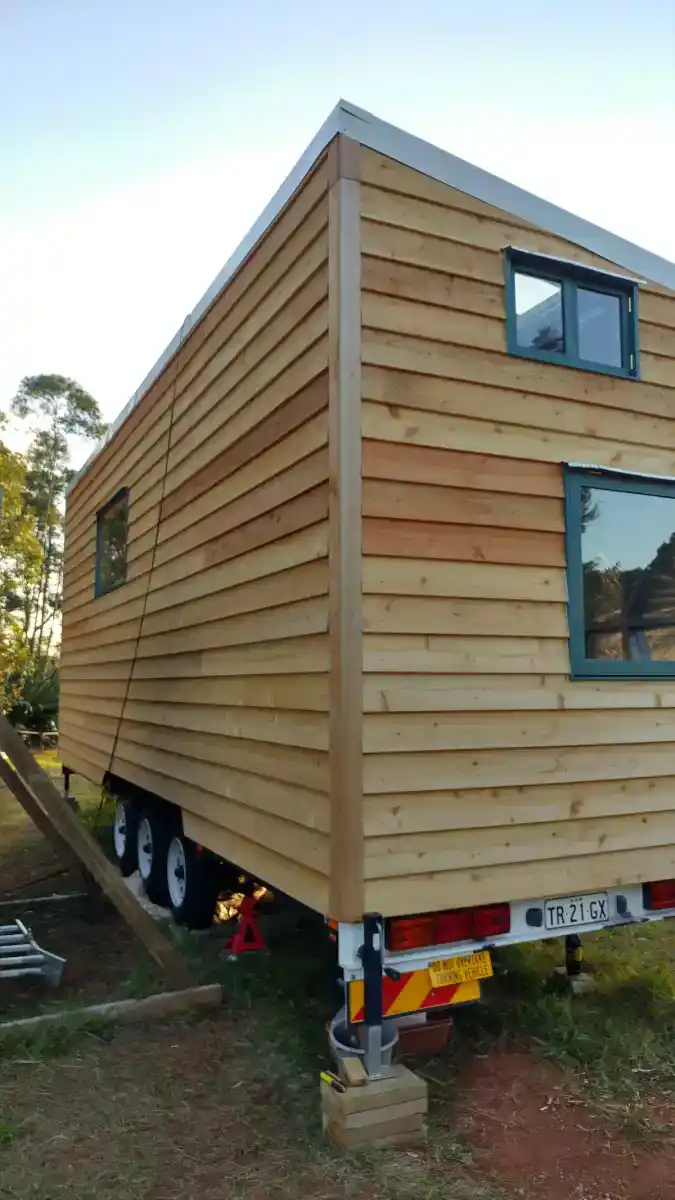
Feather edge external house cladding — the profile is equally at home on a full house elevation as on a garden shed. On residential properties, feather edge suits traditional, rural, and barn conversion contexts particularly well — its agricultural heritage makes it the authentic choice for these building types.
Feather edge cladding is not limited to sheds and outbuildings — it is widely used on residential house elevations, particularly on traditional, rural, and barn-style properties where its agricultural character suits the context. It is also increasingly used on contemporary extensions as a deliberate contrast to render or brick — the texture and shadow depth of feather edge provides visual relief against flat contemporary surfaces.
For external house cladding use, the species specification becomes more important than for garden buildings. Nordic spruce on a house elevation requires a consistent 2–3 year treatment cycle — for a main house elevation on scaffolding, that is a significant ongoing cost and disruption. For house cladding we recommend Siberian larch or ThermoWood feather edge — both naturally durable or modified, both zero chemical treatment obligation, both appropriate for long-term residential use. See our full timber cladding for modern extensions guide and building regulations guide for residential cladding requirements.
Sawn vs Planed Feather Edge — What's the Difference?
Sawn feather edge cladding — the rough-sawn surface has a more rustic, textured character than planed boards. Sawn feather edge is the traditional agricultural choice — particularly suited to barns, rural sheds, and buildings where a naturalistic finish is appropriate. The rougher surface also holds preservative treatment more effectively than a smooth planed face.
Feather edge cladding is available in two surface finishes — sawn and planed — and the choice affects both appearance and performance:
- Sawn feather edge: Rough-sawn surface with visible saw marks and a more open grain structure. More rustic and agricultural in character. The rougher surface holds preservative treatment more effectively — paint and stain penetrate deeper into the open grain. Traditional choice for barns, rural agricultural buildings, and where a naturalistic appearance is appropriate
- Planed feather edge: Smooth machined surface. Cleaner, more refined appearance. Better suited to contemporary applications and residential elevations. Slightly less absorbent — treatment sits more on the surface than penetrating through it. All three of our feather edge products are supplied planed smooth
Feather Edge vs Shiplap — Which to Choose?
| Property | Feather Edge | Shiplap |
|---|---|---|
| Profile | Tapered board, overlapping | Rebated board, interlocking |
| Shadow line | Deep — pronounced texture | Shallow — cleaner surface |
| Character | Traditional, rural, agricultural | Contemporary, versatile |
| Installation | Easier — very forgiving | Straightforward |
| Board replacement | Simple — remove individual boards | Requires care with rebate |
| Water shedding | Excellent — natural overlap design | Good — rebate protects joint |
| Best for | Sheds, barns, agricultural, traditional | Houses, garden rooms, contemporary |
| Species range | Spruce, larch, ThermoWood | Spruce, larch, ThermoWood |
Choose feather edge if the building is a shed, barn, agricultural structure, or traditional house where the pronounced shadow depth and rustic character suit the context. Choose shiplap if the building is a garden room, contemporary extension, or modern house where a cleaner, flatter surface is more appropriate. Both are available in the same three species at comparable prices.
How to Install Feather Edge Cladding — Key Points
Check the frame is sound, square, and minimum 38mm deep. Fix a breather membrane to the external face of the frame, working bottom to top with each course overlapping by 150mm. This protects the frame from wind-driven rain while allowing moisture to escape outward.
Fix 25x38mm treated counter battens vertically over the membrane at 400mm centres — aligned with the studs behind. These create the ventilated cavity essential for all exterior timber cladding. A 25mm clear cavity is the minimum.
For Nordic spruce — apply preservative stain to all four faces and both ends of every board before fixing. The back face becomes inaccessible once installed. For larch and ThermoWood — seal all end grain at cut ends with exterior wood oil. This step is critical for spruce service life.
Fix a thin starter strip (a ripped-down piece of the same board) at the base to kick out the first full board at the correct angle. Confirm minimum 150mm clearance between the first board and finished ground level. Check for level before fixing — the first board sets the alignment for every course above.
For feather edge, one A4 stainless ring-shank nail per batten per board is standard — through the face of the board, above the overlap line of the board below. Overlap each course by minimum 25mm — 30–35mm gives a better shadow line and more weather protection. Check level every 3–4 courses. Pre-drill within 25mm of board ends to prevent splitting.
Seal all cut ends on site immediately after sawing. At external corners, use a corner post or mitre the boards — the corner post is simpler and provides a clean shadow line. At window and door heads, fit a head flashing or drip mould to shed water clear of the frame.
1 — Insufficient overlap: Less than 25mm overlap allows wind-driven rain to penetrate the joint. Aim for 30–35mm minimum. 2 — No starter strip: Without a starter strip the bottom board sits flat against the batten — the correct angle kicks it out so all subsequent boards sit at the same pitch. 3 — Galvanised nails: Corrode within 2–3 years, leaving rust stains and moisture entry at every fixing. Always A4 stainless ring-shank.
Feather Edge Cladding Cost UK 2026
| Species | Board cost/m² | Lifespan | 30-yr maintenance/m² | 30-yr total/m² |
|---|---|---|---|---|
| Nordic Spruce | £20–£30 | 15–25 yrs | £45–£75 | £65–£105 |
| Spruce (unmaintained) | £20–£30 | 5–8 yrs | £80–£150 (replacement) | £100–£180 |
| Siberian Larch | £35–£55 | 20–35 yrs | £0–£15 (optional oil) | £35–£70 |
| ThermoWood | £50–£70 | 25–40 yrs | £0 | £50–£70 |
Note that feather edge boards require approximately 10–15% more material than the net wall area due to the overlap — calculate your wall area then add 12% for overlap coverage loss and 10% for waste and cutting. For full pricing across all cladding species see our timber cladding cost per m² guide.
What is feather edge cladding?
Feather edge cladding is a tapered timber board — thick on one edge, thin on the other — installed horizontally with each course overlapping the one below by minimum 25mm. It creates deep shadow lines and a traditional textured appearance. One of the oldest UK cladding profiles, used on sheds, barns, agricultural buildings, and traditional house elevations.
How long does feather edge cladding last?
Nordic spruce feather edge lasts 15–25 years with preservative treatment every 2–3 years. Siberian larch feather edge lasts 20–35 years with no treatment required. ThermoWood feather edge lasts 25–40 years with zero maintenance. Correct installation — breather membrane, ventilated cavity, 150mm ground clearance, A4 stainless fixings — is as important as species choice.
How much does feather edge cladding cost UK?
Nordic spruce £20–£30 per m². Siberian larch £35–£55 per m². ThermoWood £50–£70 per m². Add 12% to board quantity for overlap coverage loss. Add £8–£12 per m² for membrane, battens, and fixings. Professional installation adds £20–£35 per m².
Is feather edge cladding the same as shiplap?
No — feather edge boards are tapered and installed overlapping, creating deep shadow lines and a rustic appearance. Shiplap has a rebated edge creating a tighter, flatter surface with a cleaner, more contemporary look. Feather edge is more traditional and agricultural; shiplap is more contemporary and suited to houses and garden rooms.
Does feather edge cladding need treating?
Nordic spruce feather edge must be treated with preservative before installation and every 2–3 years — without treatment it will fail within 3–5 years. Siberian larch feather edge does not need treatment — naturally Durability Class 3. ThermoWood feather edge never needs treatment — thermally modified to Durability Class 2, zero maintenance, 30-year BRE endorsed service life.
Feather Edge Cladding — All Three Species from UK Stock
We supply Nordic spruce, Siberian larch, and ThermoWood feather edge cladding from UK stock. FSC and PEFC certified. Tell us your wall area and we'll calculate the precise quantity including overlap — nationwide delivery in 7–14 days.