
- Siberian larch wins on durability — Durability Class 3, 20–35 years without treatment, higher natural resin content.
- Douglas fir wins on appearance character — distinctive warm reddish-brown colour and straight grain that larch cannot match.
- Larch wins on maintenance — can be left untreated; Douglas fir requires preservative treatment every 2–4 years.
- Both are comparable on cost — typically £35–£70 per m² for materials depending on profile.
- Larch wins on profile range — 15+ profiles vs 2 for Douglas fir in our UK stock range.
- Douglas fir wins on workability — straight grain, lower density, cleaner to cut and machine.
Douglas fir and Siberian larch are both widely referenced as quality exterior cladding timbers — but they are significantly different materials that suit different projects, priorities, and budgets. Douglas fir has been a staple of North American construction for over a century and brings a distinctive warm reddish-brown character to facades. Siberian larch is the most specified naturally durable softwood in the UK, valued for its dense grain, minimal maintenance requirement, and long service life. This guide compares both honestly across every factor that matters for a UK cladding project — so you can make the right choice for your build.
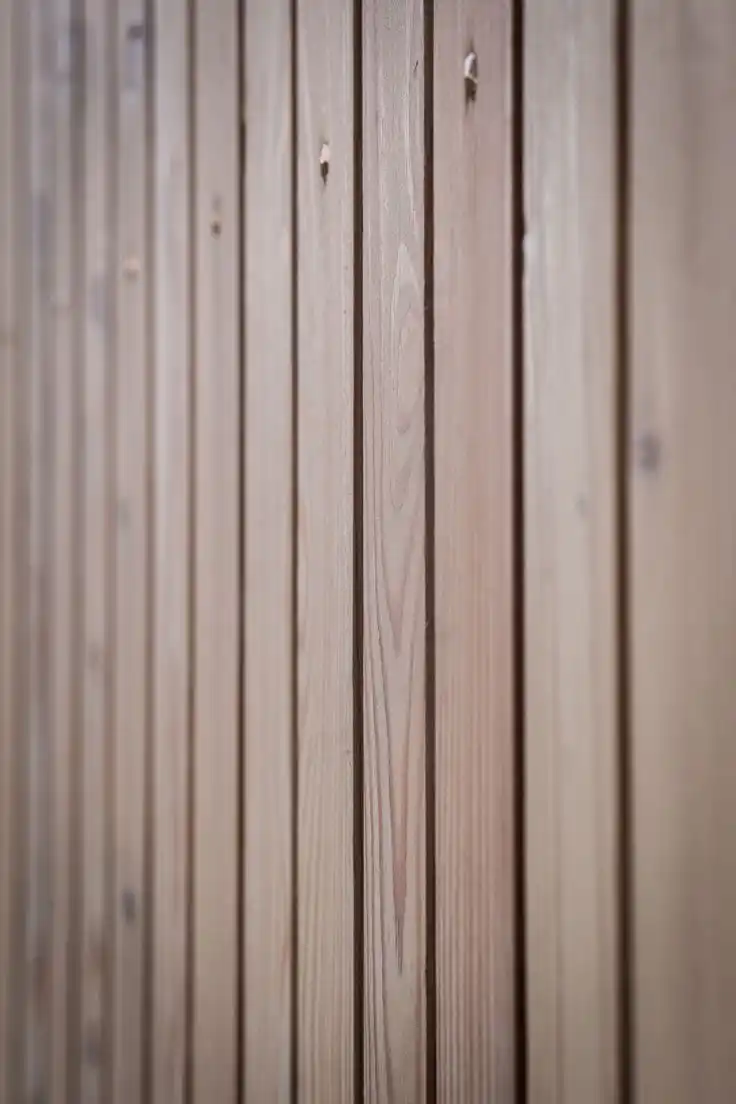
We stock both Douglas fir cladding and Siberian larch cladding from UK stock. This guide is an honest comparison — not a sales pitch for either species.
Douglas Fir Cladding — What You Need to Know
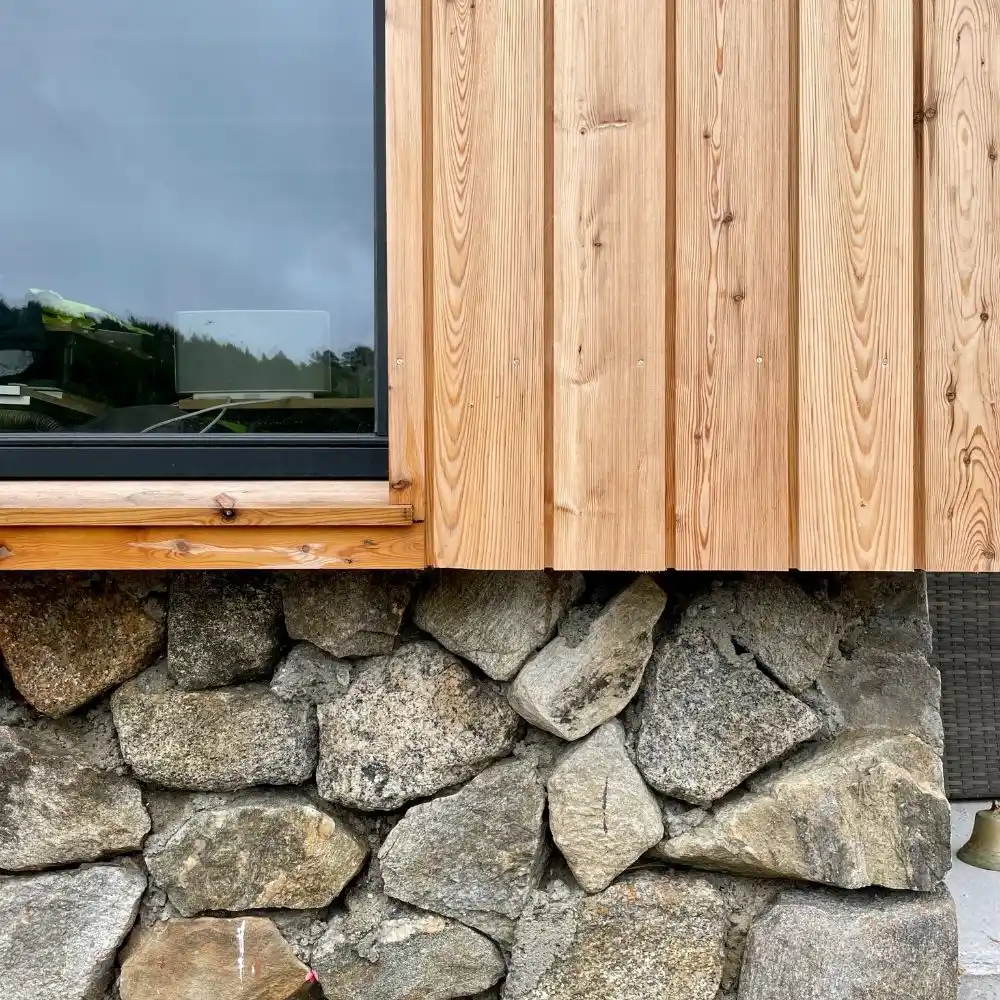
Douglas fir vertical shadow gap cladding — the warm reddish-brown colour and straight, fine grain create a distinctive facade character that is unique to this species.
Douglas fir is a large softwood native to western North America, grown commercially in managed forests across the Pacific Northwest, British Columbia, and parts of Europe. It has a warm reddish-brown to orange-brown heartwood, a relatively straight, fine grain, and a density of approximately 530 kg/m³. Classified as Durability Class 3–4 (BS EN 350) for above-ground exterior use, Douglas fir requires preservative treatment in UK exterior cladding applications. It is known for its exceptional strength-to-weight ratio, good workability, and distinctive rich colour.
Strengths of Douglas fir for UK cladding
Douglas fir's most compelling quality is its appearance. The warm reddish-brown colour is unique among commonly available UK cladding timbers — it brings a richness and warmth that larch, spruce, and even ThermoWood cannot replicate. For projects where a specific warm reddish-brown facade tone is wanted, Douglas fir is often the only softwood that delivers it naturally.
Its straight grain and lower density make it one of the most workable exterior cladding timbers — it cuts cleanly, takes fixings well, and machines to precise profile tolerances. It is lighter to handle than Siberian larch and significantly easier to work with than dense hardwoods. Available from us in rainscreen 27x68mm and tongue and groove V-joint 20x140mm profiles.
Limitations of Douglas fir for UK cladding
The primary limitation is durability classification. At Class 3–4, Douglas fir requires preservative treatment for above-ground exterior use in the UK and cannot be reliably left untreated on an exposed elevation. It is also more susceptible to surface checking as it dries and moves in UK conditions than Siberian larch, which has a denser, more stable grain structure. The profile range available in the UK is significantly narrower than larch — most UK suppliers stock only one or two Douglas fir profiles.
Douglas Fir — Weathered vs Treated
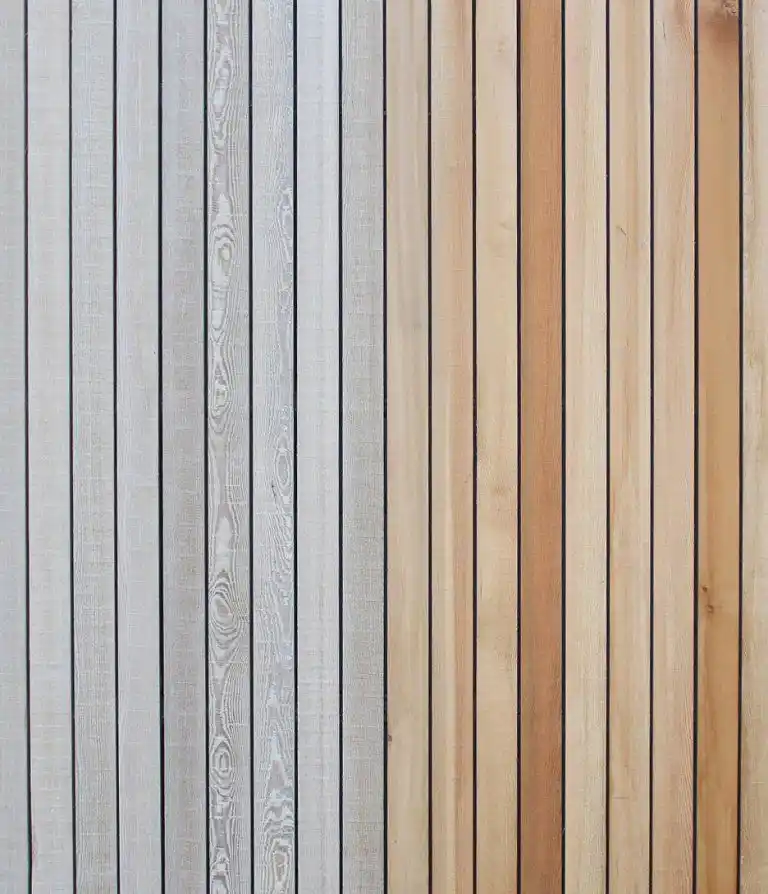
Douglas fir cladding — weathered (left) vs treated (right). The maintained reddish-brown finish preserves the colour character that makes Douglas fir worth specifying. Untreated weathering produces a less consistent result than Siberian larch in the same conditions.
Douglas fir's weathering behaviour in the UK differs from Siberian larch in one important respect — consistency. When Siberian larch is left untreated it weathers to a relatively uniform silver-grey driven primarily by UV photochemical change. Douglas fir's weathering is more variable, influenced by its higher moisture movement and the uneven distribution of resins through the grain — the result can be less consistent across exposed UK elevations than larch.
For most Douglas fir projects, maintaining the original reddish-brown colour with a UV-stable exterior oil is both practical and aesthetically the right decision — it is the colour that makes Douglas fir worth choosing over other species. Apply within 2–4 weeks of installation and re-apply every 2–4 years. The rich warm tone maintained by regular oiling is one of the most striking exterior timber finishes available from any softwood species. For compatible products see our fixings and woodcare range.
Siberian Larch Cladding — What You Need to Know
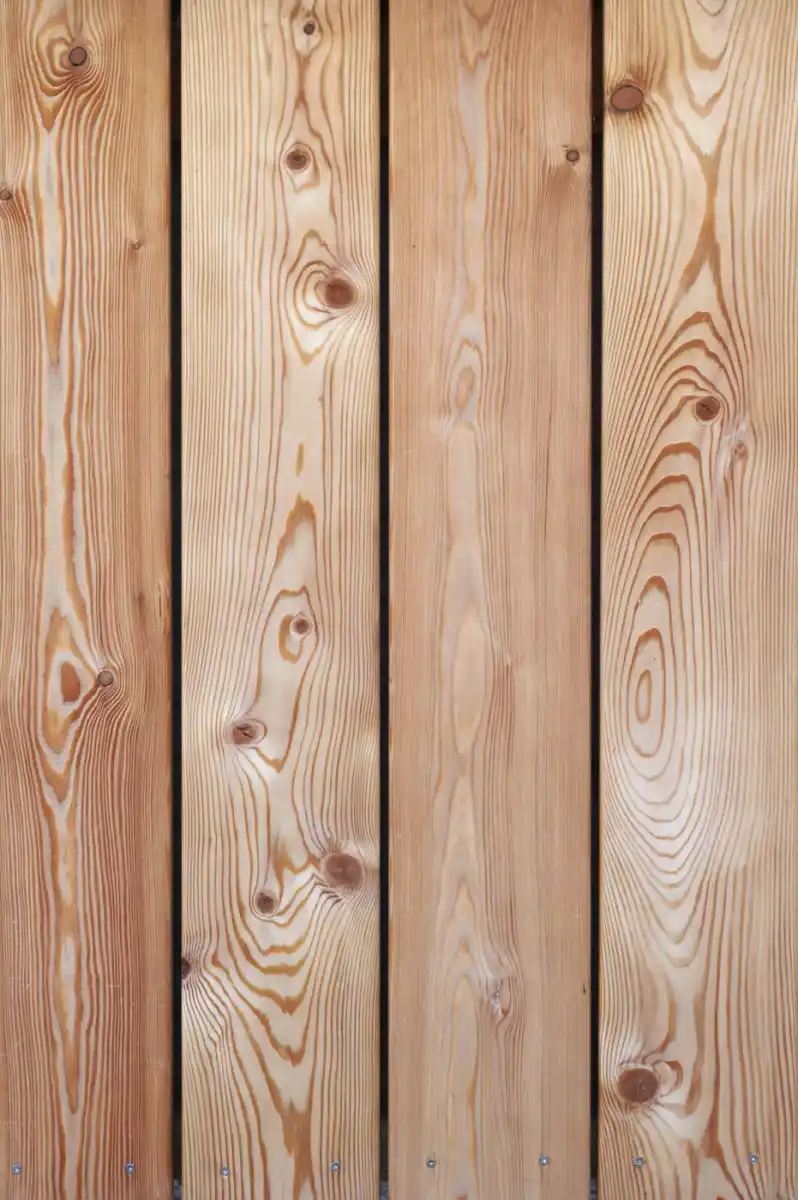
Siberian larch close-up — the pale golden-yellow colour, tight annual rings, and small consistent knots are the result of extremely slow growth in cold Siberian conditions. Completely different in character to Douglas fir's warm reddish-brown tone.
Siberian larch (Larix sibirica) is the most widely specified naturally durable cladding timber in the UK. Grown in the extreme cold of Siberia and northern Russia, it develops a dense, resinous grain structure with a density of approximately 590 kg/m³ — noticeably denser and harder than Douglas fir. Classified as Durability Class 3 (BS EN 350), Siberian larch is suitable for above-ground exterior cladding without chemical preservative treatment — the natural resin content and dense grain provide the necessary biological decay resistance.
The pale golden-yellow colour and distinctive knot pattern of Siberian larch are immediately recognisable — it is the material most associated with contemporary UK residential architecture over the past decade. Left untreated, it weathers to a consistent silver-grey that has become one of the most popular low-maintenance exterior finishes for UK residential and commercial buildings. The wider range of profiles available in Siberian larch — including shadow gap, double shadow gap, rainscreen, shiplap, feather edge, and tongue and groove — gives architects and builders maximum design flexibility.
Douglas Fir vs Siberian Larch — Full Comparison
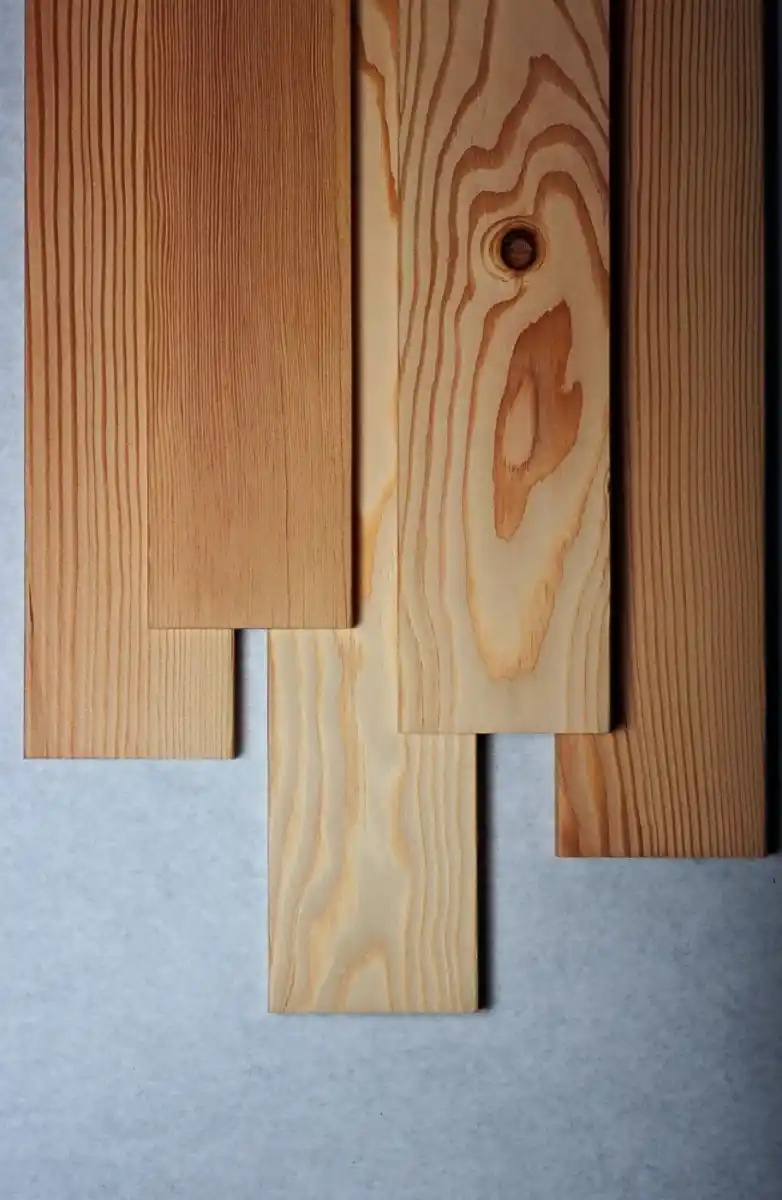
Larch vs Douglas fir — the colour difference between the two species is immediately apparent. Douglas fir's warm reddish-brown tone versus Siberian larch's pale golden-yellow are the defining visual distinction between these two species.
| Factor | Douglas Fir | Siberian Larch |
|---|---|---|
| Durability class (BS EN 350) | Class 3–4 above ground | Class 3 — moderately durable |
| Treatment required | ✗ Yes — every 2–4 years | ✓ Not required |
| Service life | 20–30 years with treatment | 20–35 years minimal maintenance |
| Colour | Warm reddish-brown — unique character | Pale golden-yellow — weathers silver-grey |
| Weathering consistency | Variable — less consistent than larch | Consistent silver-grey patina |
| Density | ~530 kg/m³ | ~590 kg/m³ — denser, harder |
| Workability | Excellent — straight grain, easy to cut | Good — slightly harder to work |
| Material cost per m² | £35–£65 | £35–£70 — comparable |
| Profile range (UK) | Limited — 2 profiles stocked | Extensive — 15+ profiles stocked |
| Certification | ✓ FSC/PEFC available | ✓ FSC and PEFC certified |
| Fire rating option | ✓ Euroclass B available | ✓ Euroclass B available via fire treatment service |
Which Should You Choose?
- The warm reddish-brown colour is specifically wanted
- Ease of installation and workability are priorities
- The project suits a rainscreen or tongue and groove profile
- Regular maintenance every 2–4 years is acceptable
- The facade is sheltered or partially sheltered
- A distinctive, less common species is wanted
- Low or zero maintenance is the priority
- The widest profile range is needed — shadow gap, shiplap, feather edge, rainscreen
- Natural weathering to silver-grey is the intended finish
- The facade is exposed or high-rainfall
- Long-term consistent appearance matters
- Best whole-life value is the objective
For most UK exterior cladding projects, Siberian larch is the stronger specification — better natural durability, lower maintenance, wider profile range, and more predictable long-term performance. Douglas fir is the right choice when its distinctive reddish-brown colour is specifically wanted and the maintenance commitment is accepted. Both are quality materials that deliver excellent results when correctly installed and maintained. For a full comparison of all UK cladding timber options see our Siberian larch buyers guide and timber cladding cost guide.
Is Douglas fir or larch better for exterior cladding in the UK?
For most UK exterior cladding applications, Siberian larch is the stronger choice — Durability Class 3, no preservative treatment required, 20–35 year service life, and a wider profile range. Douglas fir suits projects where its distinctive warm reddish-brown colour is specifically wanted and regular maintenance every 2–4 years is acceptable.
Does Douglas fir cladding need treating?
Yes — Douglas fir requires preservative treatment for above-ground exterior cladding use in the UK. A quality exterior preservative oil or stain should be applied to all faces and end grain before installation and re-applied every 2–4 years depending on exposure. Unlike Siberian larch, Douglas fir cannot be reliably left untreated on a UK exterior elevation.
What colour is Douglas fir cladding?
Fresh Douglas fir cladding has a distinctive warm reddish-brown to orange-brown colour — significantly richer and redder than Siberian larch's pale golden-yellow. When finished with a UV-stable oil the original reddish-brown tone is maintained. When left untreated it weathers to silver-grey, though less consistently than larch in UK conditions.
Is Douglas fir more expensive than larch cladding?
Douglas fir and Siberian larch are broadly comparable on material cost — both typically £35–£70 per m² for standard profiles. However Douglas fir's UK profile range is significantly narrower. For most UK buyers, Siberian larch offers better value across a wider range of profiles and applications.
What profiles are available in Douglas fir cladding?
At Timber Cladding Specialists we stock Douglas fir in rainscreen 27x68mm and tongue and groove V-joint 20x140mm profiles. For a wider profile range including shadow gap, double shadow gap, shiplap, feather edge, and rainscreen, Siberian larch offers significantly more choice from UK stock.
Douglas Fir & Siberian Larch Cladding — Both From UK Stock
We supply Douglas fir cladding in rainscreen and tongue and groove profiles, and Siberian larch in the full UK profile range — all FSC and PEFC certified with nationwide delivery in 7–14 days. Not sure which is right for your project? Contact our team for advice.
