
- What it is: A rebated timber cladding profile — each board has a stepped edge that overlaps the one below, creating a tight interlocking surface with a clean horizontal shadow line. Suitable for horizontal and vertical installation.
- Species available: Nordic spruce (3 sizes), Siberian larch, ThermoWood (2 sizes) — all from UK stock.
- Cost: Spruce £22–£35/m². Larch £40–£60/m². ThermoWood £50–£75/m².
- Lifespan: Spruce 15–25 years with treatment. Larch 20–35 years, no treatment. ThermoWood 25–40 years, zero maintenance.
- Uses: Sheds, garden rooms, garden offices, house extensions, new builds, contemporary and traditional buildings.
- vs feather edge: Shiplap is flatter and more contemporary. Feather edge is more rustic and traditional. Both suit garden buildings — shiplap is the better choice for houses and contemporary architecture.
Shiplap cladding is one of the most versatile timber profiles available in the UK — equally at home on a simple garden shed, a contemporary garden office, a barn conversion, or a new-build house extension. Its rebated interlocking boards create a clean, consistent surface with a defined horizontal shadow line that reads as refined and architectural rather than rustic — making it the most widely specified profile across the broadest range of building types. This guide covers everything: what shiplap is, all six products across three species, horizontal and vertical installation, costs, lifespan, maintenance, and how it compares to feather edge and shadow gap.
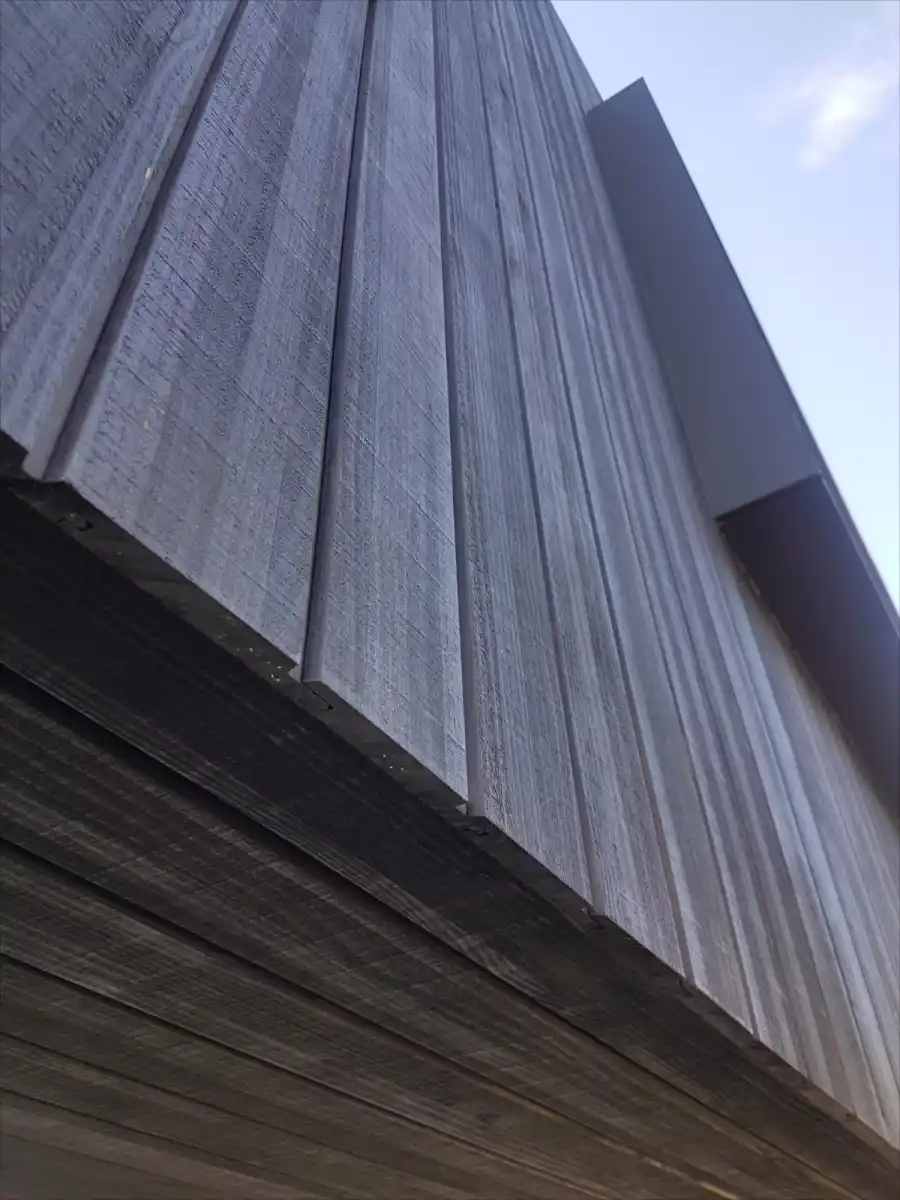
Shiplap cladding installed — the clean horizontal rebated profile creates a consistent shadow line across the elevation. Shiplap's combination of traditional character and contemporary versatility makes it the most widely used timber cladding profile in the UK across all building types, from garden sheds to architect-designed houses.
What Is Shiplap Cladding?
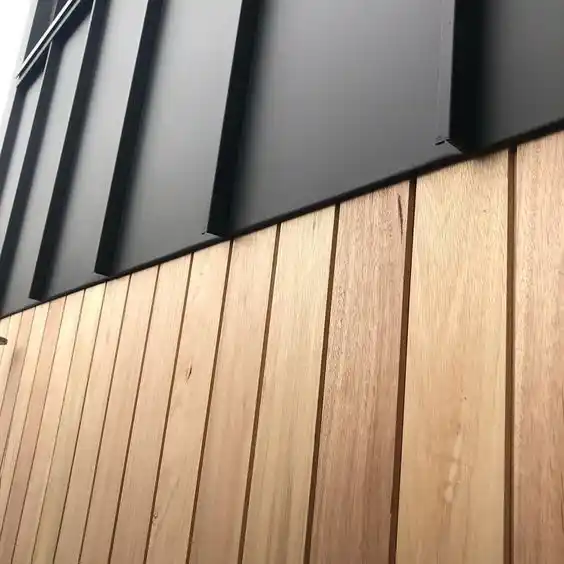
Shiplap profile close-up — the rebated edge machined into each board creates the interlocking joint. The rebate on the bottom edge of each board overlaps the rebate on the top edge of the board below, creating a tight weather-resistant joint with a clean shadow line at each course junction.
Shiplap cladding is a timber board with a rebated (stepped) long edge — a section machined out of one face near the edge. When boards are installed, the rebate of the upper board overlaps the rebate of the lower board, creating a tight interlocking joint that is inherently weather resistant. The overlap at the rebate produces a clean, consistent shadow line at each board junction — shallower and more refined than the deep overlap of feather edge, but more pronounced than a flush tongue and groove joint.
The interlocking rebate does two things simultaneously: it weatherproofs the joint between boards, and it maintains a consistent face gap that produces the characteristic horizontal lines of the shiplap profile. This combination of weather resistance and clean appearance is why shiplap has been used on buildings in the UK for centuries — and why it remains the first-choice profile across such a wide range of building types today.
Shiplap can be installed both horizontally — the traditional orientation — and vertically, which gives a more architectural, contemporary character. Both orientations use the same boards; the difference is in the batten layout of the cavity system behind the cladding. See our vertical vs horizontal cladding guide for full detail on which orientation suits different building types.
Shiplap Cladding — All Six Products
Nordic Spruce Shiplap — Three Sizes
Thinnest and most affordable spruce shiplap. Suits lightweight shed construction and garden fencing. 14mm depth — fix into battens at 400mm centres. Must be treated with preservative before installation.
Standard depth with 120mm face width. Good all-round spruce shiplap for sheds, garden buildings, and agricultural structures. 19mm depth gives better structural rigidity than 14mm. Treat before installation and every 2–3 years.
Wider 146mm board for fewer courses per elevation and a bolder horizontal rhythm. Most popular spruce shiplap size for garden buildings where appearance as well as economy matters. 19mm depth, treat every 2–3 years.
Siberian Larch Shiplap — Naturally Durable
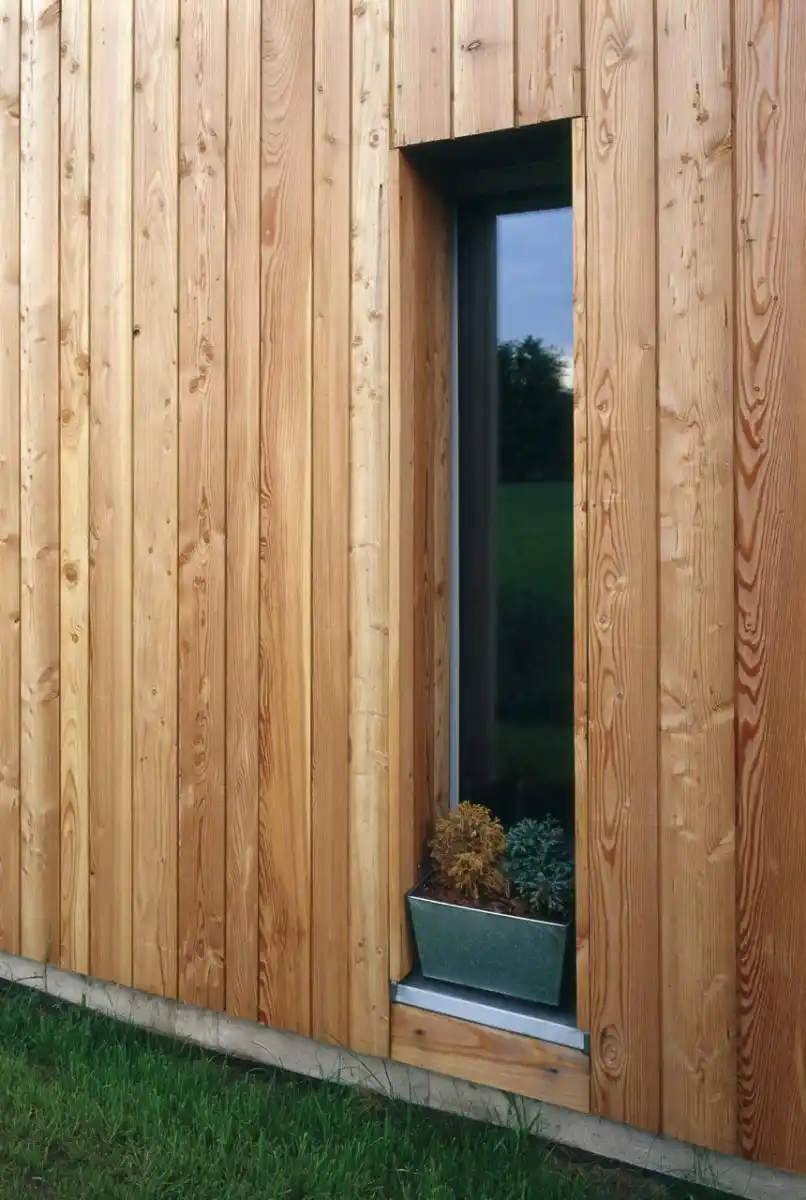
Siberian larch shiplap cladding — the warm honey-gold of fresh larch with the clean, consistent horizontal lines of the shiplap profile. No preservative treatment required throughout the 20–35 year service life. The larch will weather to a rich silver-grey if left untreated, or maintain its warm gold tone with optional oiling every 2–3 years.
Naturally Durability Class 3 — no preservative treatment required throughout the 20–35 year service life. Wide 146mm face board. Weathers to silver-grey without treatment — optional oiling every 2–3 years to maintain warm gold colour. Suitable for sheds, garden rooms, and house cladding.
ThermoWood Shiplap — Zero Maintenance
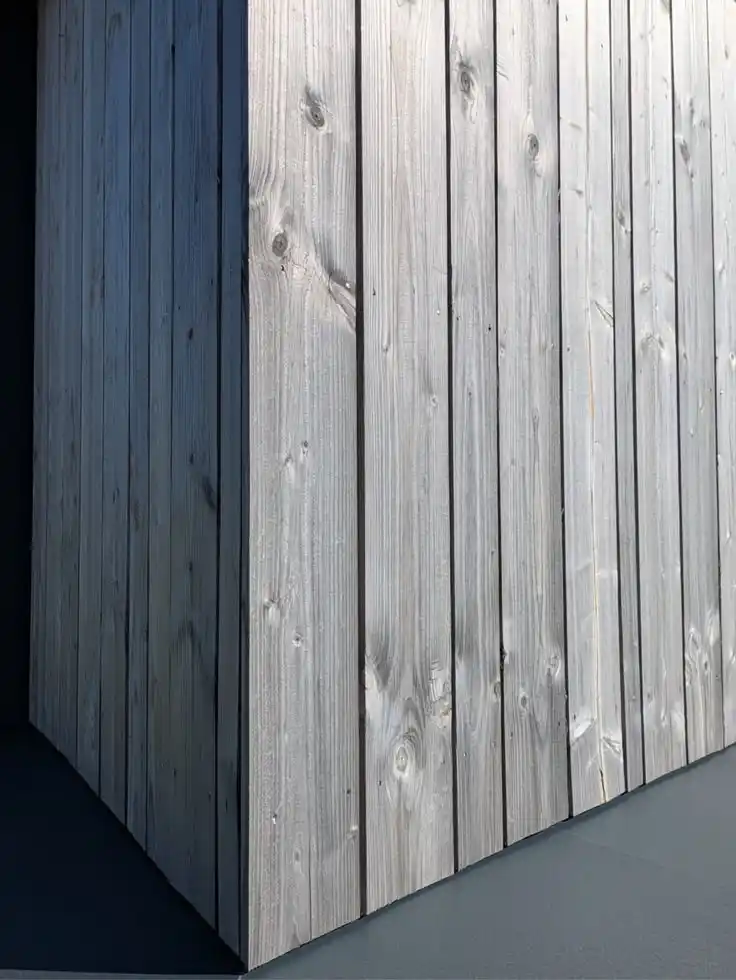
ThermoWood shiplap cladding — the rich honey-brown of thermally modified pine with the clean horizontal shiplap profile. ThermoWood's Durability Class 2 and BRE endorsed 30-year service life make it the premium zero-maintenance shiplap specification for garden rooms, home offices, and contemporary house extensions.
Narrower 117mm ThermoWood shiplap — more courses per elevation, finer horizontal rhythm. Zero maintenance, 30-year BRE endorsed service life. Good choice where a more detailed board pattern is preferred or where the narrower board scale suits the building proportions.
Wider 140mm ThermoWood shiplap — the most popular ThermoWood shiplap specification. Fewer courses per elevation, bolder horizontal lines, and a more generous board appearance. Zero maintenance, 30-year BRE endorsed service life. For full ThermoWood specification detail see our ThermoWood technical guide.
How Shiplap Cladding Weathers
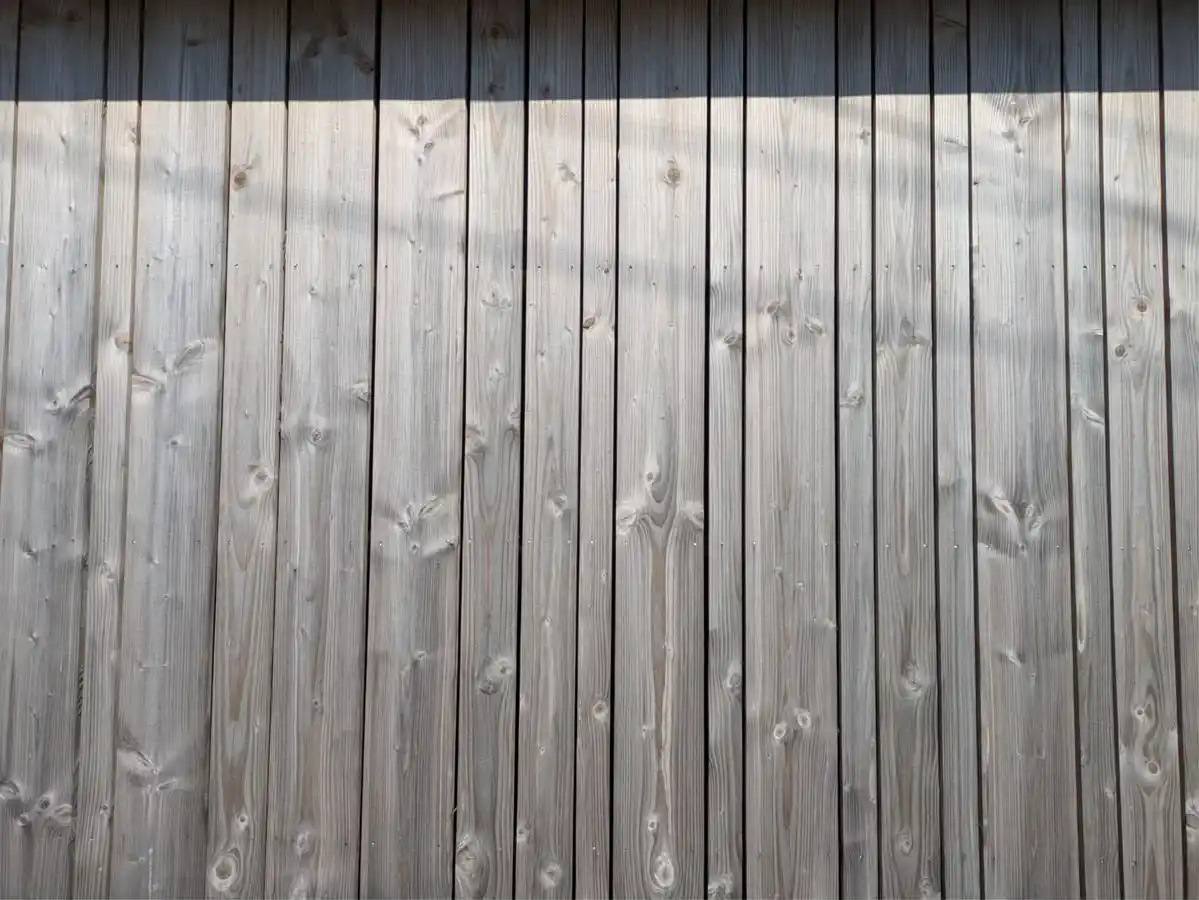
Weathered shiplap cladding — left untreated, all naturally durable and modified timber species weather to a warm silver-grey over 12–18 months. The weathered shiplap profile retains its clean horizontal lines throughout — the greying is a surface colour change only and does not affect the timber's durability or service life.
All naturally durable and modified timber cladding — Siberian larch and ThermoWood — weathers from its initial warm tone to silver-grey when left untreated outdoors. This is a normal UV-driven process that affects only the surface colour, not the timber's structural integrity or durability. The weathered appearance of shiplap is particularly attractive — the clean horizontal lines remain crisp and well-defined even as the colour transitions.
For Nordic spruce shiplap, the colour maintenance approach is different — the preservative treatment cycle that determines service life also typically includes a coloured stain that maintains the surface appearance. Remmers HK Stain is available in a range of colours including dark and black tones, allowing spruce shiplap to be maintained in contemporary colour schemes throughout its life. For Siberian larch and ThermoWood, Koopmans Houtolie applied every 2–3 years is the recommended colour maintenance product.
Vertical Shiplap Cladding
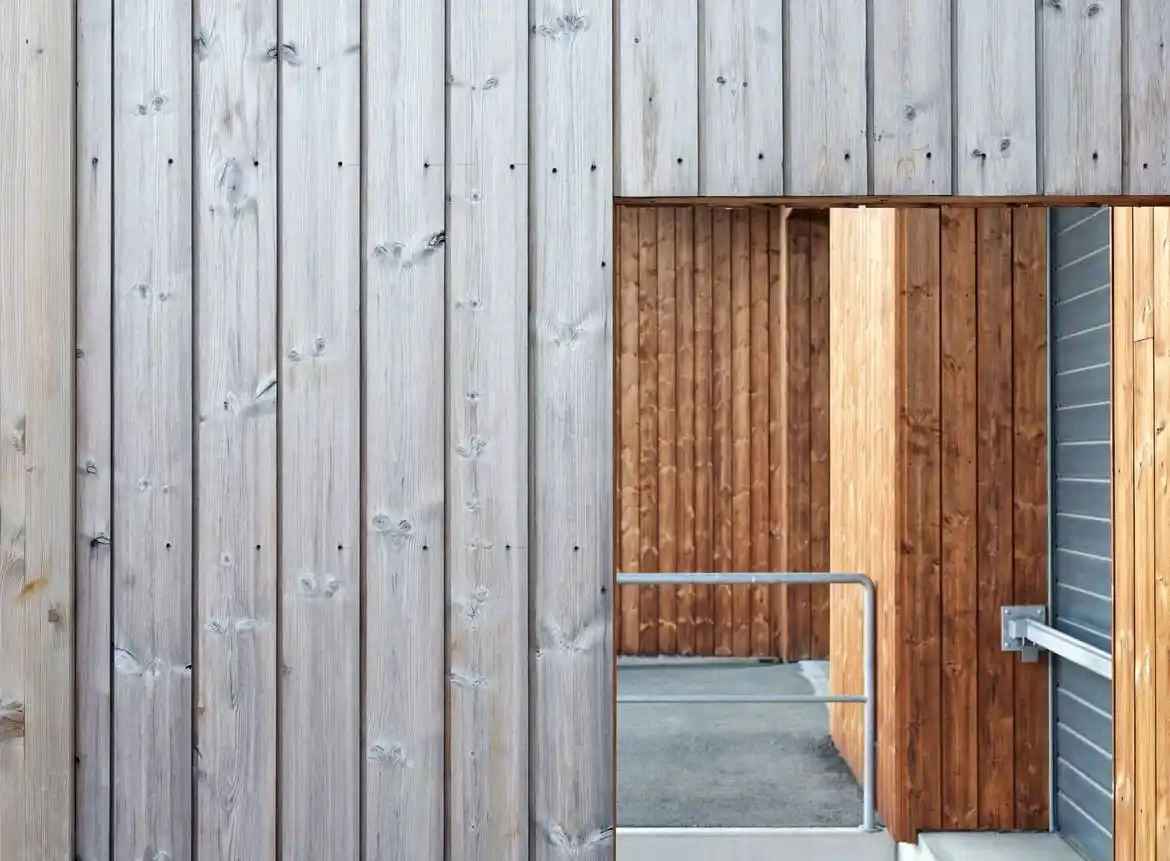
Vertical shiplap cladding — the same boards installed vertically rather than horizontally creates a completely different character. Vertical installation emphasises height, gives a more contemporary and architectural appearance, and is increasingly popular for garden rooms, home offices, and contemporary house extensions where a modern aesthetic is the brief.
Vertical shiplap installation uses identical boards to horizontal — the only differences are in the cavity system behind the cladding and the direction the rebate faces. For vertical installation, the battens in the ventilated cavity system run horizontally (rather than vertically for horizontal cladding), providing fixing points for the vertically running boards at regular intervals up the elevation.
The visual effect of vertical shiplap is significantly different from horizontal — it emphasises the height of the building, creates stronger vertical lines, and reads as more contemporary and architectural. It is the preferred orientation for contemporary garden rooms, garden offices, and modern residential extensions. Horizontal shiplap reads as more traditional and suits sheds, agricultural buildings, and traditional house elevations. Both are equally weatherproof — the rebate profile sheds water effectively in either orientation.
Species and Size Comparison
| Product | Size | Cost/m² | Lifespan | Maintenance | Best for |
|---|---|---|---|---|---|
| Spruce 14x120mm | 14x120 | £22–£28 | 15–25 yrs | Treat 2–3 yrs | Light sheds, fencing |
| Spruce 19x120mm | 19x120 | £24–£30 | 15–25 yrs | Treat 2–3 yrs | Sheds, garden buildings |
| Spruce 19x146mm | 19x146 | £26–£35 | 15–25 yrs | Treat 2–3 yrs | Sheds, wider board look |
| Larch 20x146mm | 20x146 | £40–£60 | 20–35 yrs | None required | Garden rooms, houses |
| ThermoWood 19x117mm | 19x117 | £50–£65 | 25–40 yrs | Zero — ever | Contemporary, narrow board |
| ThermoWood 19x140mm | 19x140 | £55–£75 | 25–40 yrs | Zero — ever | Garden offices, extensions |
Shiplap vs Other Profiles
| Profile | Shadow depth | Character | Orientation | Best use |
|---|---|---|---|---|
| Shiplap | Medium — clean rebate line | Traditional and contemporary | Horizontal or vertical | All building types |
| Feather Edge | Deep — pronounced overlap | Traditional, rustic, agricultural | Horizontal | Sheds, barns, traditional |
| Shadow Gap | Deep — architectural recess | Contemporary, architectural | Horizontal or vertical | Contemporary houses, extensions |
| Tongue & Groove | Minimal — V-joint only | Traditional, interior, sauna | Horizontal or vertical | Interior, sauna, traditional exterior |
Shiplap is the most versatile choice — it works on every building type from a simple garden shed to a contemporary architect-designed extension. Choose feather edge for sheds and agricultural buildings where a more rustic traditional character suits. Choose shadow gap for the strongest contemporary architectural statement on extensions and new builds. Both feather edge and shadow gap are available in the same species — the choice is primarily aesthetic. Browse our full cladding range across all profiles.
Installing Shiplap Cladding — Key Points
Check the frame is structurally sound and minimum 38mm deep. Fix breather membrane to the external face, working bottom to top with each course overlapping by 150mm. The membrane protects the frame from wind-driven rain while allowing moisture vapour to escape outward.
For horizontal shiplap: fix 25x38mm treated battens vertically over the membrane at 400mm centres, aligned with studs behind. For vertical shiplap: fix horizontal battens at 400–600mm vertical centres. Battens create the minimum 25mm ventilated cavity essential for all exterior timber cladding.
For Nordic spruce: apply Remmers HK Stain preservative to all four faces and both ends before fixing — the back face is inaccessible once installed. For larch and ThermoWood: seal all end grain at cut ends with exterior wood oil. No preservative treatment required for larch or ThermoWood.
Start at the bottom. Confirm minimum 150mm clearance between the first board and finished ground level. Check the first board is level — it sets the alignment for every board above. For horizontal shiplap, ensure the rebate faces correctly — the upper rebate of each board should overlap the lower rebate of the board above it.
Fix each board with A4 stainless ring-shank nails or screws — one or two per batten per board depending on board width. Fix through the face above the rebate of the board below — never through the rebate itself. Pre-drill within 25mm of board ends to prevent splitting. Check level every 3–4 courses.
At external corners, use a square corner post or mitre the boards at 45°. Seal all cut ends immediately after sawing with exterior wood oil or end grain sealer. At window and door heads, fit a drip flashing to shed water clear of the opening frame.
1 — Wrong rebate direction: If the rebate faces the wrong way, water will be channelled into the joint rather than away from it. Check the profile before you start the first board. 2 — Galvanised fixings: They rust within 2–3 years. Always A4 stainless steel — ring-shank nails or screws. 3 — No ventilated cavity: Shiplap fixed directly to a frame without a cavity traps moisture behind the boards. The 25mm batten cavity is not optional — it determines whether the cladding lasts 5 years or 30.
What is shiplap cladding?
Shiplap cladding is a timber board with a rebated edge that interlocks with the board above and below, creating a tight weather-resistant surface with a clean horizontal shadow line at each joint. It can be installed horizontally or vertically and suits all building types from garden sheds to contemporary house extensions.
How long does shiplap cladding last?
Nordic spruce shiplap lasts 15–25 years with preservative treatment every 2–3 years. Siberian larch shiplap lasts 20–35 years with no treatment. ThermoWood shiplap lasts 25–40 years with zero maintenance. Correct installation — breather membrane, ventilated cavity, 150mm ground clearance, A4 stainless fixings — is as important as species.
How much does shiplap cladding cost UK?
Nordic spruce shiplap £22–£35 per m². Siberian larch shiplap £40–£60 per m². ThermoWood shiplap £50–£75 per m². Add £8–£12 per m² for membrane, battens, and fixings. Professional installation adds £20–£35 per m².
Can shiplap cladding be installed vertically?
Yes — shiplap can be installed both horizontally and vertically using the same boards. Vertical installation requires horizontal battens in the cavity system rather than vertical. Vertical shiplap creates a more contemporary, architectural appearance and is increasingly popular for garden rooms, home offices, and modern extensions.
What is the difference between shiplap and feather edge cladding?
Shiplap has a rebated interlocking joint — flatter, cleaner, more contemporary. Feather edge is tapered and overlapping — deeper shadow, more rustic and traditional. Shiplap suits houses, garden rooms, and contemporary buildings. Feather edge suits sheds, barns, and traditional agricultural buildings. Both are available in the same three species.
Shiplap Cladding — All Species and Sizes from UK Stock
We supply shiplap cladding in Nordic spruce (3 sizes), Siberian larch, and ThermoWood (2 sizes) from UK stock. FSC and PEFC certified. Tell us your wall area and we'll calculate the precise quantity — nationwide delivery in 7–14 days.