
- Lifespan: ThermoWood wins — 25–40 years versus 15–25 years for composite.
- Maintenance: Draw — ThermoWood zero maintenance; composite needs annual cleaning but no oiling.
- Cost: Comparable upfront; ThermoWood cheaper over 30 years — no replacement cycle.
- Appearance: ThermoWood wins for most — real wood, natural warmth, ages attractively. Composite looks plastic to informed eyes.
- Sustainability: ThermoWood wins clearly — natural, FSC certified, carbon-storing, biodegradable. Composite contains plastic.
- Slip resistance: Composite wins on standard smooth profiles — its embossed surface provides better wet grip. ThermoWood brushed profile closes this gap significantly.
ThermoWood versus composite decking is the most common decking comparison in the UK market right now — and for good reason. Both are premium, low-maintenance alternatives to standard softwood decking. Both cost more upfront than treated pine. But they are fundamentally different materials with different performance profiles, different appearances, and different whole-life cost trajectories. This guide compares them honestly across every dimension that matters for a UK garden deck.
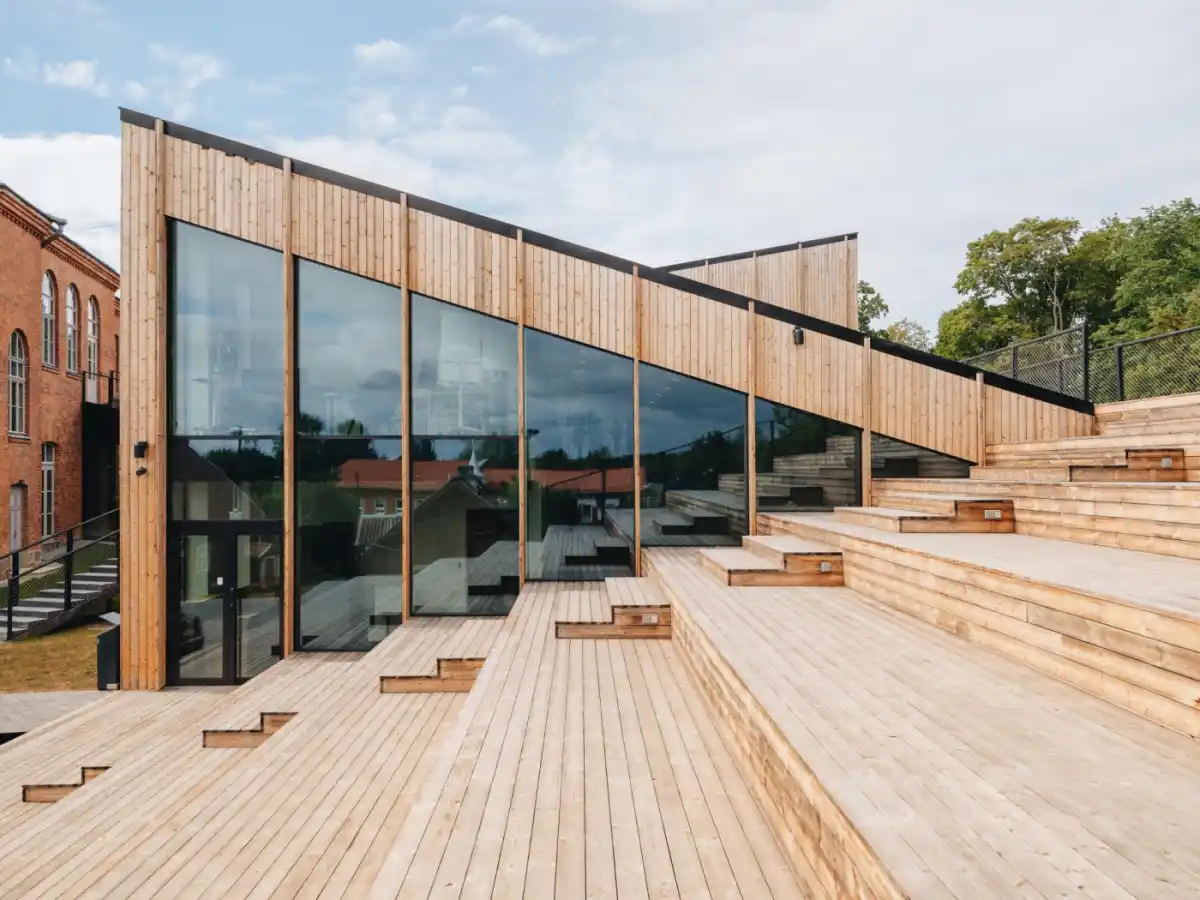
ThermoWood pine decking — the natural warmth and grain character of thermally modified pine is one of its defining advantages over composite. No composite product fully replicates the appearance of real wood at close inspection — ThermoWood is real wood, thermally modified to perform like a durable hardwood.
Head-to-Head Comparison
| Property | ThermoWood decking | Composite decking | Winner |
|---|---|---|---|
| Material | Natural wood — thermally modified pine | Wood fibre + plastic polymer | ThermoWood (natural) |
| Service life | 25–40 years | 15–25 years (grade dependent) | ThermoWood |
| Maintenance | Zero — ever | Annual brush/clean to prevent algae | ThermoWood (marginally) |
| Cost per m² boards | £55–£80 | £60–£120 (budget to premium) | ThermoWood |
| 30-yr whole-life cost | £55–£80 | £70–£150 (inc. cleaning + replacement) | ThermoWood |
| Appearance | Real wood — natural warmth, grain | Wood-effect — convincing from distance | ThermoWood |
| Wet slip resistance | Good (brushed) / fair (smooth) | Good — embossed standard | Composite (smooth profiles) |
| Heat retention in sun | Low — natural wood stays cool | Higher — plastic content retains heat | ThermoWood |
| Sustainability | FSC certified, carbon-storing, biodegradable | Plastic content — not biodegradable | ThermoWood |
| Fading over time | Weathers to silver-grey — even, attractive | Fades unevenly — patchy appearance | ThermoWood |
| Staining resistance | Good — oil helps | Very good — surface resistant | Composite |
| Secret fix option | Yes — Brofix system | Yes — most composites | Draw |
Where Composite Has the Genuine Advantage
This is an honest comparison — composite decking has real advantages in specific contexts:
- Very high moisture environments: Poolside, hot tub surrounds, and areas with permanent standing water — composite's plastic content makes it completely impervious to moisture in a way that even ThermoWood cannot fully match in the most extreme conditions
- Slip resistance on smooth profiles: Standard composite profiles with embossed surfaces provide better grip when wet than smooth ThermoWood — though ThermoWood brushed profile closes this gap significantly
- Stain resistance: Composite surfaces resist oil, food, and leaf staining better than natural timber — easier to clean if deck is used intensively for outdoor dining
- Colour consistency over time: Composite maintains a more consistent colour (albeit fading over years) versus ThermoWood's natural greying — for buyers who want a specific colour maintained, composite may suit better
Where ThermoWood Is the Stronger Choice
For the majority of UK residential garden decks, ThermoWood is the stronger specification on almost every measure that matters to homeowners:
- It looks like real wood — because it is: No composite product fully replicates the warmth, grain variation, and tactile quality of real timber at close inspection. ThermoWood is modified pine — it looks and feels like the premium hardwood deck it genuinely competes with
- It lasts longer: 25–40 years versus 15–25 years for composite. Most composite warranties top out at 25 years for premium products — ThermoWood's BRE endorsed service life is 30 years and realistic performance extends beyond that
- It stays cooler in direct sun: Composite decks with high plastic content retain heat significantly in strong sunlight — bare feet on a composite deck in summer can be uncomfortable. Natural wood, including ThermoWood, stays noticeably cooler
- It is genuinely sustainable: FSC certified timber from sustainably managed Scandinavian forests, thermally modified without chemicals, carbon-storing during growth, biodegradable at end of life. Composite's plastic content — even if it is recycled plastic — means it cannot be biodegraded or composted at end of life
- Whole-life cost: ThermoWood's purchase price is the total cost of ownership. Composite requires annual cleaning and eventual replacement within 15–25 years — the 30-year whole-life cost comparison consistently favours ThermoWood
Cost Comparison — Upfront and Whole-Life
| Cost element | ThermoWood | Budget composite | Premium composite |
|---|---|---|---|
| Boards per m² | £55–£80 | £40–£65 | £80–£120 |
| Fixings per m² | £5–£10 | £5–£12 | £8–£15 |
| Annual cleaning (30 yrs) | £0 | £15–£30 per yr = £450–£900 | £15–£30 per yr = £450–£900 |
| Replacement within 30 yrs | None | Full replacement yr 15 = £40–£65/m² | Possible replacement yr 25 |
| 30-yr total per m² | £60–£90 | £125–£200 | £115–£180 |
Which Should You Choose?
- Natural wood appearance is important
- Sustainability credentials matter
- 30–40 year service life without replacement
- Zero maintenance is the priority
- Heat retention in summer is a concern
- You want brushed profile for grip
- Secret fix clean surface required
- Whole-life cost matters more than upfront
- Poolside or permanent wet environment
- Maximum slip resistance on standard profiles
- Heavy staining risk (outdoor dining, BBQ area)
- Specific colour maintenance required
- Very tight upfront budget vs budget composite
For a standard UK residential garden deck — ThermoWood is the better choice for most homeowners. It is a natural material that looks, feels, and ages better than composite, lasts longer, requires zero maintenance, and has a lower 30-year whole-life cost. Composite has genuine advantages in specific high-moisture and high-stain-risk applications — but for the majority of UK garden decks, those advantages do not outweigh ThermoWood's superiority in appearance, longevity, sustainability, and whole-life value. Browse our full ThermoWood decking range including secret fix smooth and secret fix brushed profiles, or read our complete ThermoWood decking guide for full product detail.
Is ThermoWood decking better than composite?
For most UK gardens, yes. ThermoWood is a natural material with lower embodied carbon, comparable or lower cost, longer service life (25–40 years versus 15–25 years for composite), and superior appearance. Composite has advantages in poolside and very high-moisture applications and on stain resistance.
Does ThermoWood decking get slippery when wet?
Smooth ThermoWood can be slippery when wet. The brushed profile with its wire-brushed textured surface provides significantly better grip in wet conditions and is recommended where slip resistance is important. ThermoWood brushed competes closely with composite's standard embossed surface for grip.
Which lasts longer — ThermoWood or composite decking?
ThermoWood lasts longer — 25–40 years versus typically 15–25 years for composite decking. Composite is susceptible to fading, surface staining, and mould growth over time. ThermoWood's BRE endorsed service life is 30 years with zero maintenance.
Is ThermoWood decking more expensive than composite?
ThermoWood at £55–£80 per m² is broadly comparable to mid-range composite at £60–£120 per m². On a 30-year whole-life cost basis, ThermoWood is consistently cheaper — it lasts longer and requires zero maintenance versus composite's annual cleaning and eventual replacement cycle.
Is ThermoWood decking more sustainable than composite?
Yes — ThermoWood is natural wood from FSC certified sustainably managed forests, thermally modified without chemicals, carbon-storing, and biodegradable at end of life. Composite contains plastic — not biodegradable and with higher embodied carbon than natural timber.
ThermoWood Decking — UK Stock, Secret Fix Available
We supply ThermoWood decking in standard, secret fix grooved, secret fix smooth, and secret fix brushed profiles from UK stock. Brofix hidden fixing system also available. FSC and PEFC certified. Nationwide delivery in 7–14 days.